


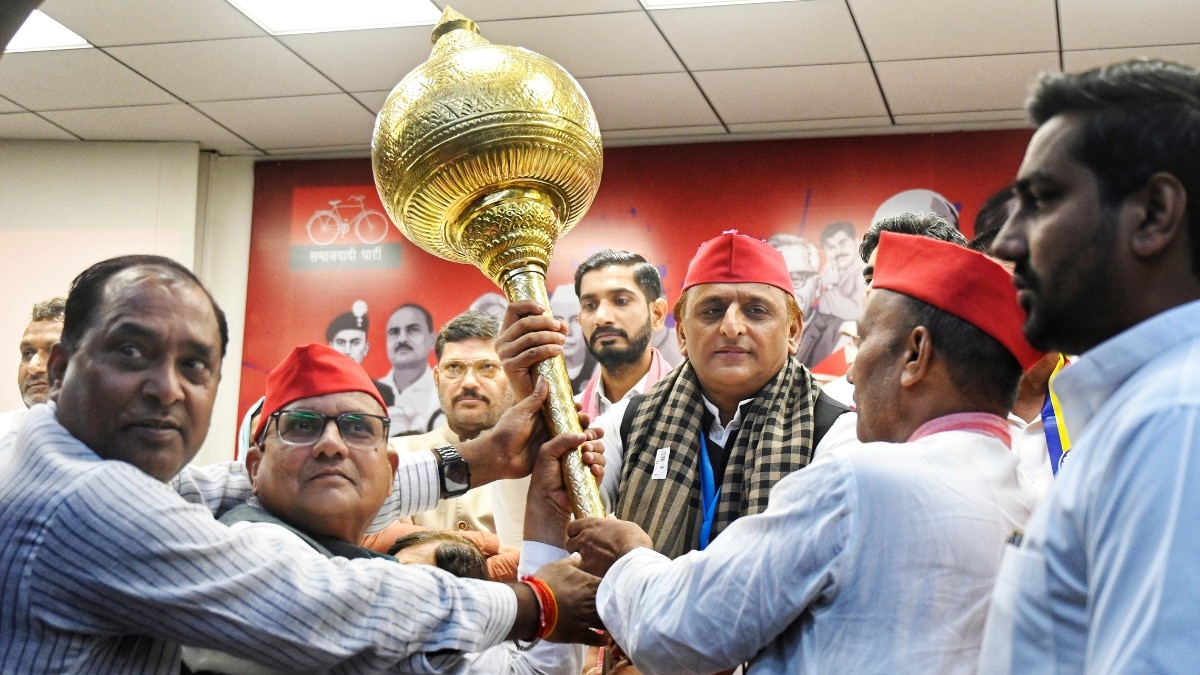
The BJP topped the overall tally, but the Samajwadi Party's wins in particular in Lucknow and Varanasi could open up possibilities in the 2027 state pollsThe Samajwadi Party (SP) has found fresh ammunition for its electoral campaign against the BJP in Uttar Pradesh by winning five of the 11 seats in the latest round of legislative council elections. SP leaders are already projecting the results as a sign of changing political mood in the state, with hoardings in Lucknow declaring that their chief Akhilesh Yadav is on course to returning to power in 2027.
The results, declared on October 29 after polling on October 23 and several days of counting, gave the SP victories in three graduates’ constituencies and two teachers’ constituencies. The BJP won two graduates’ seats and four teachers’ seats.While the ruling party retained the highest overall tally, the SP’s victories in Lucknow and very crucially Varanasi (Prime Minister Narendra Modi’s Lok Sabha stronghold), along with its win in the Allahabad-Jhansi graduates’ constituency, have given it an opportunity to challenge the BJP’s claim of organisational strength ahead of the assembly elections next year.The results also marked an improvement for the SP compared with the 2020 legislative council elections, when it held three of these seats.
The BJP, however, retained its overall tally of six. Two seats previously represented by Independents also changed hands after their former occupants entered the contest on party tickets: Akash Agrawal won the Agra teachers’ constituency for the SP while Dhruv Kumar Tripathi retained the Gorakhpur-Faizabad teachers’ seat for the BJP.The constituency-wise results show the mixed nature of the contest.
The SP’s Maan Singh Yadav won the Allahabad-Jhansi graduates’ seat, Kanti Singh secured Lucknow graduates’, and Ashutosh Sinha won Varanasi graduates’. Lal Bihari Yadav retained the Varanasi teachers’ seat for the party while Akash Agrawal won Agra teachers’.The BJP’s winners included Dinesh Kumar Goyal from Meerut graduates’, Manvendra Pratap Singh from Agra graduates’, Umesh Dwivedi from Lucknow teachers’, Shrichand Sharma from Meerut teachers’, Hari Singh Dhillon from Bareilly-Moradabad teachers’, and Dhruv Kumar Tripathi from Gorakhpur-Faizabad teachers’ seat.Some of the margins were significant.
Maan Singh Yadav defeated the BJP’s Ashok Kumar Rathore by 27,663 votes in Allahabad-Jhansi while Ashutosh Sinha beat the BJP’s Kedarnath Singh by 19,932 votes in Varanasi graduates’. Kanti Singh defeated BJP incumbent Avneesh Kumar Singh by 17,127 votes in Lucknow graduates’.At the other end of the contest, Dhruv Kumar Tripathi defeated independent candidate Rajiv Yadav by 2,210 votes in Gorakhpur-Faizabad teachers’, making it the closest of the 11 contests.For Akhilesh, the results offer an opportunity to reinforce the SP’s narrative that dissatisfaction with the BJP, which is eyeing a third consecutive power term in 2027, is spreading across voters.
In a message congratulating his party’s candidates, he described the outcome as a “double defeat” for the BJP’s “double-engine” government. He also linked the results to the concerns of teachers, students and unemployed graduates, arguing that the ruling party had alienated sections of the electorate.Akhilesh claimed the party’s PDA coalition of ‘Pichhda, Dalits, Alpsankhyak’ was expanding.
He asserted that the support base for the PDA had grown to 95 per cent. The party has also used the outcome to energise its organisation.
Hoardings put up near the SP headquarters in Lucknow and at prominent intersections in the city celebrate the victories and project Akhilesh as a potential chief minister again in 2027.The SP has also highlighted its performance in Varanasi, a BJP turf that has been electing Modi to the Lok Sabha since 2014 and the party itself since 2009. The Varanasi outcome is particularly significant because the SP managed to retain both council seats despite the challenge from the BJP.
The SP’s victories in the Lok Sabha constituency represented by Modi offer Akhilesh an opportunity to challenge the ruling party in its own bastion.The Varanasi division's two MLC constituencies cover eight districts and 47 assembly segments. In the 2022 assembly elections, the BJP-led National Democratic Alliance had won 28 of these 47 seats while the SP secured 14, the Suheldev Bharatiya Samaj Party (SBSP) four and the Bahujan Samaj Party (BSP) one.The SP's success in both council constituencies could, therefore, be used to question the BJP's ability to retain support among sections of the electorate in this region.
The BJP had campaigned actively, making its defeat even more politically uncomfortable for the party.The results have placed the BJP’s candidate selection under scrutiny. In Agra, Akash Agrawal, who won the teachers’ seat for the SP, had sought a BJP nomination.
After the BJP chose Hari Kishore Tiwari, Agrawal joined the SP and contested. In Varanasi graduates’, the BJP again fielded Kedarnath Singh, who had lost to Ashutosh Sinha in 2020.
Sinha’s repeat victory has raised questions among BJP workers about whether the party adequately considered local feedback while selecting its candidate.The BJP’s losses in Lucknow graduates’ and both Varanasi constituencies have added to those questions. Deputy chief minister Keshav Prasad Maurya has said the party will review its performance and examine how the SP won in constituencies where the BJP had expected a stronger showing.
Yet the BJP also retained several seats, including both Meerut constituencies and the Bareilly-Moradabad teachers’ seat, indicating that the results were not a uniform rejection of the ruling party.Uttar Pradesh minister and SBSP chief Om Prakash Rajbhar sought to play down the significance of the results, arguing that they reflected the views of the comparatively more literate voters rather than the electorate as a whole. The remark was notable because it appeared to concede that the BJP and its allies had struggled to secure the support of this section of the electorate.
Meanwhile, for the SP, the immediate gain is political and organisational. It can point to victories in constituencies associated with Lucknow and Varanasi, celebrate the return of two seats to its tally, and use the results to motivate workers ahead of a larger electoral contest.
Akhilesh has already asked SP workers to work hard to increase the party’s vote count by at least 27,000 in every assembly constituency in the 2027 polls. The BJP, meanwhile, will have to address questions about candidate selection and local dissatisfaction.Subscribe to India Today Magazine- Ends