


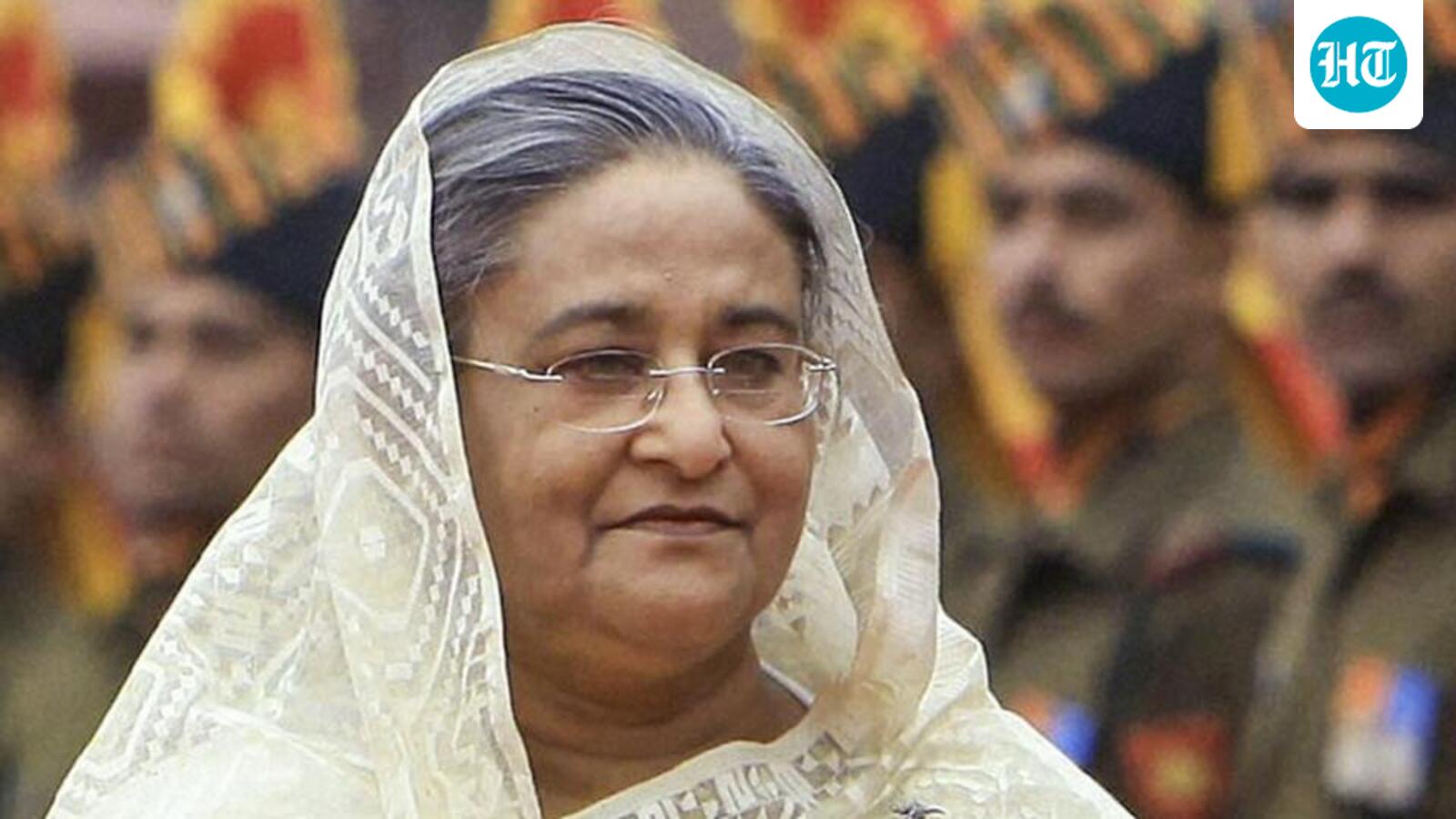
Bangladesh’s insistence on the extradition of former premier Sheikh Hasina from India is a tactic aimed at delaying her homecoming, and the Indian side has created no impediment to her voluntary return, people familiar with the matter said on Friday after the Awami League leader made a second request for a new passport.Sheikh Hasina, 79, has lived in India since her government was ousted in a student-led uprising in August 2024 (PTI FILE)Hasina, 79, has lived in India since her government was ousted in a student-led uprising in August 2024. She has insisted in recent interviews, including with HT, that she intends to return to Bangladesh in December despite being sentenced to death over her government’s crackdown on protesters.After the London-based law firm Matrix Chambers, acting for Hasina, emailed the Bangladesh high commission in New Delhi seeking a new passport and national identity card for her on November 9, questions were raised by authorities in Dhaka about the communication having no authorisation from her.
A second letter was sent by Matrix Chambers to the mission on Thursday along with an authorisation signed by Hasina to act on her behalf.Soon after Hasina’s request on November 9, Bangladesh’s minister of state for foreign affairs Humaiun Kobir said his government will insist on her extradition as she is a “killer and terrorist” who fled the country after allegedly killing more than 2,000 people. He also said that Bangladesh does not “give passports to terrorists”.However, the people cited above argued that by denying Hasina the sole travel document required to return home while simultaneously demanding her extradition, Dhaka was stalling her return.“It can be inferred that the Bangladesh government does not, in fact, wish her to return at this moment.
Bangladesh is insisting on extradition, which is a legal process that is, by its nature, complicated,” a person said.Extradition also presupposes that a person will not willingly return, and it is the mechanism a state uses when it must compel return, while Hasina has publicly stated that she will voluntarily go home and surrender before the court, the people said. “Where the person has decided to return of her own volition, there is no one to extradite,” the person said.At the same time, the people emphasised that India has created no obstacle to Hasina’s voluntary return, which is only being blocked by the lack of a travel document. This document can be issued only by Bangladesh because Hasina is a Bangladeshi national, they said.According to reports, Hasina’s diplomatic passport was revoked on August 22, 2024, a little more than a fortnight after she fled to India, and her national identity card was blocked on February 16, 2025.The people made it clear that the issuance of a passport and national identity card is a matter between Bangladesh and its national, while extradition is a separate legal matter and the two should not be conflated.A willing returnee does not require extradition, and passport restriction provisions under Bangladesh law are “exit control measures” and were not designed to prevent a Bangladeshi national from returning home, the people said.
In this context, they pointed to several articles of the Bangladesh Passport Order of 1973 which are only meant to prevent a person from fleeing the country in order to evade charges.After Bangladesh first sought Hasina’s extradition in December 2024 and followed up with several requests, the Indian side said it would handle the matter through legal processes.At the same time, Hasina should be allowed to return under the provisions of different international conventions to which Bangladesh is a party. This includes the Universal Declaration of Human Rights (UDHR), which recognises a person’s right to leave and return to their country, and the International Covenant on Civil and Political Rights (ICCPR), which protects against arbitrary deprivation of the right to enter “one’s own country”.The International Convention on the Elimination of All Forms of Racial Discrimination requires equality before the law in the right to nationality, while a State is expected to issue, renew or replace travel documents for its nationals abroad and to readmit them under Annex 9 of the International Civil Aviation Organisation (ICAO) and Article 5(d) of the Vienna Convention on Consular Relations of 1963