


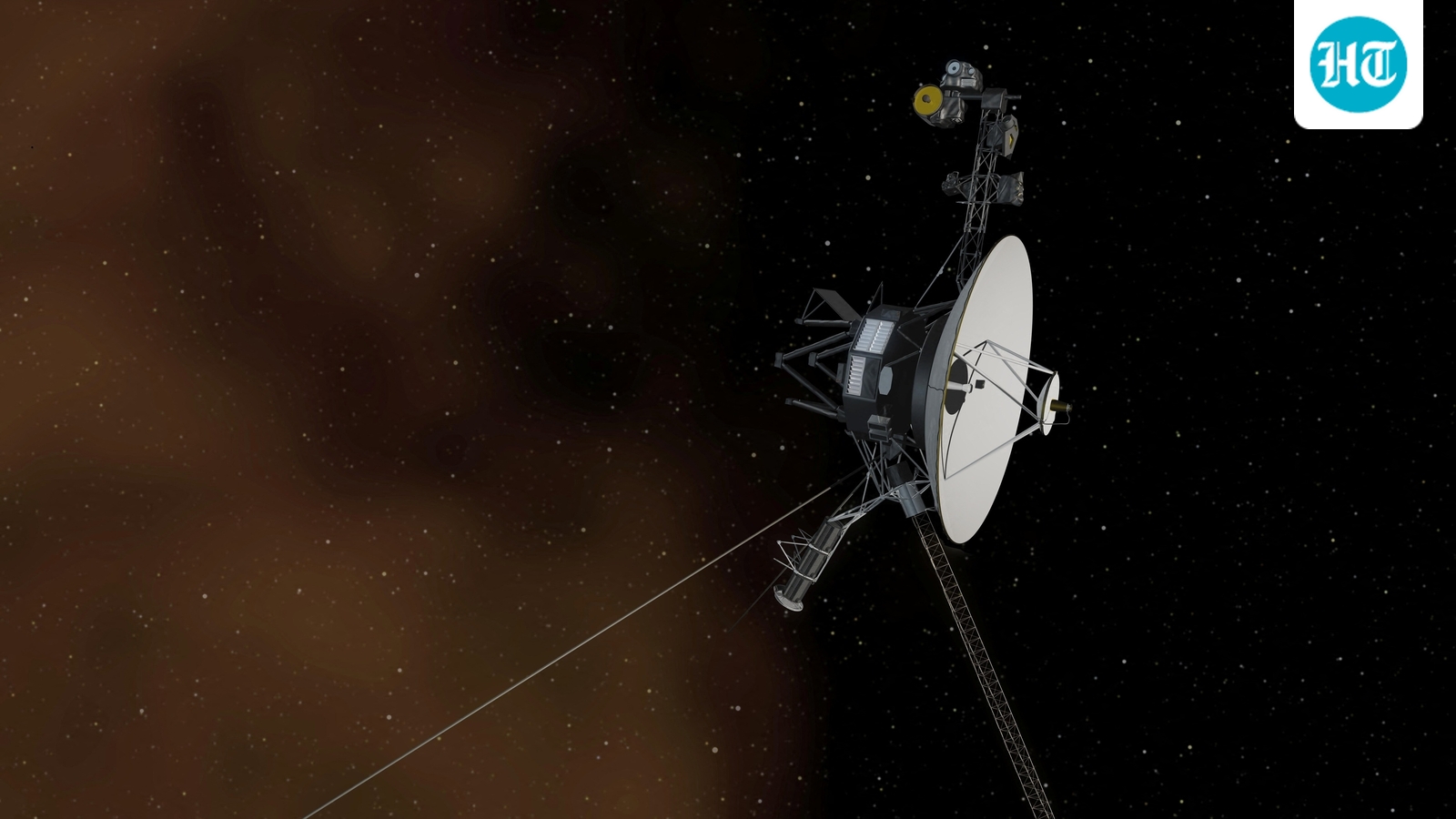
NASA confirmed that Voyager 1 has achieved a historic milestone by becoming the first human-made object to travel beyond a light-day from Earth, continuing its nearly half-century voyage through interstellar space. The spacecraft crossed the 24-hour light-travel distance—approximately 16 billion miles or 26 billion kilometers—surpassing the mark nearly 49 years after its initial launch.
A radio transmission sent from the probe was successfully received by the Deep Space Network station in Madrid, Spain, with the signal taking nearly a full day to complete the journey. NASA engineer Nshan Kazaryan announced the confirmation during an event at the agency's Jet Propulsion Laboratory in California, celebrating the ongoing exploration.
Nicola Fox, NASA's head of science, praised the dedication of the mission team and noted that the scientific value of Voyager 1 will endure long after direct communication eventually ceases. Travelling at a speed of approximately 38,000 miles per hour, Voyager 1 is presently heading toward the star Gliese 445, which lies roughly 17 light-years away.
Launched in 1977, Voyager 1 previously flew past Jupiter and Saturn before crossing the heliosphere's boundary into interstellar space in 2012. Its twin probe, Voyager 2, entered interstellar space in 2018 and is projected to reach the one-light-day milestone by November 2035.
Despite its longevity, the ageing spacecraft contends with declining electrical power from its decaying plutonium sources and intermittent technical anomalies. Mission managers have disabled several onboard systems over the years to preserve energy, leaving Voyager 1 with two operational scientific instruments while Voyager 2 maintains three.
Project representatives estimate that conservation efforts could sustain communication with both probes for another three to four years. As Voyager 1 ventures deeper into uncharted space, scientists continue to analyze its precious stream of data concerning galactic cosmic rays and solar activity fronts.