


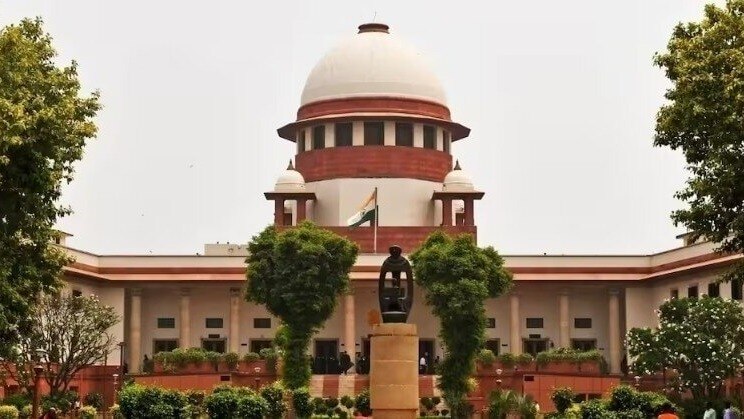
The Supreme Court has issued notice on a public interest litigation filed by the political watchdog Association for Democratic Reforms challenging Section 16 of the Chief Election Commissioner and Other Election Commissioners Act, 2023, while tagging it alongside related petitions already pending before the bench.
Section 16 of the legislation prohibits courts from entertaining or continuing any civil or criminal proceedings against the Chief Election Commissioner and Election Commissioners for actions undertaken while discharging their official duties. During the proceedings, the court noted that multiple petitions from various stakeholders, including lawyers and journalists, require a collective hearing.
The bench asked the Solicitor General's office to compile a consolidated chart detailing all the pending petitions and their respective legal issues to assist the government in formulating its response. The case has been tentatively scheduled for a hearing in November.
The petition filed by the Association for Democratic Reforms argues that Section 16 provides sweeping immunity from prosecution, effectively shielding serving and former election commissioners from constitutional accountability. The challenge asserts that the provision lacks a good-faith requirement, an independent sanction mechanism, and a standard saving clause.
Furthermore, the organization contends that equivalent protections are not granted to other key constitutional authorities, such as the President, state Governors, judges, or the Prime Minister after they leave office. The plea also objects to the legislative process behind the provision, claiming it was introduced via an executive amendment without debate after being absent from the original bill.
A separate public interest litigation filed by Lok Prahari previously challenged the constitutionality of Section 16, prompting the Supreme Court to issue notices to both the Centre and the Election Commission of India. That earlier petition seeks a declaration that the immunity provision exceeds legislative competence and violates constitutional articles related to equality before the law and the independence of the election commission.