


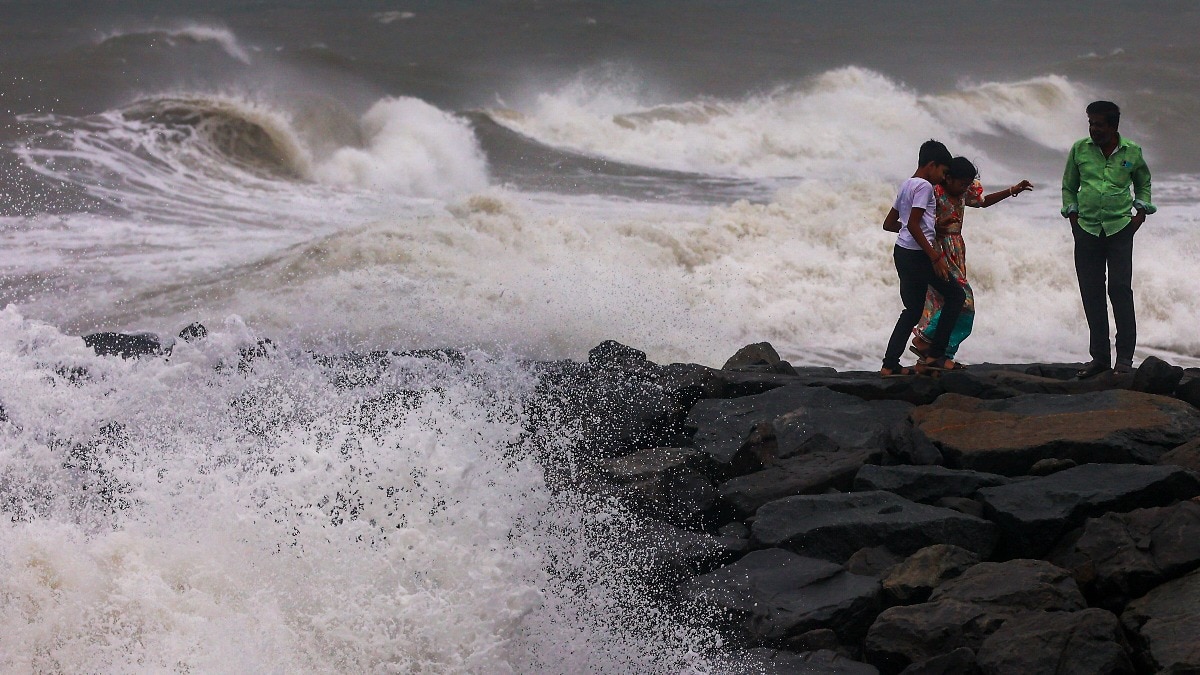
A cyclone heading towards Andhra Pradesh has a name that sounds more like a call to battle than a weather warning. Called Murasu, the storm has drawn its name from Tamil, where the word refers to a large drum traditionally used during war, celebrations and to alert people to impending danger.But Murasu is not just an unusual name picked for a storm approaching India's eastern coast.
It is part of a pre-approved list of cyclone names, with each country in the North Indian Ocean region contributing names under an established international system.The name has also followed a specific sequence. Days after Cyclone Arnab, which was named by Bangladesh, made landfall in Andhra Pradesh on October 28, the India Meteorological Department (IMD) named the next cyclonic storm Murasu.
India had contributed the name to the regional list.So, how did an Andhra-bound cyclone get a Tamil name, and who decides what a storm should be called? WHY IS THE CYCLONE CALLED MURASU?Murasu is a Tamil word referring to a musical instrument, specifically a large drum.
Traditionally, the instrument has been associated with different public and social occasions, including warfare, celebrations and alerting people to imminent danger.The drum was used to communicate important messages, summon people and signal events. One of its traditional forms, Veera Murasu, was a martial drum used for military purposes.
According to the naming guidelines, cyclone names should have a connection with people, be easy to pronounce and should not be anyone's specific name. Murasu is among the names contributed by India to the official list used for cyclones forming over the North Indian Ocean.Its cultural association with alerting people to danger makes the name particularly striking for a storm, although a cyclone's name does not indicate its intensity or the threat it poses.HOW DID MURASU FOLLOW CYCLONE ARNAB?The sequence in which cyclones receive their names is not decided by the country towards which a storm is heading.The North Indian Ocean cyclone naming list contains 169 names, with 13 names contributed by each of the 13 participating countries.
These countries are arranged alphabetically, and the names are used in a predetermined sequence.In the relevant sequence, Bangladesh's Arnab was followed by India's Murasu, with Iran's Akvan next in line.This explains why the cyclone approaching Andhra Pradesh received an Indian name. It was not because the storm was expected to make landfall in India, but because Murasu was the next name in the regional naming sequence.The same list is used for cyclones forming over both the Bay of Bengal and the Arabian Sea.WHO DECIDES THE NAMES OF CYCLONES?Cyclone naming involves three stages: countries proposing names, the regional committee approving the list and the designated weather centre assigning a name when a storm qualifies.Participating countries submit suggestions through regional arrangements involving their respective weather services.
The names are then considered and approved under the World Meteorological Organization's framework.For the North Indian Ocean, the India Meteorological Department (IMD), headquartered in New Delhi, is the designated centre responsible for assigning cyclone names.Its responsibility extends to cyclones forming over the Bay of Bengal and the Arabian Sea, including storms that may eventually affect countries other than India.The names are therefore assigned according to the approved regional sequence, rather than the location where a cyclone is expected to make landfall.WHAT RULES MUST A CYCLONE NAME FOLLOW?Not every suggested word makes it to the official cyclone naming list. Names have to meet specific conditions before they can be approved.For the North Indian Ocean region, names must be short, easy to pronounce and contain no more than eight letters.
They must not be offensive and should remain neutral towards politics, political figures, religious beliefs, cultures and gender.Public suggestions can also be considered. An IMD committee had considered suggestions from people in India while selecting the country's contributions to the 2020 list.However, a proposed name must undergo scrutiny and receive approval before it becomes part of the official list.
The regional panel can reject a suggestion or review an approved name if a reasonable objection is raised.WHEN DOES A CYCLONE GET ITS NAME?A weather system does not receive a cyclone name as soon as it develops over the sea.In the North Indian Ocean region, the IMD assigns a name when a system's maximum sustained surface wind speed reaches at least 34 knots, or approximately 62 kmph. This is the threshold for cyclonic storm intensity.A depression can be tracked by weather agencies before reaching this stage.
Once it qualifies and receives a name, the storm retains that name even if its intensity increases.This means that even if Murasu strengthens, it will continue to be called Murasu.FROM MURASU TO AKVAN, WHAT COMES NEXT?The cyclone naming list also provides a glimpse of the name that could be assigned to the next qualifying storm in the region.With Bangladesh's Arnab followed by India's Murasu, Iran's Akvan is next in the sequence.However, this does not mean that another cyclone is expected to form immediately. The naming sequence only determines which approved name will be used when a future weather system meets the criteria for being declared a cyclonic storm.For now, Murasu is the name attached to the storm approaching Andhra Pradesh.
While its name comes from a traditional Tamil drum associated with warning people of danger, it is the IMD's weather bulletins and advisories that will determine the actual threat posed by the cyclone.- Ends