


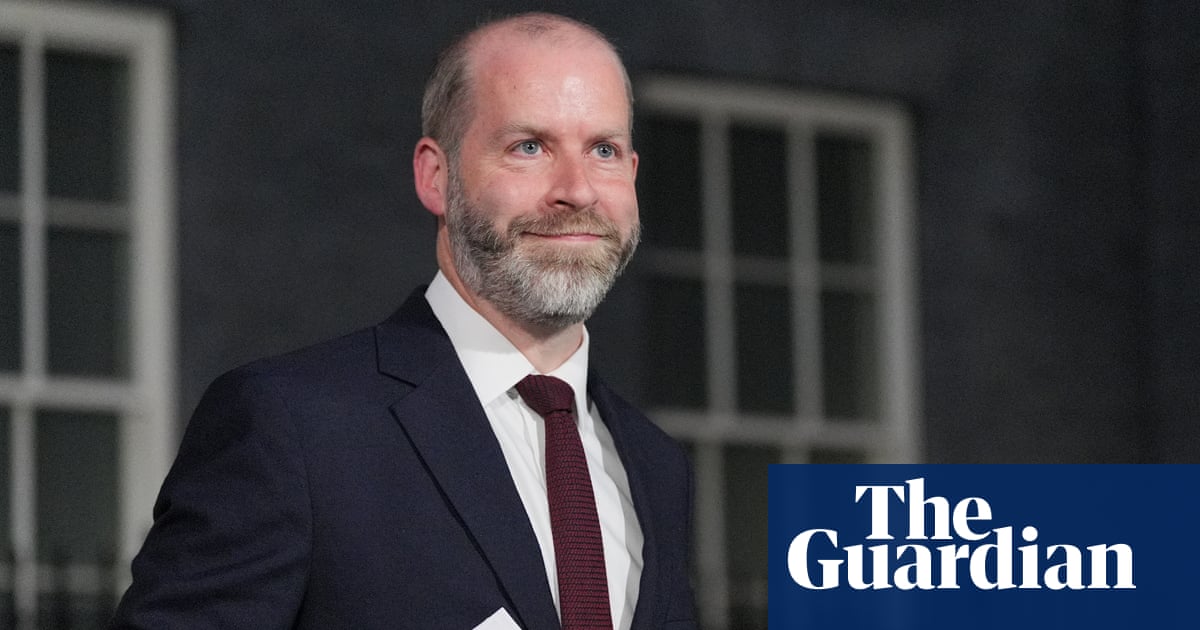
British officials have begun discussions with the EU about a long-term relationship that could include a return to free movement, the business secretary has said, promising the British people “are the boss” when it comes to what the UK will accept.Jonathan Reynolds said the focus for British negotiations was the EU summit in November to seal an agreement to ease some trading restrictions and a youth mobility deal. But he said that the prime minister, Andy Burnham, had made it clear he wanted to see a long-term and stable relationship with the bloc.“They will be talking to them about what the future options for our relationship might be.
But here and now, the focus should be on the summit and the tangible difference improvements we’re going to make,” he told BBC Radio 4 Today programme.He said that the changes announced at the EU summit, including food and drink deal and emissions trading, would make a significant difference. But he added: “What the prime minister has also said, quite rightly, is we face a series of policy changes on the European side that will affect us, and we need to get as little uncertainty as possible.“We need to have a way to resolve what our long-term relationship will be, and he is going to set that out after the summit.
And he is going to be frank with the British people about what the trade-offs are.”Reynolds said there had been “no assumptions made about the next stage after that. It’s the prime minister quite rightly saying he wants to set out to the British people what the options are to resolve some of the tensions that exist.”He said no decision would be made without voters being given a say, without specifying whether this would be through a general election or a referendum. “No assumptions have been made on this.
The British people are the people who will decide this. They’re the boss on this,” he said.A number of backbenchers with heavily pro-Brexit seats in the north and Midlands are wary about reopening the arguments for free movement or rejoining the EU.The Labour MP for Great Grimsby and Cleethorpes, Melanie Onn, was among those urging caution. “I am still not over the kind of very divisive debate that we had when we were leaving the EU post the referendum, and I don’t think that the scars have healed for many people around the country,” she told BBC Radio 4’s Today programme. “So I do think that this is an unnecessary conversation to be having at this time.”The Reform UK leader, Nigel Farage, told the programme it would be “very, very poor indeed” to begin discussing freedom of movement. “Five months ago, Andy Burnham says to leave-voting Makerfield: ‘I’m not going to reopen these arguments.’ Two and a half years ago, a Labour government got a massive majority in parliament saying we will not be re-entering the single market, the customs union, or opening up the debate on the free movement of people,” he said.“What I am saying is this: this prime minister has no mandate, and to hear that his officials are negotiating in Brussels already is really very, very poor indeed.”Burnham made his plea for an “honest discussion” about freedom of movement in an interview with the Sunday Times, making clear that staying out of it would no longer be a red line in talks with the EU.Burnham also shared his belief that rejoining the single market and accepting free movement could be done without the need for another referendum, if Labour put it in their manifesto.
In contrast, he said fully rejoining would need another in-out poll.The prime minister said: “Freedom of movement had very significant challenges associated with it and I spoke about them in my previous time in parliament. But, at the same time, it was a type of immigration that perhaps wasn’t as difficult [as now].“Revolving-door migration where people would come and then go back is different.
The balance of migration has changed, hasn’t it, since then? I think we’ve just got to have an honest discussion about those things.”