


The West Bengal government's new industrial promotion policy offers an elaborate package of financial incentives to attract investors, promising reimbursements, subsidies and other benefits once industrial units begin production. But while the administration has spelt out in considerable detail what investors stand to gain, it remains less forthcoming on a fundamental question: where will the land for these industries come from?The West Bengal Investment Promotion Policy, 2026, lays down an extensive incentive structure for manufacturing, services, MSMEs (micro, small and medium enterprises) and large industrial projects.
Yet, the policy offers little clarity on how the government intends to ensure the availability of land—particularly large, contiguous parcels— required for major industrial investments.The omission is significant because land availability has historically been one of the biggest stumbling blocks to industrialisation in Bengal. The political consequences of the erstwhile Left Front government's land acquisition drives in Singur and Nandigram continue to influence the state's approach to industrial development.
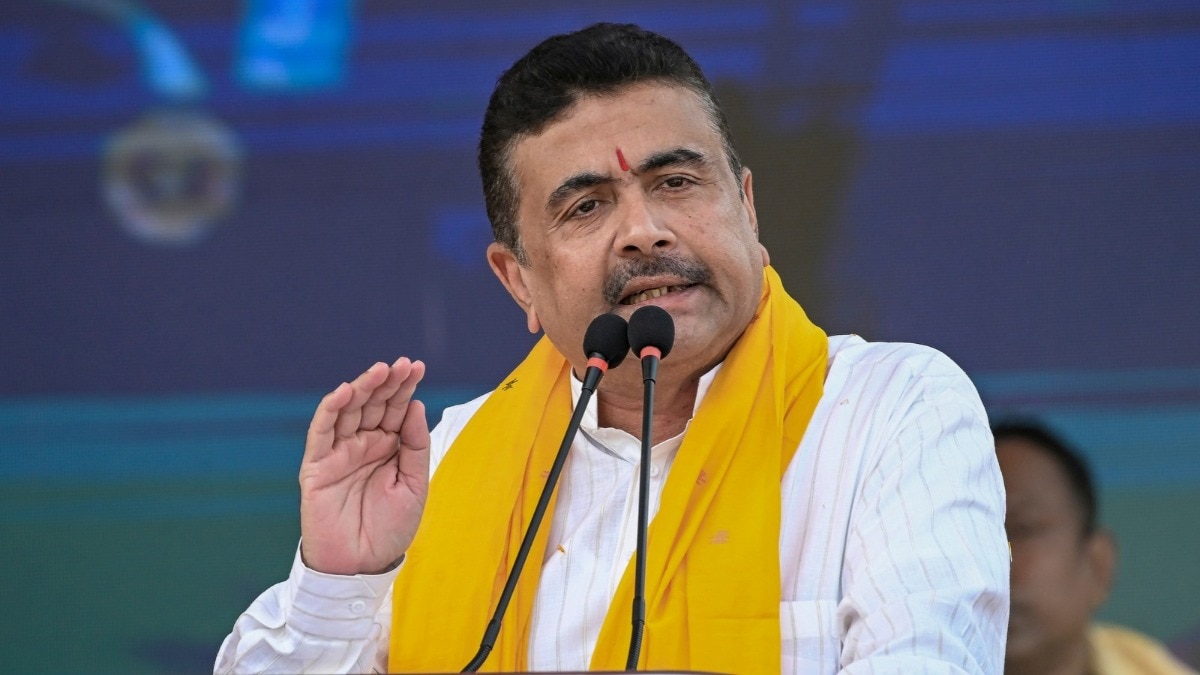
The subsequent Trinamool Congress government largely adopted a hands-off approach, leaving private investors to negotiate directly with landowners.Under BJP rule, chief minister Suvendu Adhikari has indicated that his government intends to move away from both approaches. Unveiling the industrial promotion policy, he announced that the administration would arrange land for industries through direct purchases from farmers and a land-pooling mechanism. “We will not sit idle and ask the industrialists to purchase land for their units.
Nor will we acquire land from farmers at gunpoint,” Adhikari said. “We will set up a land bank by purchasing land directly from farmers and also through a land-pooling system.”Under the proposed land-pooling arrangement, landowners would voluntarily contribute their plots to the government, which would develop the land and return a portion to the original owners. Adhikari said the government would give back 25-30 per cent of the developed land to landowners, besides ensuring that they received a certain percentage of shares in the industries established on their land.“We will give 25-30 per cent of the land back to landowners after developing it in line with the policies adopted by Uttar Pradesh, Haryana and Andhra Pradesh.
In addition, we will ensure that those giving up land get a certain percentage of shares in the industries developed on their land,” he said.However, these assurances are yet to find a detailed expression in the industrial promotion policy itself. The document does refer to an inventory of mapped industrial land and provides for allotment through published criteria and online applications.
It also mentions priority for brownfield sites and industrial parks located along notified industrial corridors.Yet it does not specify the extent of land currently available with the government, how much additional land it intends to acquire or how it will assemble contiguous parcels for projects requiring hundreds of acres. Nor does it provide a timeline for operationalising the proposed land bank.This is particularly relevant given the sectors the government wants to promote.
Semiconductors and electronics, green hydrogen, electric vehicles and batteries, defence, petrochemicals, automobile manufacturing and critical minerals processing figure among the policy's thrust sectors. Several of these industries require substantial land, reliable infrastructure and uninterrupted access to utilities.Officials have indicated that the details of the government's two-pronged approach to land mobilisation will be incorporated in a comprehensive land policy, which is expected to be published separately.
Senior bureaucrats have also acknowledged that creating a land bank through land pooling will take time.For investors requiring land urgently, the government proposes to purchase plots directly from farmers and subsequently allot them to industries. But this mechanism comes with its own limitations.
Industrial projects often require large, contiguous parcels, something that direct purchases cannot necessarily guarantee if even a handful of landowners within a proposed project area refuse to sell.The administration is, therefore, expected to offer attractive compensation to persuade landowners. Adhikari referred to the 2013 land acquisition legislation while explaining the proposed direct purchase mechanism.
The legislation, formally known as the Right to Fair Compensation and Transparency in Land Acquisition, Rehabilitation and Resettlement Act, provides for compensation of up to four times the market value in rural areas, besides provisions relating to rehabilitation and resettlement.The chief minister has also sought to address the problem of existing industrial land remaining underutilised. He said the government was examining cases where industrial plots leased out years ago had remained unused.“We have asked investors who have left industrial plots unused for years to start work on the plots within three months or return the land to the government,” the chief minister said. “The government will repay the amount they paid to the government for the land.”Reclaiming such plots could potentially increase the availability of industrial land.
However, the policy does not quantify the extent of unused land that could be recovered or indicate how quickly it could be brought back into the industrial land inventory. In contrast, the financial incentives on offer have been laid out with considerable precision.For regular manufacturing units, the overall assistance ceiling is 100 per cent of eligible fixed capital investment.
This rises to 110 per cent for units in thrust sectors or priority areas, and 120 per cent for thrust-sector units located in priority areas. The assistance can be extended for up to 10 years from the commencement of production or until the applicable ceiling is reached, whichever is earlier.The package includes reimbursement of state GST (goods and services tax), electricity duty, stamp duty and registration fees, interest subsidies for eligible MSMEs, research and development assistance, technology upgradation support and reimbursement of employers' provident fund contributions.The policy also offers additional incentives for employment generation.
Women-owned and transgender-owned MSMEs will receive 100 per cent reimbursement of the employer's EPF (provident fund) contribution for 10 years while regular MSMEs will receive 50 per cent reimbursement. Large units employing at least 200 people are eligible for 50 per cent reimbursement for five years, with enhanced assistance in priority areas.For Strategic and Mega Projects, the government has promised tailor-made benefits.
A project can qualify by meeting at least two of three criteria: investment of more than Rs 500 crore in eligible fixed capital investment if the investor sources the land independently or more than Rs 1,000 crore if the land is allotted by the state; investment in specified strategic sectors; and generation of at least 50 direct jobs for every acre of project land.The government has also promised infrastructure assistance for projects involving eligible investment exceeding Rs 1,000 crore, including support for drainage, water supply, effluent treatment, testing laboratories and approach roads.The policy's administrative framework is equally detailed. Applications will be processed through the Single Window Portal, with a Certificate of Intent to be issued within 30 days.
Investors will subsequently receive a Certificate of Eligibility after production begins, and claims will be processed quarterly, with payments promised within 30 days of sanction. The government has also promised designated administrative officers for large projects, with secretary-level facilitation for investments exceeding Rs 2,500 crore.The contrast is evident.
While the policy provides investors with a defined roadmap for accessing incentives, the process of securing the land on which their investments will materialise remains dependent on a separate framework that is yet to be announced.Adhikari’s proposed combination of direct purchase and land pooling could potentially offer a way out of Bengal's longstanding land acquisition dilemma. But the success of this approach will depend on the government's ability to persuade landowners, assemble large parcels and make them available within a reasonable timeframe.For now, Bengal has laid out an attractive financial proposition for industries willing to invest in the state.
Whether that proposition translates into factories, manufacturing facilities and new industrial clusters will depend as much on the availability of land as on the incentives being promised.Subscribe to India Today Magazine- Ends