


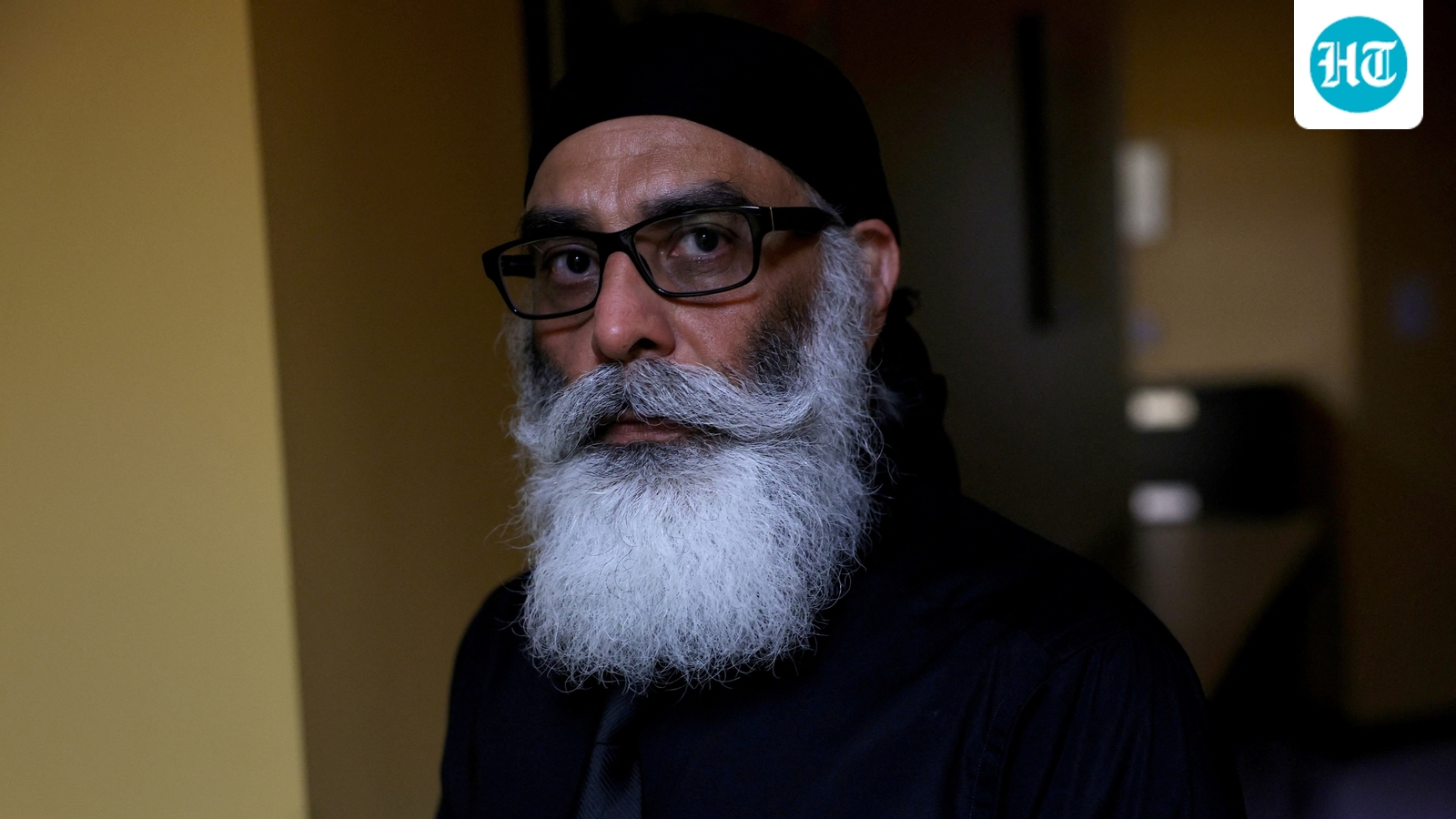
India on Tuesday rejected the case filed by Khalistani separatist Gurpatwant Singh Pannun in the US against National Security Adviser Ajit Doval and the government, describing such moves as “fabricated and malicious attacks” that will not stand the test of legal processes.External affairs ministry spokesperson Randhir Jaiswal dismissed the case filed by Pannun. (REUTERS)At the same time, the Indian side has officially taken up the “frivolous nature” of Pannun’s lawsuit with US authorities, people familiar with the matter said on condition of anonymity. The people noted that the NSA enjoys diplomatic immunity and said the legal moves by Pannun are aimed at keeping the Khalistan issue in the limelight and have no legal merit, they said.External affairs ministry spokesperson Randhir Jaiswal dismissed the case filed by Pannun when he was asked about the matter at a regular media briefing.
He also made it clear that all official communications related to the issue will have to be routed through India’s law ministry.Also Read | ‘Fake alert’: MEA debunks fake post attributing remarks on Russia-Ukraine war to Jaishankar“We reject the fabricated and malicious attacks on our high officials, as also we reject the frivolous lawsuits,” he said. “Requests for serving of judicial documents in India can only be routed through India’s designated central authority, that is the ministry of law and justice.”The US state department transmitted a civil lawsuit filed by Pannun against the Indian government to the Indian embassy in Washington through diplomatic channels, while a federal court in New York separately cleared the way for the separatist to serve summonses on Doval and former Research and Analysis Wing (RAW) chief Samant Goel through Indian courts.The two developments mark separate steps in the process of formally notifying the defendants in the civil suit, which alleges that Indian officials conspired to assassinate Pannun at his New York home in 2023. However, neither amounts to a judicial finding on the allegations, and the latest court order does not establish any liability on the part of the Indian government or the two officials.In a letter to the US District Court for the Southern District of New York dated October 20, the state department stated that it transmitted the summons, complaint and notice of suit to the Indian embassy under cover of a diplomatic note signed on September 30 and delivered on October 9.Also Read | No bail for two linked to Khalistan terror moduleThe department said the transmission was undertaken in discharge of its statutory responsibilities under the US Foreign Sovereign Immunities Act (FSIA), while making clear it was not taking any position on the merits of the case or whether all legal requirements for service had been fulfilled.The people cited above said this was not the proper procedure for serving such documents.
They also noted that such matters come under the purview of The Hague Convention, especially the Service Convention of 1965 that governs the cross-border service of judicial documents.India has for long taken up the activities of Pannun and other Khalistani separatists based in North America with the US side, including the threats issued by them against Indian diplomats and missions. The Indian side has also informed the US side of the frivolous nature of legal cases filed by the separatists.The diplomatic note from the US asked the Indian government to forward the documents to the appropriate authority and take steps to avoid a default judgment.
It referred to a 60-day period within which a defendant is required to file an answer or other responsive pleading, warning that failure could expose it to a judgment without an opportunity to present its arguments or evidence.The state department’s transmission, however, should not be read as an endorsement of Pannun’s allegations or as a determination of the Indian government’s liability. The department expressly clarified its action didn’t reflect a position on whether service had been properly effected, the status or character of the defendants, or the merits of the claims and possible defences.Separately, in an order dated November 9, US district judge Katherine Polk Failla allowed Pannun to send summonses for Doval and Goel to designated district courts in Delhi, which would be requested to serve them as if they were summonses issued by Indian courts.The ruling followed Pannun’s difficulties in serving Doval personally during his visits to the US.
According to court filings, he made three attempts to serve the summons to the NSA, but security personnel prevented process servers from doing so. Pannun claimed his attempts to route the documents through India’s law ministry, also failed.The law ministry returned the documents with a brief communication stating that the summons did not fall within relevant categories.
Pannun argued this amounted to India’s determination that the Hague Convention didn’t apply, freeing him to seek alternative methods of service. The US judge rejected this contention and said the Indian authority’s response was too ambiguous to establish it had made a legal determination on The Hague Convention’s applicability.Instead, the court held that the Hague Convention applied to civil proceedings but permitted service through Indian courts under Article 19, which preserves domestic legal procedures allowing more permissive methods of transmitting foreign judicial documents.The judge relied on Section 29(c) of India’s Code of Civil Procedure, which allows summonses issued by notified foreign civil courts to be sent to Indian courts and served as if they had been issued by those courts.
A January 12, 2009 government notification extended this provision to civil courts in countries party to the Hague Convention.However, the US court left open the possibility of revisiting this conclusion if the Indian government or an Indian court expresses a contrary view. The judge identified Patiala House, Dwarka and Tis Hazari court complexes in Delhi as possible receiving courts and held that summonses can be mailed to them for service on Doval and Goel.The process, however, is not complete.
Pannun has been directed to submit by November 30 a proposed packet containing the summonses, a draft order detailing the proposed procedure, relevant Indian legal provisions and the documents returned by India’s law ministry. Only after examining and approving these materials will the US court direct its clerk to transmit the packet to the designated Indian courts.The November 9 order is confined to Doval and Goel.
It does not grant the same relief to other defendants, including the Indian government, former RAW officer Vikash Yadav and Nikhil Gupta. Nor does it determine whether the US court has jurisdiction to adjudicate the substantive claims or what defences, including any immunity-related objections, may be available to the defendants.Pannun, who has been designated a terrorist by India, filed the civil suit in 2024 against the Indian government and several individuals, seeking to hold them liable for an alleged conspiracy to kill him.
India has denied state involvement in the alleged plot.The civil proceedings run parallel to a criminal prosecution in the US arising from the alleged murder-for-hire conspiracy. US prosecutors have accused Nikhil Gupta of working with Vikash Yadav to arrange Pannun’s assassination.
Gupta pleaded guilty in February. Doval and Goel have not been charged in that criminal case.