


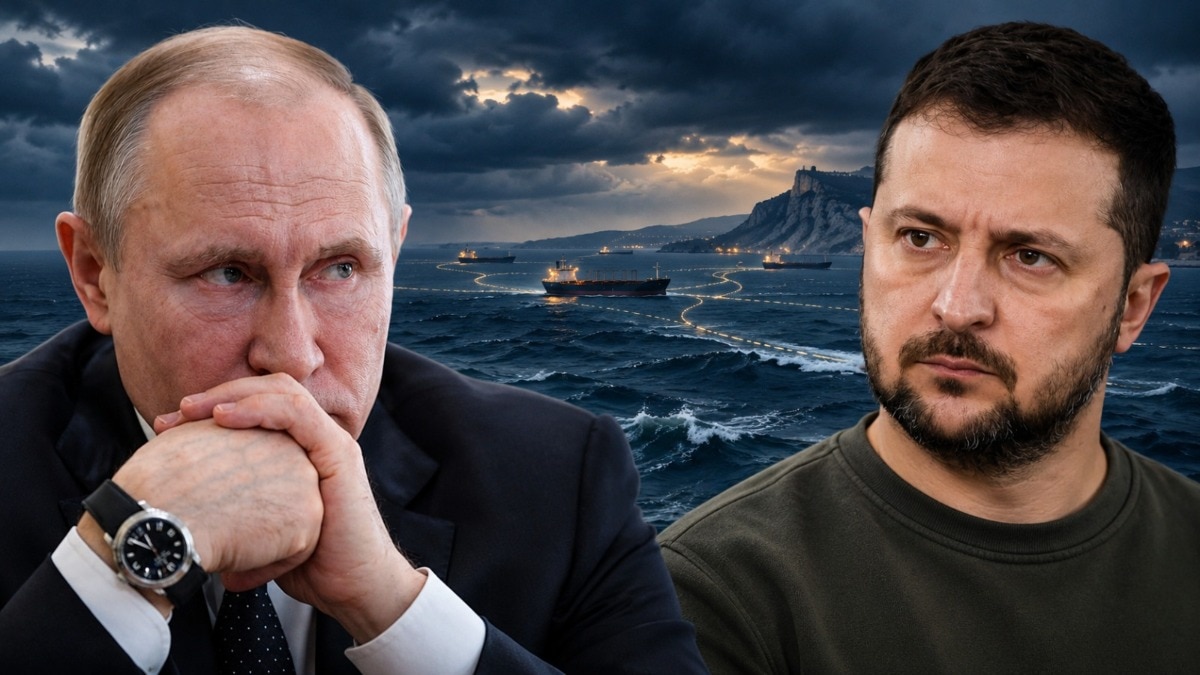
India has revealed details of New Delhi's diplomatic efforts to end the Russia-Ukraine war, saying talks with both countries and other stakeholders are taking place "at the highest level". The disclosure came on Tuesday even as Russia and Ukraine began peace talks in Abu Dhabi that are being mediated by the US.
India has been pushing for a truce covering Black Sea shipping, grain and energy exports, and "a possible non-attack arrangement." Is India playing an active role in the Russia-Ukraine peace process?At a press briefing on Tuesday, Ministry of External Affairs (MEA) spokesperson Randhir Jaiswal said New Delhi was pursuing diplomatic initiatives involving both Moscow and Kyiv, and other "interested parties"."Regarding Ukraine, I have told you in detail about the kind of initiatives being taken from our side. We are in talks with both countries, and with others connected to this matter, and these talks are happening at the highest level," Jaiswal said.His statement came a day after Prime Minister Narendra Modi spoke to Ukrainian President Volodymyr Zelenskyy and External Affairs Minister S Jaishankar held talks with his Russian counterpart, Sergey Lavrov.
The developments on this front have come thick and fast. On Monday (November 9), Zelenskyy sought India's assistance in establishing Black Sea food corridors.
On Tuesday, US, Russian and Ukrainian officials resumed negotiations in the UAE after nearly nine months. Meanwhile, reports over the past month have suggested that India had proposed a three-part truce, which Ukraine described as the most comprehensive among several proposals received.Ukrainian outlet Kyiv Independent reported on Monday that President Zelenskyy had sought India's assistance in ending the war ahead of US-brokered peace talks with Russia in Abu Dhabi.
Zelenskyy said India was ready to help mediate the establishment of Black Sea food corridors and urged New Delhi to use its diplomatic ties with other world leaders to advance peace efforts. These developments now offer hope that New Delhi's diplomatic efforts could help build momentum towards a wider peace settlement between Ukraine and Russia.Russia's full-scale invasion of eastern Ukraine began on February 24, 2022, triggering the war.
It has since killed at least 17,968 civilians, according to the UN's latest verified figures, while around 9.5 million Ukrainians remain displaced, including 5.9 million refugees abroad and nearly 3.6 million within the country, according to UNHCR and IOM.WHAT INDIA SAID ABOUT ITS RUSSIA-UKRAINE PEACE INITIATIVEDuring Tuesday's briefing, Randhir Jaiswal confirmed that India had conveyed concrete proposals to Russia and Ukraine."In recent months, the Prime Minister has expressed and articulated that endless wars must now give way to an end of war," he said."Keeping with this idea of bringing peace to the region, India has engaged with both Russia and Ukraine, and we have conveyed certain ideas to them," Jaiswal added.He said the ideas included the safety of commercial shipping in the Black Sea, addressing immediate concerns regarding energy and grain exports, and possible non-attack arrangements."On the issue of food corridor, we have exchanged ideas with both sides and India remains in touch with both sides as well as with interested parties to contribute towards return of peace to the region," Jaiswal added.The remarks suggest that New Delhi's involvement has moved beyond appeals for dialogue to discussing specific measures that could reduce hostilities. This comes even as deep disagreements over territorial concessions and Ukraine's future security continue to complicate the outcomes of US-brokered peace talks between Moscow and Kyiv in Abu Dhabi.WHAT IS INDIA'S THREE-PART TRUCE PLAN?India's diplomatic efforts did not begin this week.
On October 7, the Hindustan Times, citing people familiar with the discussions, reported that New Delhi had proposed a three-part truce between Russia and Ukraine.The plan, according to the report, sought to halt attacks on energy facilities and other critical infrastructure, stop strikes on commercial vessels in the Black Sea, and keep grain and energy supplies moving through regional ports.Foreign minister Jaishankar reportedly conveyed the proposal during his September 3 visit to Kyiv, where he met Zelenskyy and Ukrainian Foreign Minister Andrii Sybiha.On October 2, Sybiha acknowledged receiving ceasefire proposals from India, Egypt, Turkey and the United States."The most comprehensive is India's proposal," Sybiha said.Russian President Vladimir Putin also acknowledged Modi's diplomatic efforts in early October, saying the Indian Prime Minister had "excellent ideas" aimed at finding mutually acceptable solutions.New Delhi's proposal also has a direct link to Indian interests. Attacks on merchant vessels have endangered Indian sailors and disrupted shipments of oil, grain and other essential commodities.
These disruptions have pushed up shipping costs, put pressure on food and fuel prices, and threatened millions of vulnerable people, particularly in countries of the Global South that depend heavily on imports.Five Indian seafarers were killed and two remained missing in Black Sea shipping attacks linked to the Russia-Ukraine war, according to MEA spokesperson Randhir Jaiswal's casualty figures released on November 3.According to commodity intelligence firm Kpler, India imported around 1.97 million barrels of Russian crude per day in October, accounting for roughly 35% of its total oil imports.MODI'S CALL WITH ZELENSKYY AND JAISHANKAR'S TALKS WITH LAVROVThe intensification of the latest diplomatic activity on the Russia-Ukraine peace front coincides with negotiations in Abu Dhabi, the capital of the UAE, and India's top leadership speaking to the leaders of both European nations.On Monday, PM Modi spoke to Zelenskyy about the conflict, its humanitarian consequences and ongoing peace efforts. Zelenskyy subsequently said Ukraine wanted India to use its diplomatic relationships to help bring the war to an end."It is important that India identify what steps it can take and what dialogue it can pursue with other leaders to help bring the war to an end," Zelenskyy said.He identified food security as one possible area of cooperation. "India is ready to mediate in establishing food corridors, and we are counting on these efforts to continue," Zelenskyy said, the Kyiv Independent reported.Meanwhile, Jaishankar spoke to his Russian counterpart, Lavrov, about the war and ongoing diplomatic initiatives.New Delhi-based newspaper, the Business Standard, reported on November 9 that India had been discussing maritime security and the disruption of essential commodity supplies with both sides for months.At the Kautilya Economic Conclave in early October, Jaishankar had explained how disruptions to fuel, food, fertilisers and finance were disproportionately affecting the Global South.WHAT IS HAPPENING AT THE ABU DHABI PEACE TALKS?Representatives from the US, Russia and Ukraine began negotiations in Abu Dhabi on Tuesday (November 10), with discussions scheduled to continue on Wednesday (November 11).These are the first US-brokered trilateral talks after negotiations broke down in February.The American delegation includes Donald Trump's envoys Steve Witkoff and Jared Kushner.
The negotiations cover ending the war, de-escalation, humanitarian measures and post-war security arrangements, according to Reuters.However, fundamental disagreements have remained between the warring parties.Russia wants territorial concessions and restrictions on Ukraine's future military capabilities. Kyiv has rejected surrendering territory and wants credible security guarantees against another Russian attack.So, to sum up, New Delhi might not be at the trilateral negotiating table in Abu Dhabi.
Nor have Moscow or Kyiv accepted India's three-point proposal as a ceasefire arrangement. What India has confirmed is sustained engagement with both countries, specific proposals on maritime and economic security, and conversations at the highest diplomatic level.Its relationships with Moscow and Kyiv and their top leadership with that of New Delhi give it channels to both sides.
Even as India's stakes in international trade and energy supplies provide it with a practical reason to pursue de-escalation, it has always advocated for dialogue and diplomacy. PM Modi has underlined that time and again.- Ends