


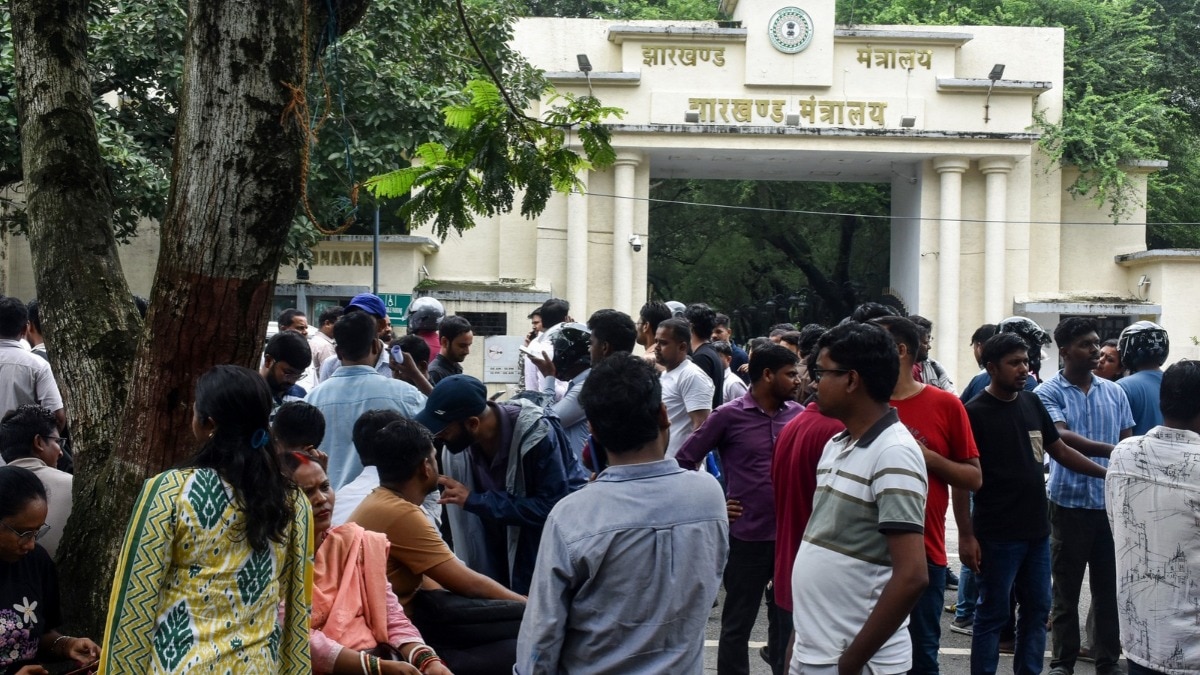
It was a double Diwali for 1,932 candidates appointed through the Jharkhand Staff Selection Commission's Combined Graduate Level (JSSC-CGL) examination when the Jharkhand High Court, on November 6, brought an end to months of uncertainty.Justice Deepak Roshan set aside the state government's August 18 notification cancelling the examination and the appointments made under advertisement no. 10/2023.
The court directed that the appointees be treated as continuing in service without interruption and that they should not lose their salary or other service benefits on account of the cancellation.The relief, however, comes with an important qualification. The court has allowed the investigation into alleged irregularities to continue and made it clear that the appointments would remain subject to the final outcome of criminal cases.
Candidates against whom evidence of malpractice is established could still face individual action. The protection granted to the appointees is not a blanket certificate of innocence for everyone selected through the examination.The background lies in the events of the summer.
On August 18, following weeks of protests by job aspirants in Ranchi, the state government had cancelled 22 recruitment examinations and processes. The list included the JSSC-CGL examination, the 11th to 13th Jharkhand Public Service Commission civil services examinations, the Child Development Project Officer (CDPO) recruitment and the Food Safety Officer selection.
Six other examinations were suspended pending investigation while 17 earlier recruitment processes were referred for scrutiny. The government's stated objective was to restore confidence in the recruitment system amidst allegations of paper leaks and other irregularities.The difficulty was that some of these recruitment processes had already reached the appointment stage.
Through the JSSC-CGL examination, 1,932 candidates had been appointed. Another 64 candidates were appointed through the CDPO recruitment while appointments had also been made through the JPSC civil services and Food Safety Officer examinations.
The August 18 notification had effectively placed the careers of people already working in government departments in jeopardy.The high court intervened by staying the cancellation of appointments arising from several of these examinations. The appointees continued in service under interim judicial protection while the petitions challenging the government's decision were heard.
On October 8, the court reserved its verdict.The JSSC-CGL examination itself has had a turbulent history. Formally known as the Jharkhand General Graduate Level Combined Competitive Examination 2023, it was held on September 21 and 22, 2024, after an earlier examination attempt in January had been cancelled following a paper-leak controversy.
The September examination also attracted allegations of malpractice and litigation.On December 3, 2025, the Jharkhand High Court lifted the stay on publication of the results, rejected the demand for a Central Bureau of Investigation (CBI) probe and directed that the selection process proceed. The final merit list was published on December 8, and appointment letters were distributed on December 30.Less than eight months after the appointments, the state government cancelled the examination and the recruitment process.
The high court's November 6 ruling has drawn a distinction between evidence of irregularities involving individuals and proof that the entire examination was compromised.According to reports, the state failed to place concrete, fact-based material before the court, establishing that the whole selection process had been vitiated by systemic malpractice. The investigation was still incomplete and the government had not adequately explained why candidates allegedly involved in wrongdoing could not be identified and proceeded against separately.The court also questioned the basis on which the government had decided to cancel other examinations.
The cabinet note placed before it, the court observed, did not clearly establish the concrete facts and evidence on which the decision to cancel 21 other examinations had been taken.The court also underscored the need to follow due process before terminating the services of appointed candidates. The government could not simply end the services of an entire group without examining individual cases and following the prescribed legal procedure.
The principles of natural justice, including giving affected employees an opportunity to be heard, could not be set aside.This is the central legal distinction in the ruling. Allegations against some candidates cannot automatically taint everyone who cleared the examination.
Nor can an administration cancel all appointments merely because an investigation is pending. The state must establish the grounds for such action and distinguish those against whom evidence exists from those whose selection has not been shown to be compromised.That does not mean the examination was free of malpractice.
The investigation has resulted in arrests. By August 10, the CID had arrested 20 people in the wider inquiry into alleged irregularities in recruitment examinations, including former JPSC chairman L.
Khiangte. The probe also led to the arrest of four successful JSSC-CGL candidates on August 28.
These are developments in the wider recruitment investigation and the separate CGL probe; the two arrest figures should not be conflated.The high court had also taken steps to ensure that the investigation did not become a source of indiscriminate harassment. On September 18, Justice Deepak Roshan appointed retired high court judge Gautam Kumar Choudhary to monitor complaints of harassment by candidates during the SIT (special investigation team) probe.
Retired IPS officer R.K. Mallick was appointed nodal officer to assist him.
The arrangement was intended to protect candidates selected fairly without interfering with the agency's freedom to investigate.The CGL controversy is part of a wider crisis in Jharkhand's recruitment system. The protests that preceded the government's August decision were triggered in large part by allegations surrounding the 14th JPSC Combined Civil Services Preliminary Examination, held in April 2026.
The controversy widened into demands for a CBI investigation and scrutiny of several other recruitment processes.On August 24, the Supreme Court issued notice to the Centre, the Jharkhand government, the JPSC and the CBI on a petition seeking an independent, time-bound investigation into alleged irregularities in the examination. It has not, however, ordered a CBI takeover.The JPSC itself was badly shaken by the controversy.
Its chairman, Khiangte, resigned on July 22, and all three serving members resigned in August amidst the protests and the CID investigation. Khiangte was subsequently arrested in connection with the wider inquiry.The November 6 verdict, therefore, resolves one part of a much larger recruitment crisis.
It protects candidates against whom the government failed to establish individual wrongdoing and rejects the idea that an entire selection process can be annulled merely because allegations exist or an investigation remains unfinished. At the same time, it leaves the investigating agency free to pursue those against whom evidence emerges.For the 1,932 CGL appointees, the immediate uncertainty has lifted.
Their service is to be treated as continuous, and the cancellation cannot be used to deny them the salary and other benefits flowing from their appointments. But for thousands of aspirants awaiting fresh examinations, the larger problem remains unresolved.
Recruitment processes have been cancelled or suspended, the credibility of the state's examination institutions has been damaged, and the investigation into alleged malpractice is still underway.The court has drawn a line between executive action and due process. The state must now do what a blanket cancellation could not: identify those responsible for malpractice, protect candidates against whom there is no evidence, complete the investigations and rebuild a recruitment system that aspirants can trust.Subscribe to India Today Magazine- Ends