


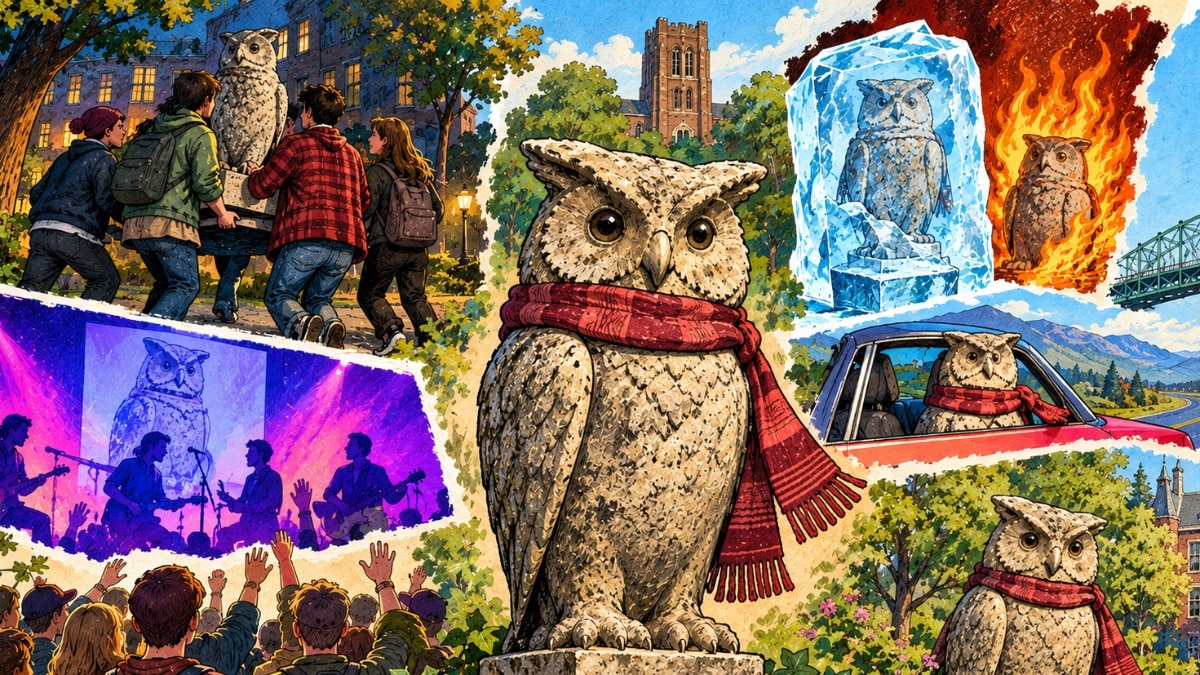
Forget expensive trophies. At Reed College in the US, students have spent generations fighting over a concrete owl that has been stolen, frozen in ice, set on fire and even featured in a music video.A stolen concrete owl became a campus legend at this US college (AI genereated image) Imagine a garden ornament becoming the most sought-after prize on campus.
At Reed College in Portland, Oregon, this unlikely celebrity is the Doyle Owl, the college’s unofficial mascot and the star of a tradition fuelled by student mischief.According to Reed College’s official website, the story began nearly a century ago when a group of students stole a large concrete owl from a neighbour’s yard and brought it back to campus.But the bird did not stay put for long. Another group of students soon took it, setting off a tradition of stealing, displaying, and defending the statue that would continue across generations.Named after the residence hall where the original students lived, the Doyle Owl quickly became much more than a garden ornament.
It became a symbol of campus pride, with possession of the bird bringing its own bragging rights. FROM CAMPUS PRANK TO CROSS-COUNTRY ADVENTUREThe owl’s adventures have been anything but ordinary.
Reed College reports the statue has been encased in ice, set on fire, suspended from bridges, and transported across the United States.It even made an appearance in a music video by British band Tears for Fears. In 1996–97, students took the owl on a road trip to California and visited Apple co-founder Steve Jobs at his home.
Jobs came to the door, admired their unusual companion, and posed for a photograph with it. Not every campus mascot gets a celebrity encounter, according to Reed magazine.A LEGACY CARVED IN CONCRETEThe Doyle Owl’s appeal lies in its wonderfully absurd history.
Generations of Reed students have kept the tradition alive through elaborate thefts, surprise appearances, and spirited attempts to reclaim the statue.As Reed College’s own account suggests, the owl has become a thread connecting students across generations. After all, why settle for an ordinary campus souvenir when you can be part of a century-old battle over a concrete bird?- Ends