


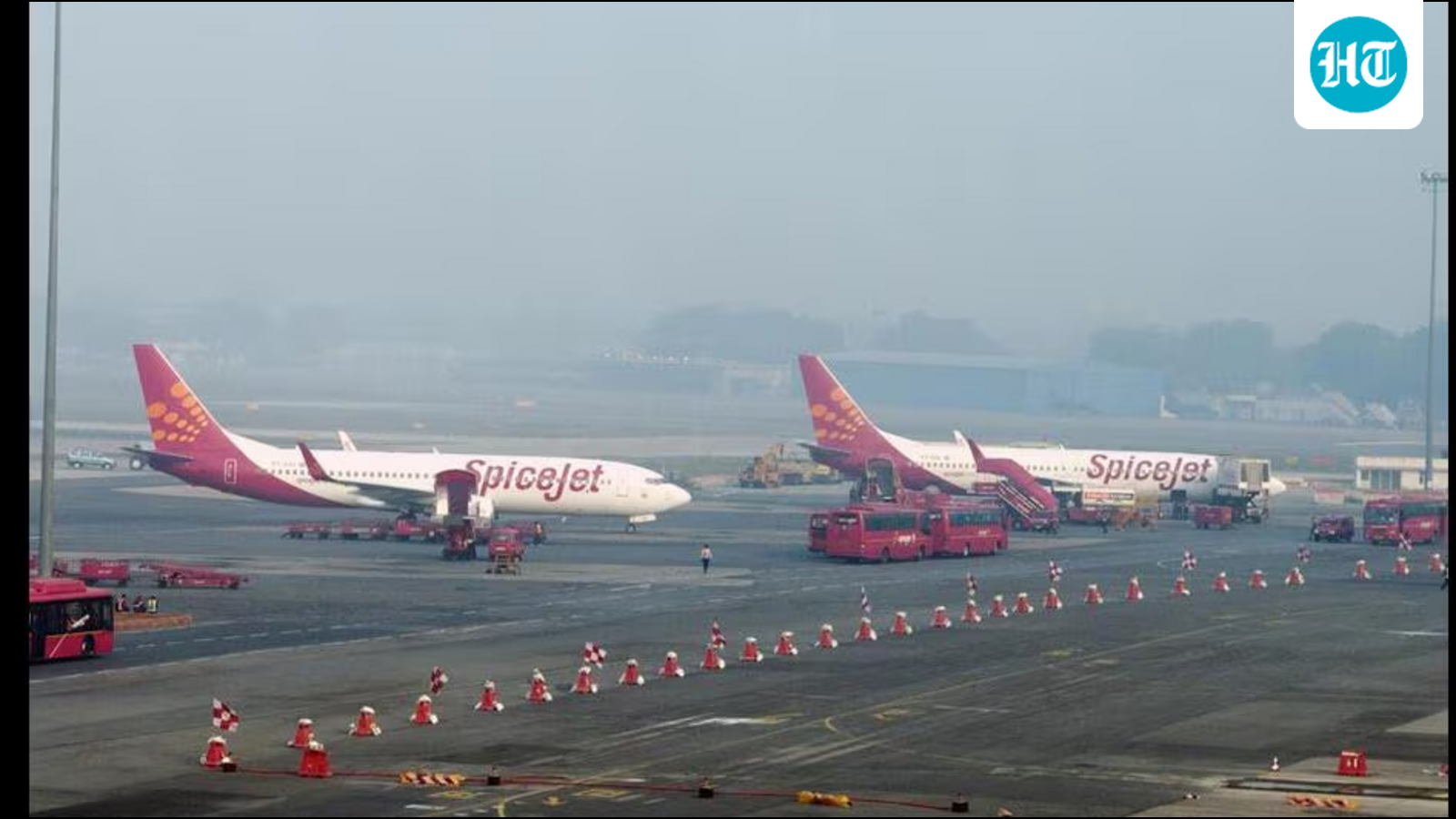
When a Bengaluru-bound passenger arrived at Delhi airport for a SpiceJet flight on November 5, she discovered at the last moment that it had been cancelled. In a post on X, the passenger quoted a help desk person blaming fewer aircraft and a financial crisis for the cancellation.On November 12, Dubai Airports stopped cash-strapped SpiceJet’s check-in services. (Representative Photo)On November 11, another X user wrote that her father-in-law’s flight from Kolkata to Mumbai was cancelled on November 6 with no information via email or WhatsApp.
The user questioned who would hold SpiceJet accountable and said last-minute flight cancellations, prolonged delays, refund issues, and complaints of poor treatment at airports were causing serious distress.Social media platforms have been flooded with posts from aggrieved passengers, complaining about last-minute cancellations, lack of information, and difficulties in securing refunds.On November 12 (Thursday), Dubai Airports, which owns and operates Dubai International Airport and Al Maktoum International Airport, stopped cash-strapped SpiceJet’s check-in services over non-payment of around 14 million UAE dirhams (approximately ₹35.85 crore), even as the airline said it was working to resolve the issue without specifying how.The action forced the airline to cancel four flights to Amritsar, Jaipur, Mumbai and Delhi on November 12. Other departures from Dubai were cancelled until the issue was resolved.A SpiceJet spokesperson said the airline is resolving the matter with the concerned authorities. “We have adequate bank guarantee cover in place and are working to ensure that the issue is sorted out at the earliest.”In a November 13 (Friday) communication, the airline informed BSE Limited about a meeting of the Board of Directors of the company on Wednesday (November 18) to consider and approve the proposal to raise fresh capital, including by issuing equity shares, preference shares, debt securities and/or other permissible instruments.Operational difficulties, shrunk fleet SpiceJet has been facing mounting financial and operational difficulties.
Its fleet has shrunk to around 12 aircraft, with only nine operational, Mint reported on November 12. The airline’s domestic market share fell to 0.6% in September, down from 3.9% in January.
It flew around 73,000 domestic passengers in September, compared with nearly 592,000 in January.Data from the Directorate General of Civil Aviation (DGCA) showed that SpiceJet cancelled 20.29% of its scheduled flights in September. Its on-time performance at major airports fell to 16.6%.
The carrier has struggled to clear supplier dues. ₹63.03 crore owed to small businesses remained unpaid beyond the stipulated 45-day period during April-September 2026, according to regulatory filings.In the fiscal year that ended March 2026, the Ajay Singh-promoted SpiceJet flew 6.24 million passengers (17,352 passengers daily on average), including international, through 46,063 departures (an average of 126.2 daily). It had a market share of 4.7%, as per provisional DGCA data.From April to September 2026, departures dipped to 13,422, including international (74 daily on average).
The number of passengers declined to 1.8 million, including international (2,043.87 passengers daily on average), according to DGCA data.Neither the Civil Aviation Ministry nor the aviation regulator DGCA has announced the weekly flights each domestic carrier will operate in the ongoing winter schedule (October 25-March 2027).A back-of-the-envelope calculation suggests that SpiceJet filed around 550 arrivals and departures weekly (around 80 flights per day) under its winter schedule. But the aircraft fleet tracking website planespotter.net said the airline had only 11 aircraft (including two regional jets) in its fleet as of November 12, and 38 of them were on the ground.Considering that one aircraft can operate an average of seven domestic flights daily, an airline roughly requires a fleet of 11-12 aircraft with some in buffer in case of a glitch.Outstanding dues People aware of the matter said the airline has failed to clear outstanding dues to vendors, including aircraft and engine lessors, jet fuel suppliers, and airport operators, amid a cash crunch.
They added that the airline has failed to pay salaries to a majority of its employees for months.Oil companies and air operators have put the struggling carrier on a pay-as-you-fly mode. As long as payments are not made, flights are not allowed to depart, resulting in delays and sometimes in last-minute cancellations.The airline is struggling with an inadequate operational fleet, financial constraints, and mounting payment obligations.
These factors appear to have affected its ability to operate flights as scheduled, resulting in cancelled flights, prolonged delays, uncertainty, and, in some cases, difficulties in securing refunds.Rights and protections The 2019 Ministry of Civil Aviation Passenger Charter, which outlines key rights and protections for air travellers and is enforced through DGCA Civil Aviation Requirements, mandates that airlines must inform passengers about a flight cancellation at least two weeks before the scheduled departure time. Airlines must arrange an alternate flight or refund, based on what the customer accepts.The compensation includes free meals and a monetary component ranging from ₹5,000-10,000 depending on scenarios, including the nature of delay, the flight’s block time, or the booked one-way basic fare plus airline fuel charge, whichever is lower.If a flight is delayed, passengers who have checked in on time are entitled to free meals and refreshments, depending on the waiting time.For domestic flights expected to be delayed by over six hours, the airline must offer an alternative flight within six hours or a full refund.
If the total delay exceeds 24 hours, or six hours for flights scheduled to depart between 8 pm and 3 am, the airline must provide hotel accommodation, including transfers, where applicable.If an airline fails to provide the prescribed compensation or facilities, passengers can first approach the airline. They can also lodge a complaint through the government’s AirSewa portal or app.
If they are dissatisfied with the resolution, they can approach the appropriate statutory body or court.Airlines are exempt from paying compensation when cancellations or delays result from extraordinary circumstances beyond their control, such as adverse weather, security risks, certain Air Traffic Control restrictions, or other qualifying force majeure events.