


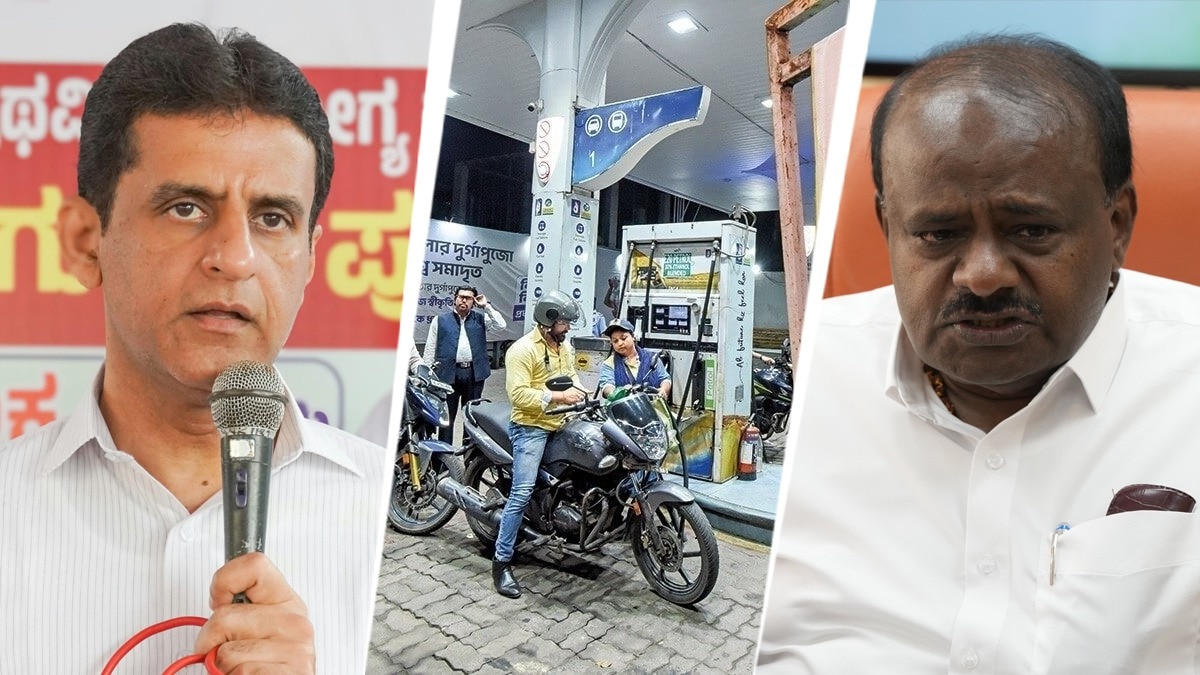
The Karnataka government stands by its findings that petrol samples contained more than 20 per cent ethanol, state minister Rizwan Arshad said on Monday, rejecting oil companies’ explanation that the issue was limited to a few outlets.
Arshad argued that blending was an automated, controlled process and questioned how excess ethanol could be confined to individual outlets. His remarks are the latest in a row that began with the state government’s fuel-testing findings on Friday.
Congress MP Rahul Gandhi cited laboratory results the following day to accuse oil companies of exceeding the prescribed blending limit. Arshad has since questioned whether higher blending was being introduced unofficially.
The state government said on November 6 that tests had detected ethanol concentrations above 20 per cent in several petrol samples, raising concerns about potential financial losses to motorists.
It had collected 63 samples across Karnataka from companies including Indian Oil, Hindustan Petroleum and Shell. The samples were initially sent to the companies’ laboratories, along with questions seeking details of their ethanol content.
On Saturday, Rahul Gandhi cited samples collected from seven districts to question both public sector and private oil companies. The Leader of Opposition in Lok Sabha claimed that 11 of 14 samples tested at an accredited laboratory contained more than 20 per cent ethanol.
Arshad took the allegations further on Sunday, sharing a video of Union Minister HD Kumaraswamy saying the Centre was planning to increase ethanol blending from 20 per cent to 30 per cent. Kumaraswamy had made the remarks at a press conference in Bengaluru.
Arshad questioned whether the remarks pointed to a larger plan to increase ethanol blending unofficially. Tagging Bharat Petroleum, Hindustan Petroleum and Indian Oil on social media, he pressed for answers regarding the higher readings.
While Kumaraswamy’s remarks referred to future plans for higher blending, they do not establish that oil companies have implemented a 30 per cent blend prematurely, leaving the dispute over current fuel testing results ongoing.