


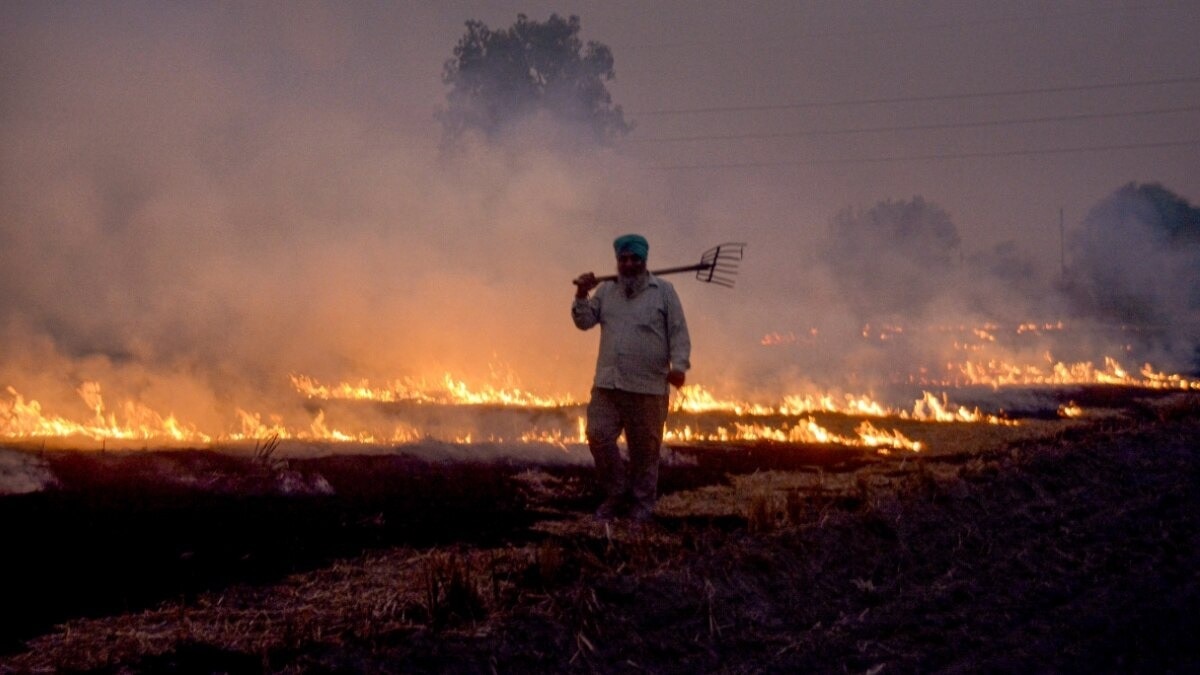
The air quality commission reviewed stubble-control measures in Amritsar and Tarn Taran. Rising farm fires have prompted stricter oversight and a push for productive residue use.A farmer burns paddy stubble in a field, at a village in Patiala, Punjab.
Chandigarh,Oct 24, 2026 23:48 ISTA high-level team of the Commission for Air Quality Management (CAQM) in the National Capital Region and adjoining areas reviewed measures to curb paddy stubble burning in Punjab's Amritsar and Tarn Taran districts on Saturday, news agency PTI reported.The team, led by commission chairperson Rajesh Verma, assessed the management of paddy residue and expressed concern over the rise in farm fires. It directed officials to intensify efforts to reduce and ultimately eliminate such incidents.According to an official statement cited by PTI, the team held a meeting with deputy commissioners and other officials from the two districts.
It reviewed methods to manage stubble on farms and transport it elsewhere for use, along with the facilities and infrastructure available for these efforts.Punjab recorded 542 farm fires between September 15 and October 23 this year, with Tarn Taran accounting for nearly half of them, official data showed. Tarn Taran had reported 257 incidents until Friday, while Amritsar had recorded 142.
The commission stressed the need to maximise the use of paddy stubble as fuel in thermal power plants, brick kilns and industries where this was feasible.It directed the authorities to appoint officers for specific sectors to ensure that industries use the stubble and regularly report their compliance. Emphasising timely intervention, the commission instructed officers to visit villages and farmers regularly.
It said farmers should not only be informed about available stubble management facilities but should also receive the necessary machinery and support promptly.District administrations were asked to improve coordination among farmers, Custom Hiring Centres, machinery providers and other stakeholders so that residue management solutions could be made available without delay.As Tarn Taran continued to report one of the highest numbers of paddy stubble burning incidents, its deputy commissioner was directed to prioritise the issue and step up field efforts to prevent and manage such cases. The commission warned that any laxity or failure to take effective measures would lead to strict action and accountability.During the visit, the team inspected facilities in Amritsar where paddy stubble is used as fuel.
It visited an industrial boiler at a local industrial complex that uses pellets made from paddy residue.The inspection allowed the team to assess the use of processed paddy residue and examine the possibility of expanding such models. The commission said stubble management should cover both residue disposal and its productive use while making the process easier for farmers.The commission reiterated that district administrations and other stakeholders must ensure the effective use of available stubble management solutions, direct the residue towards productive uses and work towards eliminating paddy stubble burning.- Ends