


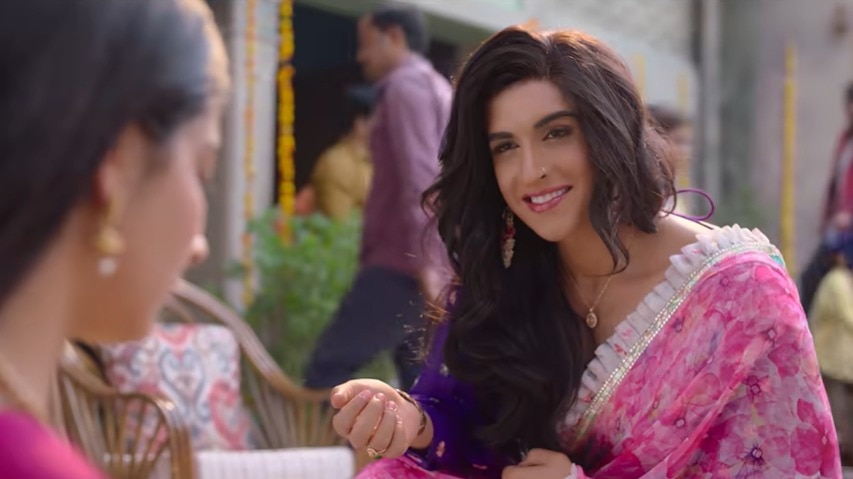
In director Rahul Shanklya’s Nakhrewaalii, Sumit Mishra (Ansh Duggal) moves from Hardoi, Uttar Pradesh, to Delhi University alongside his trusted companion Jhaadi (Akash Makhija). Navigating a swift cultural shift, Sumit finds himself torn between two worlds.
At an accidental invite from his DU batchmate Mihika (Aayushi Verma), he enters an elite, English-speaking circle and feels drawn to her lavish lifestyle. Meanwhile, he lives as a tenant in the house of Paridhi (Pragathi Srivasthava).When Paridhi comfortably initiates intimacy during a casual interaction, Sumit’s internalised patriarchal biases kick in.
He judges her for expressing her sexual desires unapologetically, leading Paridhi to cut ties with him. It is only after losing her that Sumit realises his genuine affection for Paridhi and proposes marriage.
However, her parents lay down a strict ultimatum: he must secure a government job within a month. Facing repeated failures and a desperate deadline, Sumit disguises himself as 'Sumita Mishra' to claim a female-only vacancy, setting off a classic comedy of errors.Writers Divy Nidhi Sharma and Satya Vyas, alongside director Rahul Shanklya, approach Nakhrewaalii with commendable intentions.
The narrative attempts to unpack deep-seated misogyny, the flawed mindset that refuses to respect boundaries, and the societal habit of mistaking a woman’s modern lifestyle or male friendships as an open invitation. Through Sumit’s stint as Sumita, Nakhrewaalii endeavors to reflect the everyday intimidation, harassment, and objectification women endure.Despite its progressive underpinnings, Nakhrewaalii succumbs to redundant cinematic tropes.
The cross-dressing formula — previously explored in films like Chachi 420, Aunty No 1, and Dream Girl — demands sharp, inventive writing to feel relevant. Instead, the execution relies heavily on loud, imposed background scores and overt slapstick gags to force humour out of chaos.
What could have been a nuanced exploration of small-town youth adapting to Delhi's urban landscape devolves into a surface-level caricature. Nakhrewaalii sets its narrative outside the standard Mumbai backdrop, yet it falls prey to the same structural confusions.
Characters like Mihika are reduced to tropes of urban women lacking emotional depth, missing the opportunity to build a grounded, authentic environment. Ansh Duggal and Pragathi Srivasthava deliver earnest performances in Nakhrewaalii, doing their best to anchor a routine plot line.
Among the supporting ensemble, Akash Makhija brings much-needed comedic timing as Jhaadi, ensuring his scenes retain a lively pace.Veterans Kumud Mishra and Brijendra Kala add a layer of stability and engagement through subtle comic beats during their limited screen time. Gopal Dutt stands out as Paridhi's father, Batuk; even without a fully fleshed-out character arc, the actor holds his ground effortlessly and elevates the material given to him.
Aayushi Verma manages to bring conviction to her role despite the script's stereotypical constraints.On the technical front, the film fails to create an impact with its musical score, offering uninspired tracks that do little to elevate the narrative. The songs feel largely forgettable and fail to leave any lasting impression.Nakhrewaalii possesses a progressive heart and noble thematic ambitions around consent and patriarchal double standards.
However, its reliance on exaggerated tropes, uninspired comic beats, and a repetitive storyline prevents the film from making a lasting impression.Nakhrewaalii theatrically released on October 30, 2026.- Ends