


Google has expanded its footprint in the artificial intelligence and automation sector by introducing Gemini Robotics 2.5, marking a significant technical leap for humanoid robots. Following earlier iterations that featured basic motion transfer and upper-body control, the new vision-language-action model is engineered to help machines tackle delicate objects and repetitive industrial work with heightened precision and reliability. The system allows robots to learn a wider variety of skills and execute actions more rapidly, moving the technology closer to widespread deployment alongside humans in everyday settings.
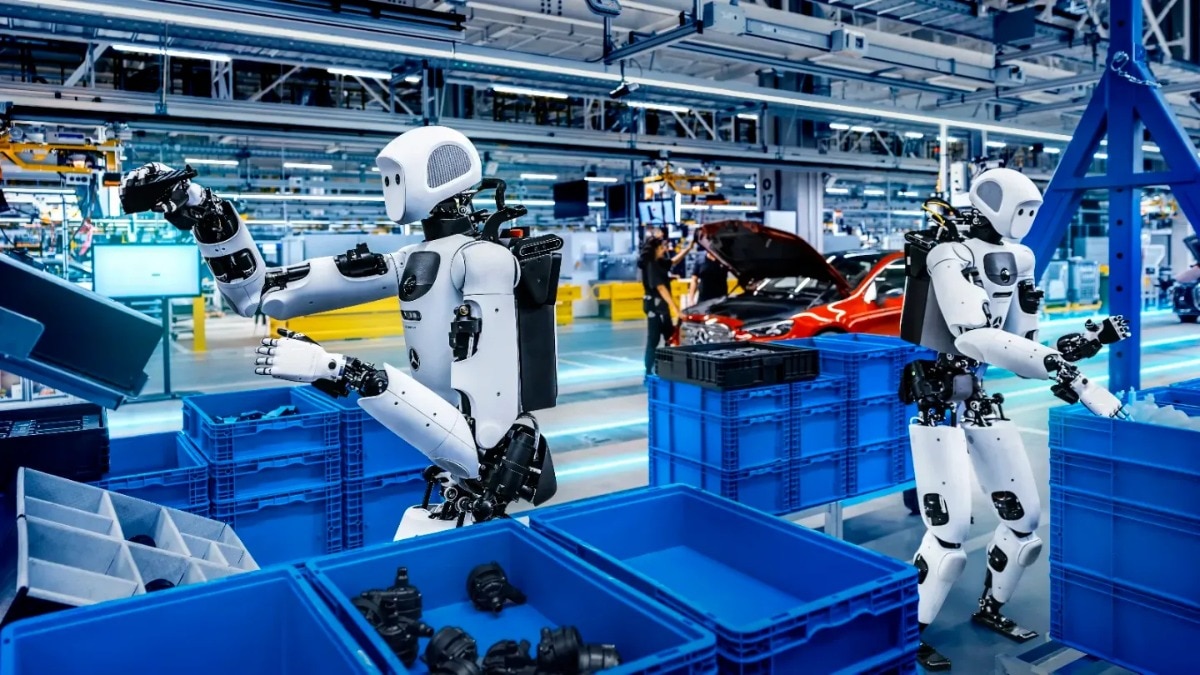
Carolina Parad, vice president and head of robotics at Google DeepMind, announced the release on social media, describing the software as the organization's most capable vision-language-action model to date. According to company disclosures, the system significantly enhances robot dexterity, reliability, and safety. To evaluate these capabilities in real-world environments, Google partnered with Apptronik and Mercedes-Benz to deploy Apptronik Apollo 2 humanoid robots at automotive manufacturing facilities in Germany and Hungary.
A primary enhancement in Gemini Robotics 2.5 involves the handling of items that demand delicate manipulation. Google evaluated the system across more than 200 distinct assignments, ranging from serving food items with tongs and tying gift box bows to pipetting liquids. These delicate operations highlight the software's expansion beyond standard repetitive factory automation.
Company data indicates that Gemini Robotics 2.5 delivers a success rate increase ranging from 30 percent to 100 percent across various assignments compared to previous versions, while also finishing tasks between 20 percent and 30 percent faster. The industrial applications have yielded notable results during proof-of-concept trials. Working alongside Mercedes-Benz, Apollo 2 units utilized the new AI model to select automotive components out of bulk bins and organize them into trays according to precise sequences. This setup attained a 96 percent success rate, automating repetitive duties traditionally handled by human technicians.
Safety enhancements represent another core pillar of the new release. The model possesses the ability to detect potential hazards and nearby humans, modifying robotic movements dynamically in real time. Assessments showed that safety guardrails improved successful task completion rates by 33 percent around physical obstacles and by 43 percent in the vicinity of people.
Alongside the model release, Google is rolling out ASIMOV-Jailbreak, an open-source evaluation benchmark created to test whether robotic systems can successfully reject potentially unsafe instructions disguised as routine queries. These collective advancements are intended to help automated systems navigate unpredictable environments with greater security.