


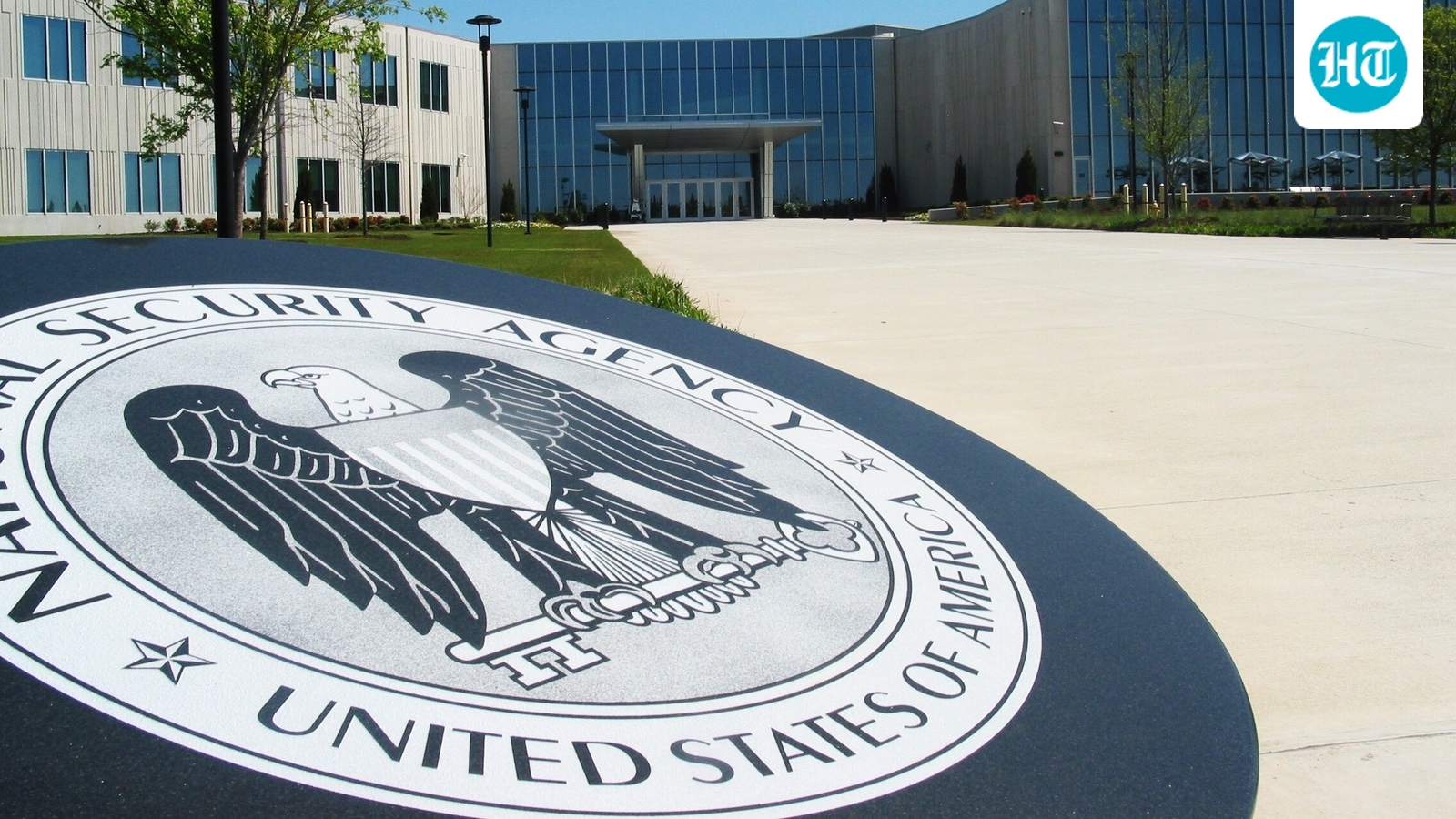
At least 11 National Security Agency (NSA) and US Cyber Command workers died by suicide over roughly the past year, according to US officials and public records, a greater number than previously known.Over the 12 months ending in September, 10 people working for the NSA or Cyber Command died by suicide around Fort Meade and one did near an NSA facility in Georgia, an official said. (NSA)The unusual spate of suicides at agencies that conduct electronic spying and hacking operations on US adversaries has prompted White House and congressional staff to question their leaders behind closed doors, said the officials. While many factors can lead someone to take their own life, the deaths have caused military commanders to take steps to control long work hours and make more mental health support available to intelligence officers and government hackers whose workload has surged in the past year because of foreign conflicts.From early June to early July, five people who worked for the NSA or Cyber Command took their own lives, a timeline that led the military to link the deaths as a so-called suicide cluster, people familiar with the matter told Bloomberg News in August.
The most recent suicides came after that in September, when a 21-year-old Army soldier and a 59-year-old civilian working for the NSA took their own lives, according to death records and an official familiar with their employment. Like others, the official spoke on condition that they not be identified because they aren’t authorized to discuss the matter.
They are both headquartered at Fort Meade, Maryland.“The pace of operations right now at both NSA and Cyber Command can be overwhelming,” said Harry Coker Jr., a former senior executive at the NSA and Central Intelligence Agency. “There is a lot of stress that a lot of us overlook because we think cyber is away from the front, and physically that’s accurate but intellectually and emotionally it’s inaccurate.”A Pentagon spokesperson didn’t provide the number of suicides at Cyber Command and the NSA in past years, saying the military publishes suicide statistics by service, such as Army or Navy, not command or agency.In 2024, the military recorded more than 23 suicides per 100,000 service members—nearly twice the rate for the US population, according to a Pentagon report. The report counted four suicides in “cyberspace operations” and 14 in “signal intelligence/electronic warfare.” It’s unclear how those categories map onto NSA and Cyber Command personnel.Over the 12 months ending in September, 10 people working for the NSA or Cyber Command died by suicide around Fort Meade and one did near an NSA facility in Georgia, an official said.
The people who took their own lives during this period — the government fiscal year — included military personnel, civilians and contractors, said the official. The tally of suicides at the two agencies, which includes the five in June and July, hasn’t been previously reported.“US Cyber Command and the National Security Agency remain committed to the health, safety, and well-being of our personnel,” spokespersons for the agencies said in an emailed statement. “Together, the command and agency take a comprehensive, integrated approach to suicide prevention in close coordination with the” various armed services.“The loss of any member of the military community is a tragedy, and our deepest sympathies are with their loved ones,” a Pentagon spokesperson said in an emailed statement.Following the deaths in June and July, congressional committees overseeing the military and intelligence agencies requested and received briefings from Cyber Command and NSA leaders on the suicides and workforce mental healthcare challenges, officials said.
Tim Kosiba, the NSA’s deputy director, went to the White House in August to brief staff there, one official said. Another said a White House representative also reached out to offer condolences and support to Cyber Command leaders.“President Trump cares deeply about supporting our brave men and women who serve our country,” said White House spokesperson Olivia Wales, adding that the president “is committed to ensuring” that all military personnel and veterans “receive the support and care they need.”Some of the deaths are still being examined by local law enforcement and investigators from the different armed services.
In briefings, NSA and Cyber Command leaders said that the evidence so far suggests that people had distinctive and complex reasons for taking their own lives, including some who were motivated by personal and financial problems, officials said.The soldier who took her own life in September enlisted in the Army in 2024 after graduating from a Minnesota high school, according to military records and an obituary. She went on to become a signals intelligence analyst at Fort Meade and was awarded a medal, according to the obituary.
She is described as having been an adventurous young woman, with an infectious smile and unmistakable laugh, who loved reading and Nordic skiing.As with some other people who died by suicide, Bloomberg News isn’t naming the soldier because a member of her family said they don’t want to speak publicly about her death.‘Why did you not check on my brother?’Suicide is rarely caused by one thing, according to the US Centers for Disease Control and Prevention.In a final message, Technical Sergeant Kevin Stallings, who took his own life in June, referenced a “wall of debt,” the end of his marriage, an earlier suicide in his military unit and the death of his dog, Scud. Members of the 36-year-old Air Force intelligence officer’s family have been left with questions about the events that led up to his death and whether the military could have done more to help him.In his classified workplace, Stallings was known as a quiet, industrious analyst and a mentor who helped his colleagues get better and faster, said a former commander, T.
Gwyddon Owen. Stallings “took on some of the most arduous and thankless jobs that our environment had to offer — and I never heard one word of complaint,” Owen told Bloomberg News.On June 17, Stallings left work at Fort Meade early for an appointment and then didn’t show up as scheduled the next day, according to a police report.
But it wasn’t until the afternoon of June 22 that Maryland police got a worried call from an Air Force leader, the record shows. Police officers went to Stallings’ apartment, where they met Air Force officials and then went inside to find the technical sergeant dead.A US official familiar with Air Force procedure said commanders usually check on missing service members at their homes within 24 hours.Anne Arundel County Police officers responded to the scene.
They didn’t determine the date of Stallings’ death, a spokesperson said, but the condition of his body when they arrived indicated he’d been dead for more than 10 hours. Air Force officials and investigators didn’t answer questions about what Stallings’ colleagues did in the four days between him missing work and being found dead.“It absolutely infuriates me,” Adam Stallings said. “Why did you not check on my brother?”“It was a dereliction of duty,” said James Stallings II, Kevin’s father, an Air Force veteran.
Growing up in Virginia, Kevin Stallings was a quiet kid who covered his childhood bedroom with glow-in-the-dark stars and stayed up late, reading under the blankets by flashlight, his brother recalled. As an adult doing secret work for military intelligence, Stallings was intensely private, including about his struggles.
Both his brother and father said they only learned after Kevin’s death that he’d been prescribed an antidepressant medication.In his final note, Stallings apologized to his military commanders, saying that they couldn’t have prevented his suicide and that he hated that his death would “stain” their records. “This is something I would never reach out for,” he wrote in the message, which Bloomberg News reviewed.‘Woken up a lot of people’For years, government officials have been concerned with the mental health of NSA and Cyber Command personnel, some of whom endure long, isolating shifts inside secure, windowless facilities. The US war with Iran and other foreign conflicts have added to the strain, Bloomberg News previously reported, as has the race to address new artificial intelligence models that are increasingly adept at hacking.The recent suicides have sharpened these concerns and prompted action at the agencies.General Joshua Rudd, who became the leader of Cyber Command and the NSA in March, requested $11 million in April to address cyber personnel’s mental health, warning of possible “burnout and force degradation.” In October, US lawmakers issued two separate letters urging the approval of the funds to fulfill Rudd’s request.“The tragedy of so many servicemembers and civilians taking their lives, I know has woken up a lot of people within DOD to respond with a degree of urgency that I think is required at this moment,” Rep.
Sarah Elfreth, a Maryland Democrat who signed both letters, told Bloomberg News.Since the cluster of deaths over the summer, Gen. Rudd broadly mandated that cyber staff need eight hours of uninterrupted rest in every 24-hour period, and can’t work longer than 12 consecutive hours without a waiver, three officials said.The NSA and Cyber Command also expanded a resources-sharing agreement to give both civilian and military staff greater access to both organizations’ healthcare services, an official said.
Separately, the Pentagon has delayed elements of a broader reorganization that would have cut some cyber staff’s incentive pay by much as $12,000 a year.Cyber Command has had challenges moving enough mental healthcare providers through its security clearance process, which involves a polygraph test and extensive background checks, officials said. At the high end, this process can take nearly two years, they said.
But in recent months, command leaders have accelerated work with the Defense Health Agency to get staff access to more vetted mental healthcare workers, some of the officials said, adding a psychologist, a clinical social worker and two chaplains.The NSA and Cyber Command have worked with other parts of the military to “ensure there is embedded care in our secure workspaces, increased education on preventative and intervention skills for the workforce,” spokespersons for the agencies said.The Walter Reed Army Institute of Research is also assessing working conditions at Cyber Command, an official said. Among other questions, the institute is examining is how many mental health workers are needed to support the NSA and Cyber Command, said Elfreth.“While we know a lot about warfare,” she said, “we don’t know much about electronic warfare in terms of its impact on the psyche and people’s mental health.”(If you or someone you know is having thoughts of suicide or self-harm, a global list of helplines is available at https://blog.opencounseling.com/suicide-hotlines/.)