


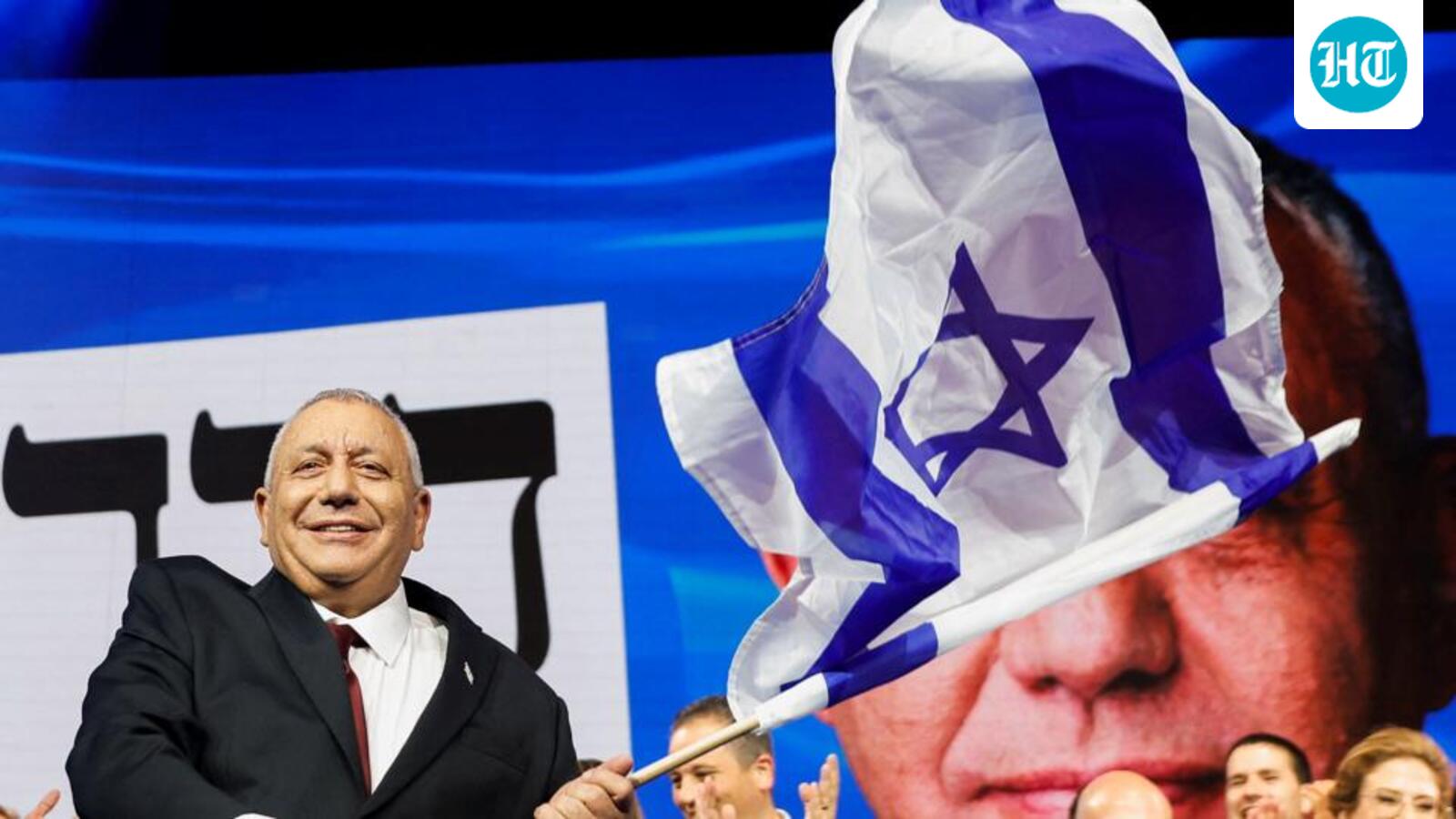
Israel’s wartime election appeared deadlocked on Tuesday, exit polls showed, with Gadi Eisenkot’s opposition bloc running neck and neck with Prime Minister Benjamin Netanyahu’s camp, leaving neither side with a clear path to power. A former chief of staff who entered politics in 2022, Eisenkot has sought to position himself as a moderate alternative to Netanyahu while retaining a hawkish stance on security.If he succeeds in forming a coalition, Gadi Eisenkot could become the first Israeli PM of Mizrahi descent. (REUTERS)The tight contest has put the spotlight on the 66-year-old, whose journey from the military’s top ranks to the forefront of Israeli politics could culminate in a historic bid for the country’s highest office.Battlefield to ballotEisenkot, 66, comes from a working-class family of Jewish Moroccan immigrants.
He spent four decades rising through the ranks of Israel’s military, eventually becoming the chief of staff. The general currently leads the largest opposition party — the centrist Yashar!.
His son and two nephews were killed in combat in Gaza following the October 7 attacks.Eisenkot also served as an observer in Netanyahu’s war cabinet, but resigned after eight months, when he accused the prime minister of lacking a clear strategy. He has since positioned himself as a moderate alternative to Netanyahu, but remains hawkish on security.
Eisenkot is credited with formulating Israel’s so‑called “Dahiyeh Doctrine,” a military strategy calling for the use of disproportionate power in areas from which militants launch attacks. On Iran, he has said the country’s nuclear program must be curbed, militarily if necessary, but that regime change in Tehran is “not an achievable goal.”If he succeeds in forming a coalition, Eisenkot could become the first Israeli Prime Minister of Mizrahi descent.
Israel’s Mizrahim, who come from North Africa and the Middle East, have historically faced discrimination from the country’s European-descended elite.Final results could take days, and Israel’s fragmented political system leaves smaller parties potential kingmakers in coalition negotiations that have run to weeks or months after past elections as the parties look to sticth a coalition, with unlikely allies.Naftali Bennett: Former PM to potential kingmakerBennett, 54, is the right-wing and religiously observant leader of Beyachad (Together), a joint ticket with centrist politician Yair Lapid. He opposes Palestinian independence and supports settlement-building in the occupied West Bank.Before entering the Knesset in 2013, Bennett served as Netanyahu’s chief of staff and also was head of the Yesha Council, an umbrella organization of local authorities inside Israeli settlements.
His conservative Yamina party won seven seats, which helped him cobble together a coalition of both left-wing and Arab parties. He then briefly served as prime minister in 2021, the result of a power-sharing agreement, also with Lapid.If neither of the coalitions are able to form a majority, Bennett could play a key role in helping form the next government by extending support, marking a return to the corridor of power.(With agency inputs)