


IIT Madras has tested a titanium dioxide coating that broke down 30% to 70% of gaseous pollutants. The findings suggest potential AQI benefits, although the technology cannot tackle particulate matter.A titanium dioxide coating that the Indian Institute of Technology (IIT) Madras is testing for the Delhi government, aimed at improving the capital’s air quality, has broken down 30% to 70% of gaseous pollutants in laboratory trials, with glass surfaces performing best so far, India Today has learnt.Though it may not work against particulate matter (PM), the main pollutant in Delhi’s winter air, the coating could still help bring down the overall air quality index (AQI).
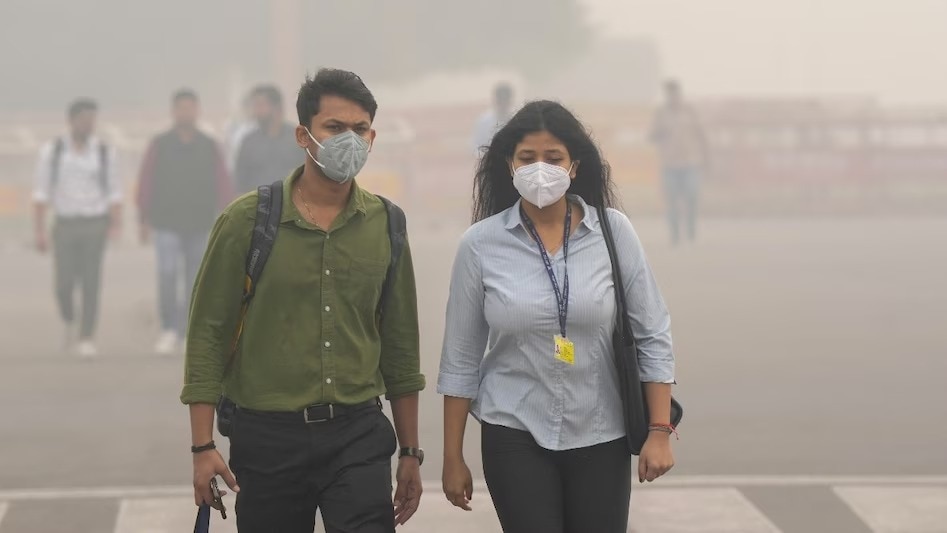
In winter, gaseous pollutants get trapped along with particulates and push the AQI higher, so breaking them down could ease the load.Every winter, PM2.5, tiny pollutants in air, in Delhi and across north India climbs well past safe limits, and the capital’s Air Quality Index (AQI) stays above 300 on most days, climbing up to 800 and even higher on some days.Crop-residue burning in Punjab and Haryana that sends smoke toward the capital, vehicle exhaust and dust and cold, still air and temperature inversion that keep pollutants from dispersing in a land-locked region, have been identified as main drivers of high PM2.5. The health toll is heavy.PM2.5 particles are fine enough to penetrate deep into the lungs and enter the bloodstream, driving lung and heart disease.
A Lancet Planetary Health study attributed 1.24 million deaths in India in 2017, or 12.5% of the total, to air pollution, and the Air Quality Life Index estimated that PM2.5 shortens life expectancy in Delhi by about a decade. The growing evidence around the huge health cost of the persistent high AQI and demand for action has pushed the government to opt for initiatives, some of them rather out-of the box, that can make a difference.The smog-eating coating project is one of them, said sources in the government, and for this a memorandum of understanding was signed between Delhi government and IIT Madras in March this year.As part of the project, researchers were to present their report within a six-month period which has now been extended for another 3 months.THREE SURFACES, ONE CATALYSTSomnath Chanda Roy of the IIT Madras’ department of physics, who is working on the smog project, said the coating is a photocatalyst: when titanium dioxide absorbs light, it drives reactions on its surface that break down pollutant molecules coming into contact with it.Applied to roads, building walls and glass facades, it would turn surfaces a city already has into ones that treat the air around them.The gases it can act on include carbon monoxide and carbon dioxide; organic compounds such as aldehydes and alcohols, which come from vehicular emissions and biological degradation; and nitric and nitrous oxides.Roy’s team has chosen three surfaces: road tar, building paint and glass.
Glass is a practical target because many office buildings are now almost entirely glazed, Roy said, and each surface needs a different coating process.The aim is to show that a coated surface measurably reduces a known amount of pollutant exposed to it. In the lab, a pane is coated with the catalyst to a set thickness and exposed to light while researchers track how quickly different pollutants degrade over time.One run proves little, so each experiment is repeated as the catalyst thickness and pollutant concentration are varied.
Roy added that, as in any research project, questions surfaced along the way that needed their own study, which is why the extra months were needed.The 30% to 70% range refers to 10 hours of sunlight exposure; the spread comes from conditions the team is still rechecking. Roy said the coating does “fantastic work on the glass surfaces”, which he attributed to the catalyst sticking well to the material.More experiments are needed to assess the benefits of coating roads and non-glass building walls.LIMITS, AND NEXT STEPSThe coating has a built-in limit: it acts only on gases, not on particulate matter.
In winter, Roy said, gaseous pollutants mix with particulates and cannot escape, so the gaseous share of the pollution load matters.Environmental experts cautioned when the agreement was announced that such surfaces should not replace curbs at the source.Some had cited a study which showed that coatings that performed well in controlled settings cut ambient nitrogen dioxide by only about 3% in the real world.“The technology can only be a complement to existing pollution controls and ideally lab tests should be followed by field tests,” said an epidemiologist at the All India Institute of Medical Sciences (AIIMS), New Delhi who studies pollution’s health related impact.Meanwhile, Roy said a preliminary report had gone to the Delhi government in August, and testing continues. Officials will review the data first, after which a comprehensive report will lay out what works and what does not, Roy said.- Ends