


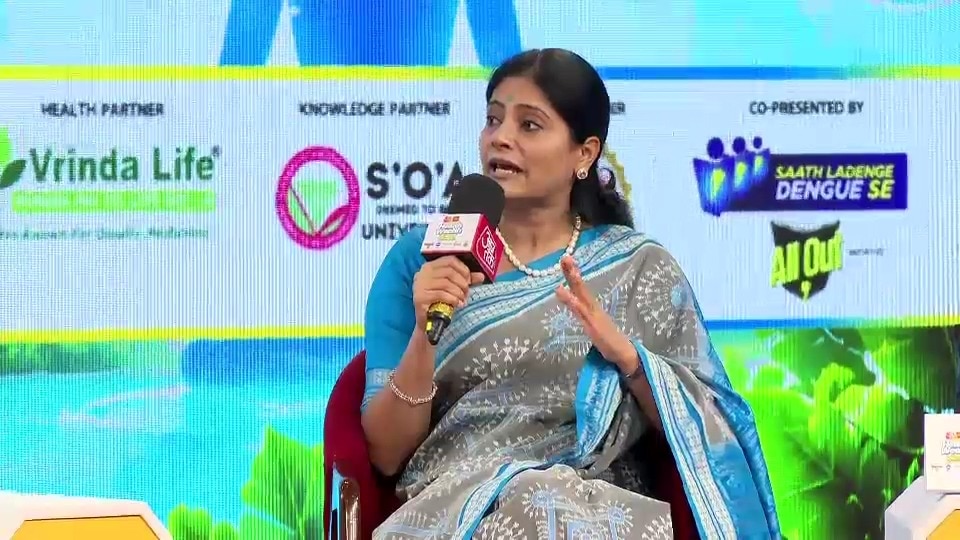
Anupriya Patel detailed the Centre's healthcare measures and addressed political questions at the conclave. Her remarks covered affordable treatment, lifestyle risks and the NDA's Uttar Pradesh preparations.Union Minister Anupriya PatelNew Delhi,Oct 29, 2026 17:12 ISTUnion Minister Anupriya Patel has said that 13.5 crore people have received treatment under the Pradhan Mantri Jan Arogya Yojana (PM-JAY), highlighting the Centre’s efforts to make healthcare more affordable.
She also said the government had reduced the prices of 137 cancer drugs by 70 per cent through trade margin rationalisation.Speaking at the India Today Health Wealth Conclave, Patel said the government had placed healthcare at the centre of its policies and increased the health budget from Rs 37,000 crore in 2015 to more than Rs 1 lakh crore currently. She also highlighted the role of Amrit pharmacies, where medicines are available at reduced prices, and said the government was bearing a substantial share of healthcare expenses.Patel said around 62 crore people were covered under PM-JAY, while 13.5 crore people had received treatment under the scheme.
She also said free dialysis services were available at public-private partnership (PPP) hospitals.Addressing concerns over differences between wholesale and retail medicine prices, Patel said the government had taken steps to reduce medicine costs. She cited Amrit pharmacies, where medicines were available at prices reduced by 50 per cent, and trade margin rationalisation for cancer drugs.
MEDICAL COLLEGES DOUBLED, AIIMS INCREASED FROM 7 TO 23Responding to a question on why MPs were not doing enough to establish good schools and hospitals in their constituencies, particularly in tier-2 and tier-3 cities, Patel said the government had focused on expanding medical infrastructure and improving access to healthcare in underserved areas.She said the number of medical colleges in India had doubled and the number of All India Institutes of Medical Sciences (AIIMS) had increased from seven to 23. The government was also increasing undergraduate and postgraduate medical seats, she said.
Patel added that the government was working to decentralise healthcare so that people would not have to travel outside their cities for treatment or come to Delhi to access better medical facilities. She said the government had been addressing gaps in medical infrastructure since the beginning of its tenure.AYUSHMAN BHARAT COMPLAINTS, OVERBILLINGOn discrepancies and complaints related to the Ayushman Bharat scheme, Patel said the government had expanded the range of procedures covered under it and included 27 medical specialities.
She added that patients' pre-existing medical conditions were also covered.Patel said the government had established mechanisms to help beneficiaries who faced difficulties at empanelled hospitals. These include Ayushman Mitras stationed inside hospitals to assist patients and a dedicated helpline, 14555, through which beneficiaries can report problems such as denial of treatment and overbilling.She said patients could register complaints through the helpline or approach district-level authorities, including district magistrates and chief medical officers.
State health authorities also address grievances submitted through the portal.Patel said the government acted promptly whenever it received complaints and had cancelled the empanelment of several hospitals for refusing treatment or charging patients more than the prescribed amount for procedures.She added that the government had developed a mechanism to detect fraud, stressing that complaints needed to be taken seriously and patients should report problems through the available channels.PATEL BLAMES LIFESTYLE CHANGES FOR RISING DIABETES, BP CASESDiscussing the growing prevalence of diabetes and high blood pressure, Patel urged people to examine their lifestyles and eating habits. She said changes in food consumption patterns, along with increased tobacco and alcohol consumption, were contributing to health problems.Patel said people had increasingly turned to packaged food instead of freshly prepared meals and were consuming non-seasonal produce.
She urged people to reduce their intake of sugar, salt and oil and pay greater attention to what they ate throughout the day.She also highlighted the role of Ayushman Arogya Mandirs, describing them as the first point of contact for healthcare in villages and cities.Patel said the government could undertake screening, but people also needed to take responsibility for improving their habits and protecting their health.KEEP YOUR PHONE AWAY WHILE EATING: PATELPatel made a strong appeal to young people to reduce their dependence on online food delivery platforms and avoid making outside food a regular part of their diets.Without naming any particular platform, she urged young people to stop relying on instant food delivery when meals could be prepared at home. She said young people were busy but should still make an effort to eat healthier food.She also raised concerns about the growing habit of eating while looking at a phone or another screen.
Patel said the combination of food and screen time had become so common that people often failed to pay attention to how much they were eating or the content they were consuming.She urged people to keep their phones away while eating and spending time with family, saying that even 15 minutes away from a phone should not be difficult.Patel warned that excessive screen time could affect attention and concentration and contribute to stress and anxiety. Comparing screen dependence with other forms of addiction, including tobacco, alcohol and drugs, she described screen-time addiction as a growing problem among young people.She said people needed to give their minds time to relax by stepping away from their phones and screens, adding that reducing screen time was important for maintaining mental health.At the end of the interview, Patel offered a message to young people: "If you love yourself, eat healthy, sleep well, stay away from the screen."- Ends