


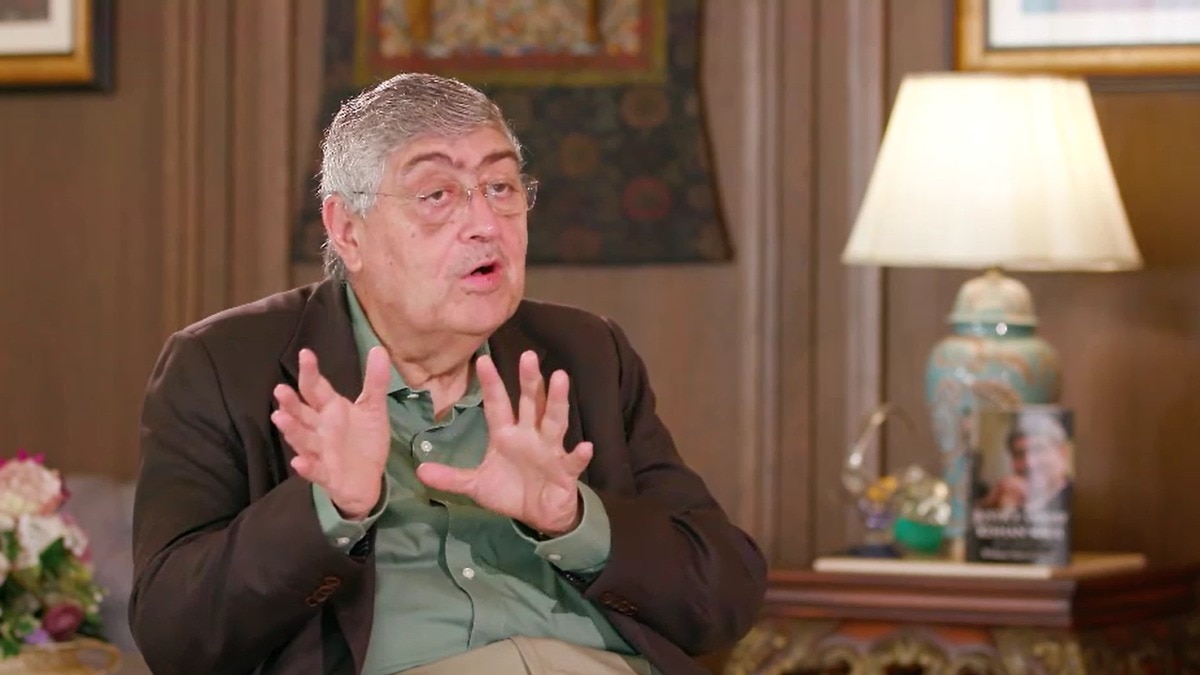
Former Supreme Court judge Justice Sanjay Kishan Kaul on Tuesday recalled that he once shut his files and withdrew from a collegium discussion over a judicial appointment, objecting to what he described as the practice of seeking the government's views before the collegium had completed its deliberations.In an exclusive interview with India Today TV, Justice Kaul recounted the July 2023 episode, raising questions about the judicial appointment process, the relationship between the judiciary and the executive and the functioning of the Supreme Court collegium.Explaining why he decided to withdraw from the discussion, Justice Kaul said he told the collegium headed by then Chief Justice DY Chandrachud, "Well, if this is how the appointment process is to go on, I close my files"."Earlier also, chief justices used to appoint and I would not like to participate in it," he added. Justice Kaul clarified that his action was not a walkout in the conventional sense but a way of registering his objection during a collegium meeting."Please understand, we are not parliamentarians who will make a walkout from parliament," he said. "What you do in five people is saying that, 'I'm closing it.
I'm not. And he quickly adjourned the meeting." The episode, he said, occurred in July 2023, when the collegium discussed a judicial appointment on which its members had agreed in principle, but reservations emerged from the government's side.Justice Kaul's remarks come amid renewed scrutiny of the collegium's functioning following revelations in his yet-to-be-released memoir, in which he described former CJI DY Chandrachud as "deferential of the government in the appointment process".In his interview with India Today TV, Justice Kaul, who retired from the Supreme Court in December 2023, clarified that his criticism was specifically directed at the judicial appointment process and did not extend to Justice Chandrachud's judicial work or administrative functioning more broadly."I have not said that he was deferential of the government.
I've said he's deferential of the government in the appointment process," he said.Explaining his objection, Justice Kaul said the collegium should first deliberate on the names proposed for judicial appointments and then forward its recommendations to the government. Discussions with the Centre, he argued, should take place only after the collegium had completed its deliberations and formally sent its recommendations."It was my belief that the collegium must debate the names and send it to the government and that's the stage where a discussion with the government should take place," he said."We should not have some kind of a pre-approvals from the government," he added.Justice Kaul said he disagreed with the approach of seeking the government's position on potential appointments before the other members of the collegium had discussed the names.Recounting the sequence of events during his tenure, Justice Kaul said the collegium considered names for judicial appointments in three stages.He said the process initially involved the recommendation of five names, followed by an attempt to introduce a sixth name at the last minute.
According to Justice Kaul, the additional name did not receive the approval of any collegium member.Subsequently, two more names were proposed while the original five recommendations were still pending. Justice Kaul said he agreed to the two additional names but insisted that seniority be maintained, with the first five recommendations sent before the subsequent two."The problem arose in the month of July (2023) when some name, another name was debated,” he said.Justice Kaul said the collegium had reached an agreement in principle on the name under discussion, but reservations subsequently emerged from the government's side.
He also said he had redacted a portion of his account of the episode.It was at this stage that Justice Kaul decided to close his files and distance himself from the process, making clear that he was unwilling to participate if judicial appointments were to proceed in that manner.- Ends