


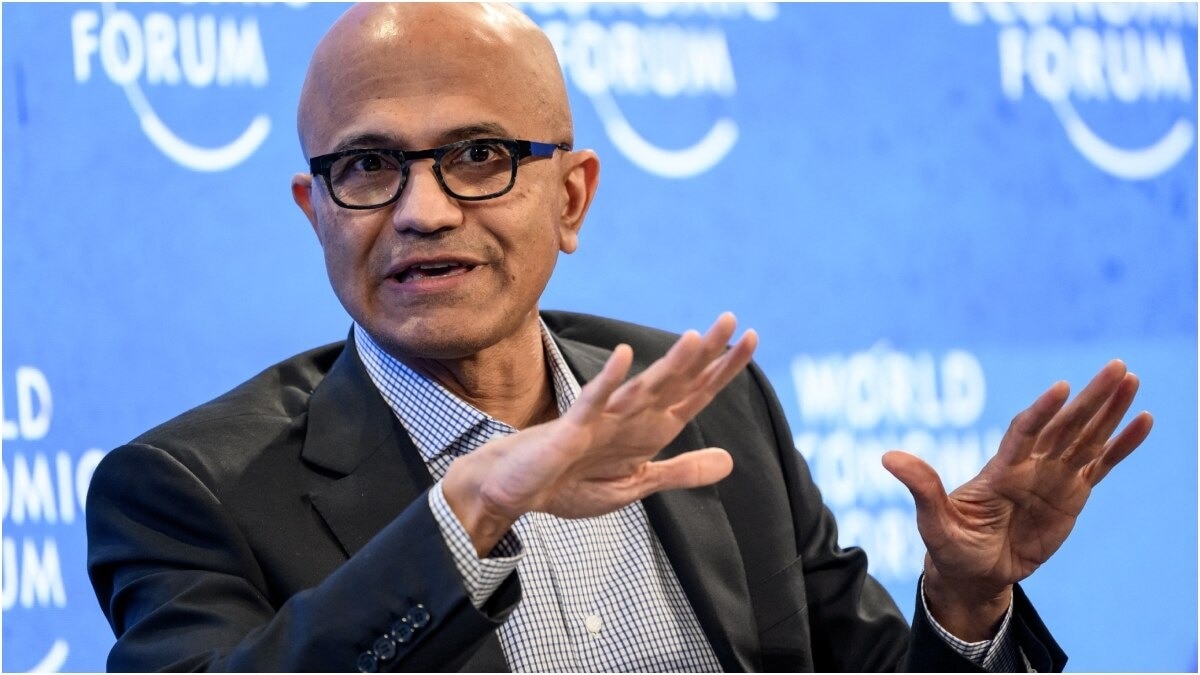
Microsoft's 60,000-employee exit offer has brought renewed attention to Satya Nadella's vision of millions of AI agents working alongside humans, raising fresh questions about job displacement, workplace transformation and the future of employment.Microsoft CEO Satya Nadella’s earlier vision of 20 million AI agents working alongside humans has resurfaced as the company offers voluntary exits to 60,000 employees. Microsoft CEO Satya Nadella's vision of a workplace powered by millions of artificial intelligence agents has resurfaced on social media, bringing fresh attention to the company's changing workforce strategy, less than two weeks after it offered voluntary exits to around 60,000 employees.A video from June 2026, featuring Nadella in a conversation with LinkedIn co-founder Reid Hoffman on the Possible podcast, is now circulating on X.
In the interview, the Microsoft chief imagined a future in which 200,000 human employees could work alongside 2 million or even 20 million AI agents.The timing has made the remarks particularly striking. Microsoft recently announced a voluntary exit programme covering more than a quarter of its global workforce, including eligible employees in India, the US, the UK and Canada.The resurfaced conversation has renewed questions about what the AI transition could mean for human jobs, even as technology companies promise that artificial intelligence will make employees more productive.
AI AGENTS WORKING ALONGSIDE HUMANSDuring the June 5 interview, Hoffman asked Nadella about the future of work and whether companies could eventually rely on AI agents as specialist employees.In response, Nadella compared the coming transformation to the spread of computers and typing in offices. He recalled how, in the early 1980s, the idea of billions of people typing every morning would have seemed absurd.
Offices then had dedicated typists and slide-making pools. However, computers helped create an entirely new category of knowledge work.He then offered a picture of what Microsoft's future could look like.
Screengrab of the X post. "We have 200,000 employees and we have, let's say, 2 million agents or 20 million agents all in a loop," Nadella said.The Microsoft chief was describing a possible model of human-agent collaboration, rather than announcing a fixed target or a plan to replace employees with that number of AI systems.He also suggested that coding offered an early glimpse of the transformation, with AI moving from completing small pieces of code to handling larger tasks through autonomous agents.60,000 EMPLOYEES OFFERED AN EXIT AS AI INVESTMENT GROWSThe resurfaced video comes against the backdrop of Microsoft's October 26 announcement of a Voluntary Exit Offer for around 60,000 employees.The programme covers eligible employees at level 70 and below in participating teams across India, the US, the UK and Canada. The offer is voluntary and provides financial support and career-planning resources to those choosing to leave.Microsoft has indicated that it expects fewer than 5 per cent of eligible employees to accept the offer, which would mean fewer than 3,000 departures.The company has not officially said that the exit programme is an AI-driven workforce reduction.
Its chief people officer, Amy Coleman, described it as another way for participating organisations to adapt to changing business needs.However, the announcement has drawn attention because Microsoft is simultaneously investing heavily in AI infrastructure, cloud computing and agent-based tools.WHAT HAPPENS TO HUMAN JOBS AS AI AGENTS EXPAND?Nadella's vision of millions of AI agents working alongside humans raises questions about how companies will redefine jobs and responsibilities. He has also emphasised the need for systems that give AI agents identities, permissions and accountability.During the June conversation, he questioned the industry's messaging around AI-driven job losses, arguing that technology companies must explain what new jobs will emerge, what they will pay and how workers can acquire the skills required for them.For employees, the challenge is no longer just adapting to AI as a productivity tool.
It is understanding how autonomous systems could reshape existing roles, career opportunities and wages.- Ends