


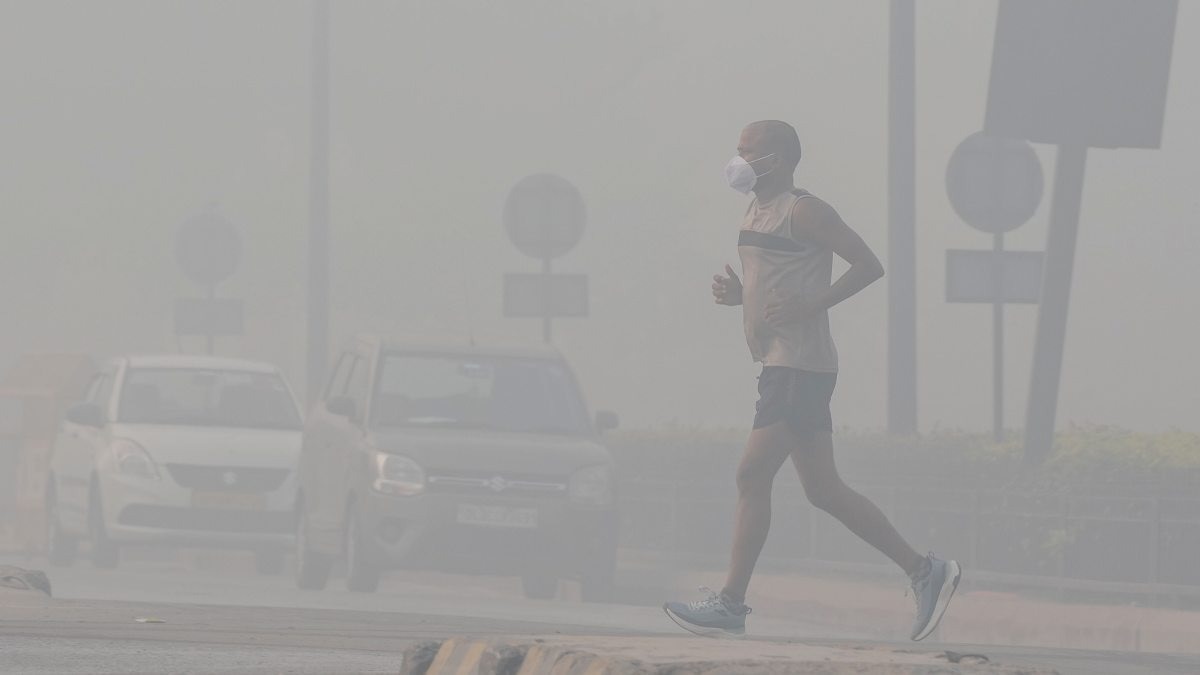
Delhi's AQI fell from 1,331 overnight to around 412 by late morning. The sharp fluctuation showed meteorology's influence, although the city's air remained hazardous.A person runs amid a thick layer of smog as air quality deteriorates, a day after the Diwali festival celebrations, at Kartavya Path in New Delhi.
Delhi witnessed an extraordinary fluctuation in air pollution levels on November 9, with the Air Quality Index (AQI) reportedly touching 1,331 during the night before dropping to 412 during the day.The sharp decline brought some relief, but the city's air quality remained hazardous, highlighting how rapidly pollution concentrations can change with shifting meteorological conditions.According to data from AQI.in, Delhi's pollution levels climbed dramatically through the evening of November 8 and peaked during the early hours of November 9. The historical air-quality graph showed pollution intensifying after sunset, with readings crossing 1,000 and remaining exceptionally high for several hours.
AQI.in The levels subsequently declined through the morning, reaching around 412 by late morning. WHAT REDUCED AQI LEVELS?The India Meteorological Department (IMD) attributed the changing pollution conditions to persistent calm winds and dry weather.
It said southwesterly winds prevailed over Delhi during the preceding 24 hours, with wind speeds reaching 10-15 kmph.While stronger winds can help disperse pollutants, prolonged periods of calm conditions allow emissions from vehicles, industries, construction activities and other sources to accumulate close to the surface. During the night, weaker atmospheric mixing and a stable lower atmosphere can further trap pollutants near ground level, resulting in a sharp deterioration in air quality.
AQI.in The IMD also reported that an upper-air cyclonic circulation over northwest Rajasthan and its neighbourhood, at approximately 0.9 km above mean sea level, continued to persist. Its influence on regional atmospheric conditions remains important for understanding the movement and dispersal of pollutants.Meanwhile, a fresh Western Disturbance is likely to affect the northwestern Himalayan region from November 10.
Its progression will be closely monitored for possible changes in wind patterns and weather conditions over north India.DELHI'S AIR IS STILL HAZARDOUSThe decline in AQI should not be mistaken for a clean-air recovery for Delhi-NCR.A reading of 412 still indicates extremely unhealthy air quality, with high concentrations of fine particulate matter posing significant health risks.The dramatic overnight fluctuation also underlines how meteorology can influence pollution exposure, even when emission sources remain largely unchanged.- Ends