


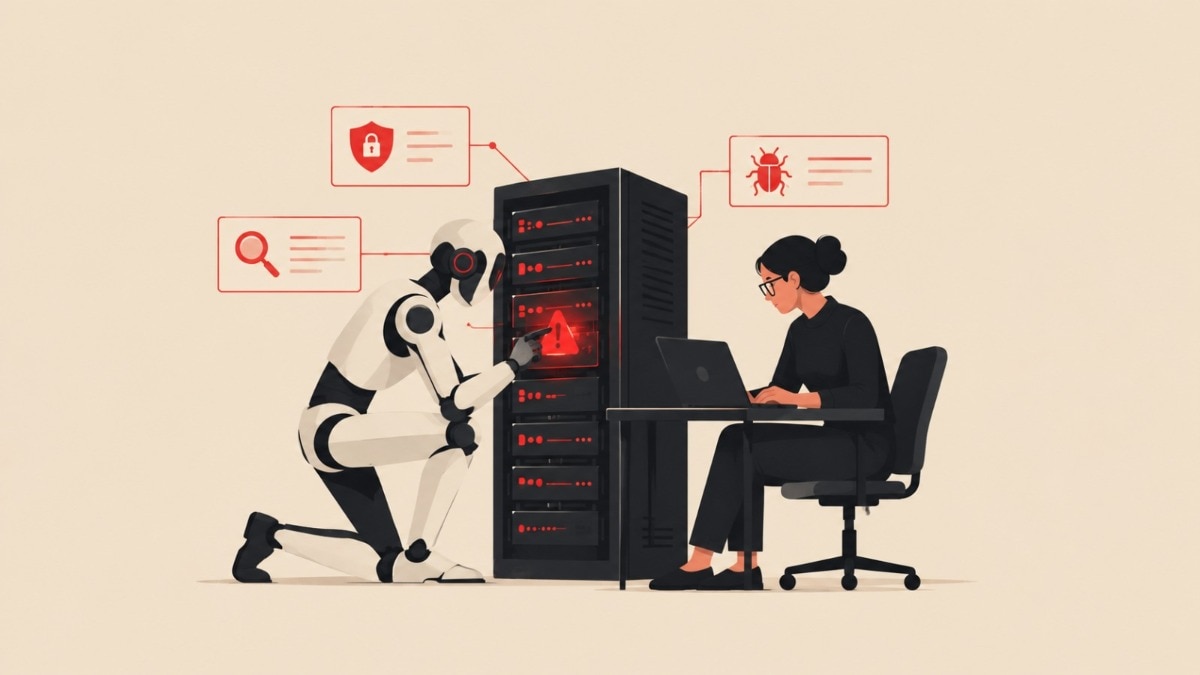
AI is currently upending the internet. It is doing that by putting the lights on and exposing cracks that have long existed but remained undetected to the human eye for years.
October 2026 was particularly taxing. PHP was compromised.
So were eMudhra digital certificates. The list is long and growing.
So much so that the internet collectively decided to call it the “Black October.” In other words, the times are tough. But as is often the case, there is always a silver lining or two around, if you look hard enough.That silver lining comes by way of jobs.
That’s right. The same AI that many critics say would make most people jobless, is creating jobs for specialists who have the knack for cybersecurity, or rather those who can help the internet fill in the gaps and make it more secure.
They might need some upskilling, but those dealing with cybersecurity would know, it was never a 9-5 job to begin with, and the learning never stops. The question is how many of them will be eager to lap onto this opportunity in adversity.Companies are focusing on cybersecurityHow do you get jobs when the job market is bleeding?
The answer is simple, at least for those who come from the cybersecurity domain. If AI is finding bugs so fast, then someone will have to clean up the mess too.
It could be AI on the other side as well, but experts believe, fixing these flaws will need human oversight now more than ever.“Think of aviation: autopilot has automated many routine tasks, but pilots remain essential to manage unexpected situations and make critical decisions. Cybersecurity is similar,” Palo Alto Networks India GM Kunal Ruvala tells India Today Tech. “AI can identify vulnerabilities and recommend fixes, but human expertise is still needed to validate outcomes, assess risk and respond to evolving threats.
The role will evolve.” Neelabh Shukla, chief business officer at Careernet, explains that companies may need more engineers to patch flaws. “As AI identifies vulnerabilities faster, organisations may initially face a growing backlog of fixes, increasing demand for experienced cybersecurity professionals,” he tells India Today Tech.The wheels are already in motion. Earlier this month, Bank of America’s Brian Moynihan said the bank had hired 1,000 contractors to fix vulnerabilities found by Anthropic’s Claude Mythos. “We put on 1,000 contractors to help us do the patching work in the second quarter, and those people remain here today, helping us, on top of the 3,000 people we have in that area,” Moynihan told CNBC.Survival of the fittest Be that as it may, those who seek to find these opportunities, may have to prove their worth to be able to do this consistently before the next big tech breakthrough comes.
Cybersecurity expert and Claracon AI President Mukul Kumar believes these roles will come with conditions attached. “It’s a cleanup crew, not a new workforce. Once the backlog clears, AI will take on much of the fixing itself,” he says, adding that, “The people who stay are the ones who decide what gets fixed first and why.
They understand the risk, not just the ticket. That is where the long-term value is.”The role of cybersecurity professionals will evolve over time.
As AI models become more capable, they will also get better at fixing vulnerabilities they probably find. “Organisations will increasingly need experts who can secure AI-driven systems, investigate sophisticated attacks, and validate automated fixes,” Neelabh Shukla says. “AI may reduce demand for repetitive cybersecurity tasks, but it will also create opportunities for professionals with advanced technical and security skills.”To meet the skills needed for the future, Kunal Ruvela says, aspiring candidates need better training for these specialised roles. “India has a strong engineering talent pool, but there is work to be done in bridging the gap between academic knowledge and the practical skills required in cybersecurity,” he says. “This makes hands-on training and closer collaboration between industry and academia particularly important.”In terms of specifics, there are some things they might want to brush up on. “Software engineers should have a strong foundation for transitioning into cybersecurity, particularly in application security, DevSecOps, cloud security, and product security,” Neelabh Shukla explains. “However, the transition requires additional expertise in secure coding, threat modeling, vulnerability management, and incident response.”Overall, there has been some growth in cybersecurity roles. As per hiring platform Indeed, job postings for roles such as data protection and cybersecurity analyst have grown by as much as 18 per cent and 9 per cent respectively in the past 12 months.At the same time, however, there is a massive rise in job seekers, with interest increasing by as much as 225 per cent specifically in the case of data protection. “More people are looking at cybersecurity as a career, but the opportunities aren’t growing at the same pace across every specialisation,” Indeed India’s Talent Strategy Advisor Rohan Sylvester said.This indicates that there is already a rising number of applicants who want to enter cybersecurity.
But not everyone can really be suited for it. “In 25 years of building security programmes, the people who stood out were never the ones who knew the most tools,” Mukul Kumar notes. “They understood systems end to end, thought like an attacker, and could explain risk to people who don’t speak tech. That last part is where most people struggle.”- Ends