


They say the first casualty of war is truth. For the Trump administration, the road to peace with Russia now encompasses some extraordinary lies.Steve Witkoff delivered one as he sat down with Vladimir Putin in his native St Petersburg on Wednesday, aiming to close the deal on Russia’s land grab in Ukraine with the White House’s strategy of maximum pressure on Kyiv and saccharine flattery of the Kremlin.“You talk so much about my president, President Trump, being a humanitarian,” said Witkoff, a real-estate mogul who, thanks to being Trump’s friend, is now the US’s senior envoy and diplomat to end the largest European conflict since the second world war. “You are a humanitarian also, sir, and I salute that.
I commend you.”In Putin’s 26 years in power, it is a rare moment when he has been granted that specific honour. Skim through Russia’s past wartime exploits, the bombing campaigns in Chechnya and Georgia and Syria, to the thousands of Russian citizens jailed for dissent, to the violent deaths of prominent opposition journalists and politicians in barely disguised assassinations and poisonings – and it will be difficult to identify Putin’s credentials as a humanitarian.Vladimir Putin and Steve Witkoff meet in St Petersburg.
Photograph: Kristina Solovyova/ReutersAnd that is before looking to Ukraine, where Russia chose to launch a full-scale invasion that has now claimed hundreds of thousands of lives. The Guardian recently obtained a Russian strategy document showing the Kremlin’s potential to black out Ukrainian cities this winter, cutting off up to 90% of electricity to cities such as Kyiv and Odesa and Kharkiv – where millions of people live – to intentionally create a humanitarian catastrophe.
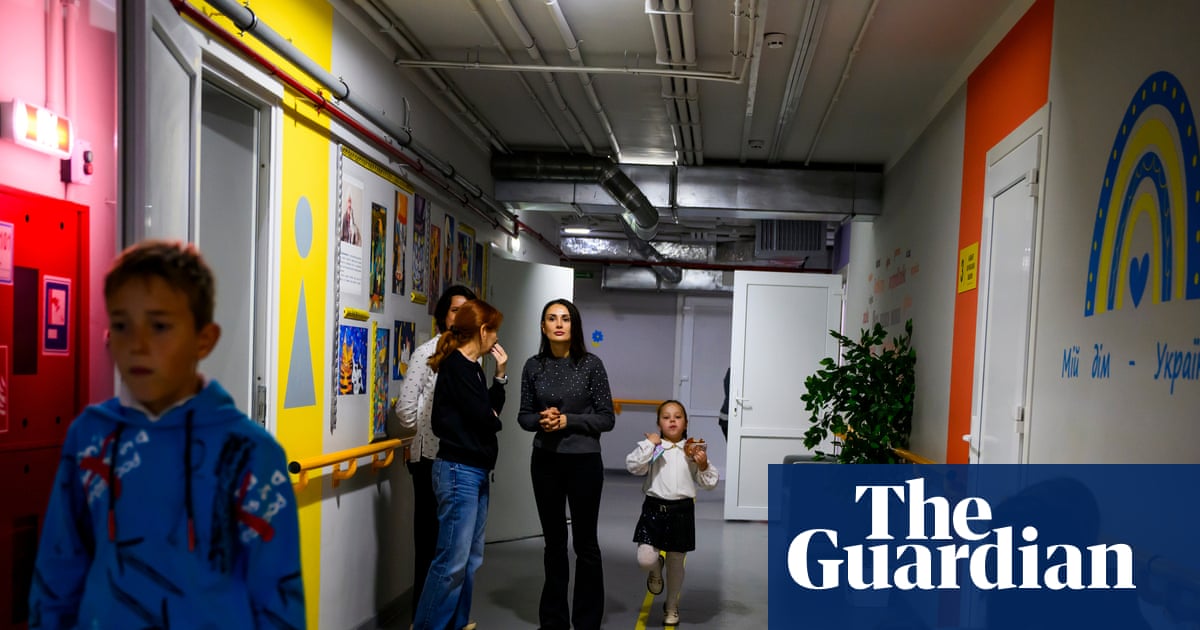
And judging by the nightly barrages levelled at power plants for cities across Ukraine, the Kremlin has decided to move forward with that strategy until Kyiv surrenders.As Witkoff met Putin on Wednesday, schoolchildren in Kharkiv hustled down a reinforced stairway, sirens announcing the arrival of Shahed drones overhead. This is no ordinary bomb shelter; it is one of 10 underground schools Kharkiv has constructed because of Russia’s regular bombing of the brotherly city less than 20 miles from the border.Parents had welcomed the schools because they were safe, said teachers, and this was the one way that young people could have an uninterrupted school day during a war that could last years more – and reignite even if a shaky peace deal is reached.“We all believed in Trump.
We all really had hopes for America and for Trump to stop this monster Putin,” said Olena Svytlychna, the head of the education department of the Novobavarskyi region in Kharkiv, sitting in the school’s cafe on Wednesday.“And now we have doubts, we don’t believe them. And we are very scared.”Students and parents arrive and depart from the entrance to an underground school in Kharkiv.
Photograph: Pete Kiehart/The GuardianAs Witkoff spoke, the families of six people killed in a drone strike in a park near Kharkiv this week were still holding funerals. The youngest victim of the strike was a one-year-old girl, Anhelina, who was killed as she was sitting strapped into her stroller in a playground.
Her mother, Inna Mariukhna, a local schoolteacher, was also killed in the strike. The final death toll was four adults and two children, Anhelina and an 11-year-old girl.Those lives have barely earned a mention from the White House as it pushes for Ukraine to capitulate as quickly as it can this week – and crucially before the 3 November midterm elections when voters will deliver a referendum on Trump’s leadership for the last two years.A destroyed building in Kharkiv after an air attack on Tuesday.
Photograph: Sergey Bobok/AFP/Getty ImagesShortly after the bombing, Trump told reporters on the White House lawn that Russia “has been fine on Ukraine”. After taking criticism for that remark, he mentioned the attacks in passing just to downplay the shelling of civilians: there were “some people in a town that got hit or whatever, but mostly young soldiers” died, he said from the Oval Office on Tuesday.For the White House, those words cost little.
Witkoff’s goal was to bring home a US citizen, a 74-year-old retired teacher from Michigan, who had been detained in Russia. But if Witkoff wants to buy a peace deal by 3 November through flattering Putin, then this will only be the White House’s opening salvo in its war on truth.