


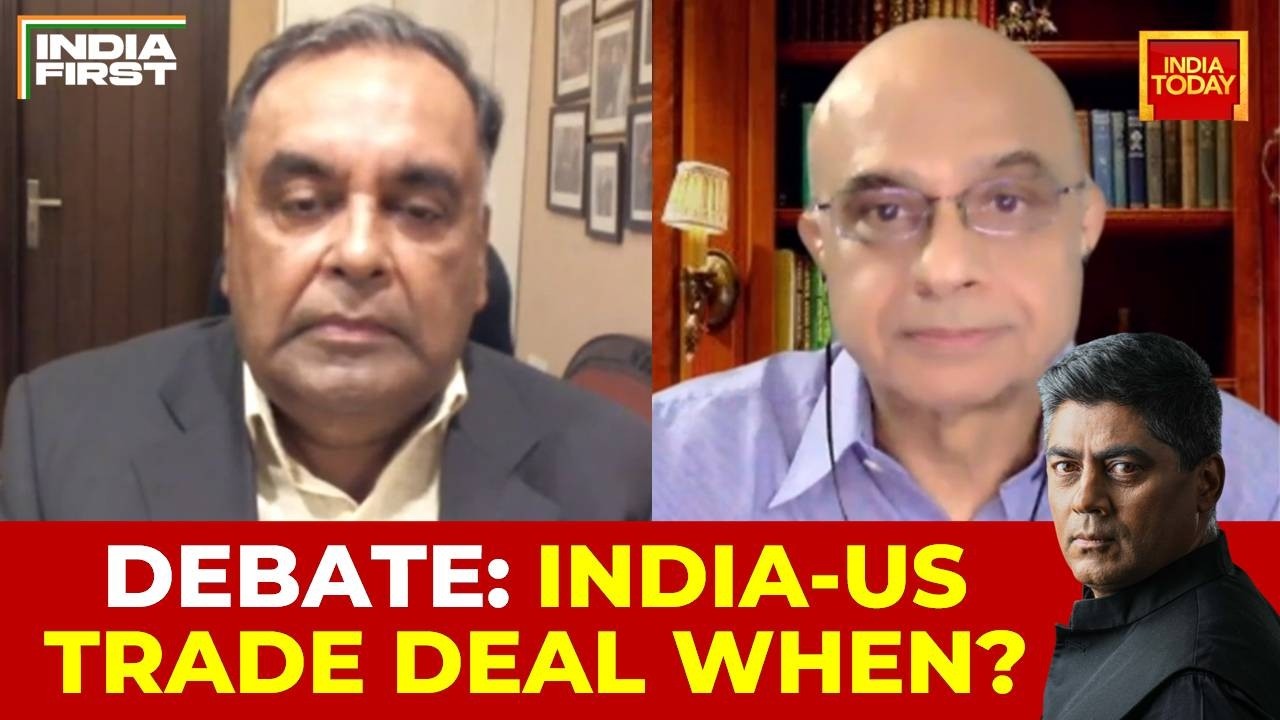
UPDATED: Oct 22, 2026 21:23 ISTOn India First, Gaurav Sawant hosts strategic thinker Professor Brahma Chellaney, former diplomat Ambassador Yash Sinha, and India Today Group Editorial Director Raj Chengappa to evaluate the trajectory of India-US ties under the Trump administration. Chellaney warns of an institutional reset in Washington, noting that 'there is a calculated downgrading of India in US strategy' driven by a rethink after China's rise.
Sinha highlights the purely transactional nature of the bilateral engagement, pointing to US Secretary of State Marco Rubio's visit to Jamnagar and Washington's push for India to process Venezuelan crude. Meanwhile, Chengappa shares insights from his interaction with Rubio regarding trade negotiations, tariff predictability, and global energy dynamics.
The experts unpack the broader implications of US defence equipment supplies, military tech holdups, and how New Delhi must navigate strategic autonomy in an increasingly transactional global order. Read MoreVIDEOS FROM OTHER SECTIONSLATEST VIDEOSTiger Shroff Firing: Video Reveals Gunpowder Burns, Bishnoi Gang Link EmergesA video released following the firing attack on Tiger Shroff shows the extent of injuries sustained on the actor's arm, including gunpowder burns and wounds caused by shattered glass.
Multiple rounds of bullets were fired at close range during the incident on Sunday night, leaving Shroff's driver and a fan injured and hospitalised. While the Lawrence Bishnoi gang claimed responsibility for the attack, Shroff's family confirmed the fan is receiving care, with the actor sharing the video with the caption 'God is kind.'Rehan Vadra Photo Takedown Row: Kishore Singh, Rishabh Shah & Sanju VermaA massive controversy has erupted following the removal of protest photographs taken by Rehan Vadra from an exhibition at Delhi's Bikaner House.
Panelists including art curator Kishore Singh, IIMUN founder Rishabh Shah, lawyer and Her Haq founder Anya Wick, Congress national spokesperson Gurmehar Kaur, and BJP national spokesperson Sanju Verma debated the issue of artistic freedom versus venue regulations. While arts advocates and the opposition argued that documenting public dissent through street photography should not face blanket censorship, Sanju Verma defended the venue's actions, asserting, 'Freedom of speech and freedom of expression under Article 19 of the Constitution are not absolute.' Verma stated that the exhibition violated specific Bikaner House guidelines restricting political content, rejecting allegations of political vendetta.India-US Ties: Key Takeaways On Trade Deal, Energy Cooperation And Summit TalksA preview of an upcoming interview on India Today outlines major developments in India-US relations, including discussions around a potential bilateral trade deal and an anticipated meeting between Prime Minister Narendra Modi and US President Donald Trump.
Key topics include strategic cooperation in nuclear energy through small modular reactor technology, joint military exercises involving F-35 aircraft, and India's position as a global refining superpower. The analysis highlights the operational capability of the Jamnagar refinery to process diverse crude grades such as Venezuelan and Russian Ural oil amid international energy supply disruptions.
Strategic considerations also encompass potential Indian corporate investments in the United States and global energy security. Furthermore, the discussion touches on bilateral trade dynamics, addressing whether the India First and America First frameworks can align, concerns over tariff policies, and the imperative for supply chain diversification away from dependency on critical mineral imports from China.India-US Ties: US Secretary of State Marco Rubio on Russia-Ukraine War and VisasA news broadcast discusses an exclusive interview featuring US Secretary of State Marco Rubio and US Ambassador to India Sergio Gor.
The discussion highlights Rubio acknowledging that the Russia-Ukraine conflict will not end on the battlefield, reflecting India's long-standing position that dialogue and diplomacy offer the only way forward. The analysis notes India's role as a diplomatic bridge, with Prime Minister Narendra Modi having engaged Russian President Vladimir Putin, Ukrainian President Volodymyr Zelenskyy, and US President Donald Trump.
Additionally, the conversation touches on core aspects of India-US bilateral cooperation, including H-1B visas, defense partnership, nuclear technology, energy, and the Quad.