


It may be a club none of its members actually want to be in, but the growing number of people in the US affected by extreme weather disasters are starting to organize into a political force.Severe wildfires, floods storms and other calamities now touch the lives of huge numbers of Americans – about half of all people in the US by one estimate – as the climate crisis supercharges extreme events. Some survivors are now coalescing to push for improved disaster response and even action on the politically contentious issue of global heating.“The group has grown, sadly, quite rapidly,” said Sierra Kos, a film-maker who co-founded Extreme Weather Survivors after being caught in a pall of toxic smoke from wildfires in rural Oregon in 2020 as she attempted to take her son to receive medical care.“I am positive though that survivors of extreme weather will not just shape political outcomes and policies moving forward but also look to run for office,” said Kos. “This is going to be a constituency that policymakers and politicians need to listen to.”A charred vehicle in the parking lot of the burned Oak Park Motel after the Santiam fire in Gates, Oregon, in September 2020.
Photograph: Kathryn Elsesser/AFP/Getty ImagesThe shock of extreme weather help bonds people in an unusually bipartisan way, Kos said, with politically diverse delegations of survivors making several trips to press lawmakers in Washington.Survivors overwhelmingly feel that the Federal Emergency Management Agency (Fema) should be more responsive but also that disaster aid should not be politicized, Kos said. Donald Trump has enacted deep cuts to Fema, stressing that states should take more responsibility for disaster relief, and has been accused of withholding resources from states that did not vote for him.“I think you’d be hard pressed to find a group of people that are more united on the core issues,” Kos said of her organization’s survivor network, which now spans around 2,500 people across the US.A meeting of survivors this month in Texas, though, suggests that politicians don’t yet feel overwhelming political pressure to engage with those affected by extreme weather.In a community hall in Kerrville, near where flash floods killed 136 people in 2025, all of the Texas gubernatorial and senate candidates were invited to speak to survivors but only one, Vikki Goodwin, Democratic candidate for lieutenant-governor, showed up.Texas state representative Vikki Goodwin speaks with reporters in Kerrville.
Photograph: Brenda Bazán/The Guardian“We are seeing more extreme weather in Texas and we need to do more for survivors,” Goodwin told the group.Several of those who spoke at the event expressed surprise at how they had been thrust into the role of advocate. “I just didn’t care about politics. I never thought I’d be doing this,” said Kylie Nidever, a former pre-school teacher whose childhood home in Hunt, Texas, was one of the few in the neighborhood to survive inundation from the floods.“It radicalized me to see my community devastated, and there was some survivors’ guilt, too.
So that was initially how I dealt with the trauma,” said Nidever, who has spoken to a committee of Texas lawmakers and expressed shock at the lack of Fema response to similar, less deadly, floods that hit the region again this year.“We need more authority, we need more guidance, we need more support,” she said. “And seeing that not happen even after this second flood has lit a fire under me. I guess I knew it would flood again, I just didn’t think it would happen so soon.”Georgia Bishop, whose best friend Felicity Jarmon died in the 2025 floods, said she still finds it difficult to talk about the disaster, which caused “devastating” damage to her own home.
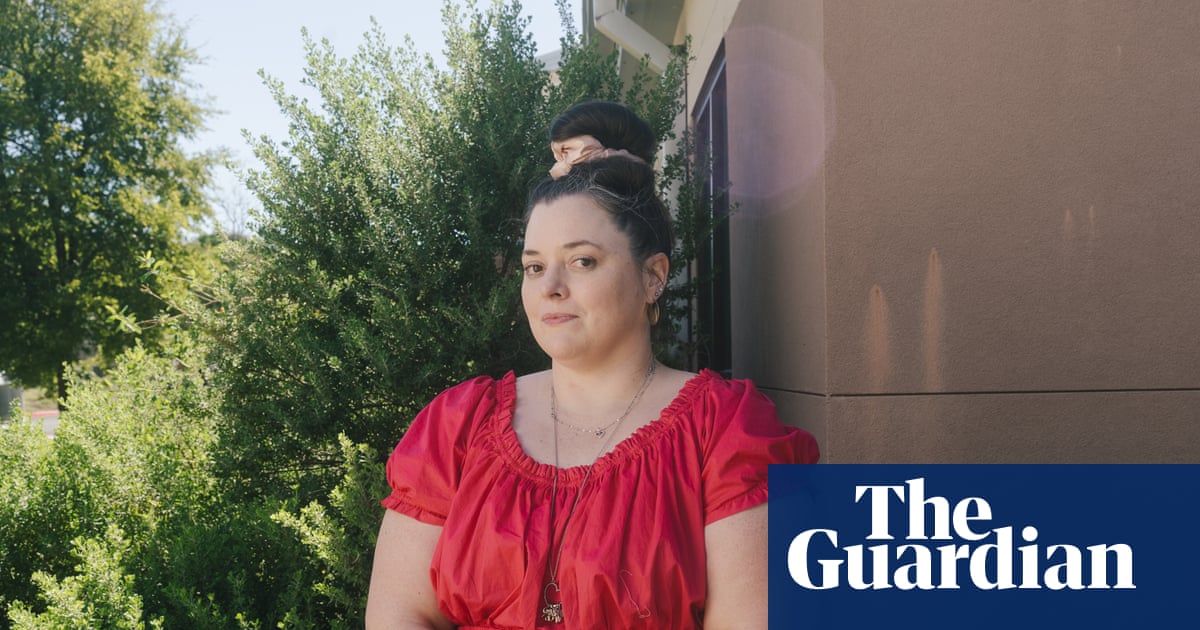
But the 19-year-old has got involved with Extreme Weather Survivors events and traveled to Washington in June to speak to members of Congress about the need for better flood warnings, such as sirens, for communities like hers.Flood survivor Georgia Bishop. Photograph: Brenda Bazan/The GuardianThe reception she got was mixed, she said, with some lawmakers appearing uninterested while some promised to do more. “My only thing is that you say you’re trying, you say you’re working, and I will believe you on that, but will it be in time before something really is going to happen again?” Bishop said.“I just want to help make sure that this never happens again, because I never want that to happen again to anybody.”Survivor groups routinely share tales of frustration when dealing with the labyrinthine and often fruitless process of dealing with insurance companies, Fema and a catalogue of other local, state and federal government agencies to get the resources to piece back together shattered homes and lives.Several people at the Texas meeting spoke of how they will soon be evicted from temporary housing, with no payments from Fema or other bodies to help make their ruined homes habitable again.
Other survivors have been rejected multiple times for Fema assistance, under this and previous administrations.“Fema is terrible, they are awful, they are so inefficient and antiquated that people give up, it’s not worth your stress,” said Elisabeth Anderson, whose home in Atlanta, Georgia was hit by Hurricane Helene in 2025.After several rejected applications, Anderson had to take out a loan to cover the $400,000 needed to repair her home from flooding that had forced her, her husband, child and two dogs to sit on the top of their car to escape the rising waters. “It was insane, like something out of a movie,” she said of the floodwater. “I definitely thought we’d die at one point.”Many survivors complain about the lack of preparation and response to major disasters, Kos said. “There’s this sense of ‘we are American, we should have the best possible evacuation notifications’ – and the fact that all of that funding has been cut really infuriates people,” she added.A destroyed motor home sits on the riverbank in Louise Hays Park next to the Guadalupe River in Kerrville in July 2025. Heavy rainfall caused flooding along the Guadalupe River in central Texas with multiple fatalities reported.
Photograph: Jim Vondruska/Getty ImagesThese common woes help pull together survivors from different parts of America’s politically fractured landscape, even helping foster a greater appreciation of the role of the climate crisis in disasters among those previously skeptical of such links. Scientists have been clear that global heating likely worsened the floods in Texas and elsewhere, as well as recent heatwaves and wildfires.“I used to think global warming was just indoctrination, then I lived through a flood where I genuinely thought I was going to die,” said Mike Malcolm, a 70-year-old Republican voter from Leander, Texas, who wrote his social security number on his hands and feet in case his body had to be identified as muddy water from the 2025 floods filled his home.Malcolm’s children helped him understand the link between the floods and global heating, he said. “We have to be willing to have difficult conversations and look for solutions,” he added. “I keep asking myself: what do we want to teach our children, and what kind of future do we want to leave them?”Flood survivor Kylie Nidever poses for a portrait.
Photograph: Brenda Bazan/The GuardianStill, the political toxicity around climate change, which Trump has called a “hoax” and “bullshit”, means that the “C” word is not prominent in survivors groups, sporting names such as Extreme Weather Survivors and Rebuild: the National Disaster Survivors Association.“It’s crazy to me that the term climate change can be divisive, but it can be,” said Nidever. “That’s why we just say extreme weather. We use that instead of going there with climate because it’s more inclusive and it’s not a hot-button term.”Campaigns for the upcoming midterm elections have barely featured mentions of the climate crisis or major disasters, despite American voters wanting politicians to speak more about these issues in the wake of the hottest summer on record in the US and the onset of one of the strongest ever El Niño events, which is already bringing flooding to the west coast and is set to spur even worse heat next year.Survivors may not make a major impact at this election but many feel this will change as warping weather continues to raise home insurance rates and other costs and pockmark large chunks of the year with toxic wildfire smoke, flooding and heat.Roberto Marquez continues building a memorial to honor the victims of the Hill Country floods.
Photograph: Houston Chronicle/Hearst Newspapers/Getty Images“More and more people know someone affected by this. I was in shock when this happened to me again but I’m not the only one affected by multiple events,” said Alex Webber, a medical journal illustrator who evacuated New Orleans after Hurricane Katrina hit in 2005, only to relocate to Asheville, North Carolina ahead of Hurricane Helene, which tore through the city two years ago.“The money for the region from Fema just hasn’t showed up,” said Webber, who said much of Asheville remains moribund two years after the flooding. “A lot of politicians were paraded downtown, it was like disaster tourism and we felt like zoo animals.
Then they disappeared and we are just old news now.“You can’t combat climate change unless you accept it exists; it feels our pigeons are clearly coming home to roost. We can’t keep delaying.
We have to solve this, it has to stop being a partisan issue. But there’s nowhere safe now.
No-one is immune from this.”