


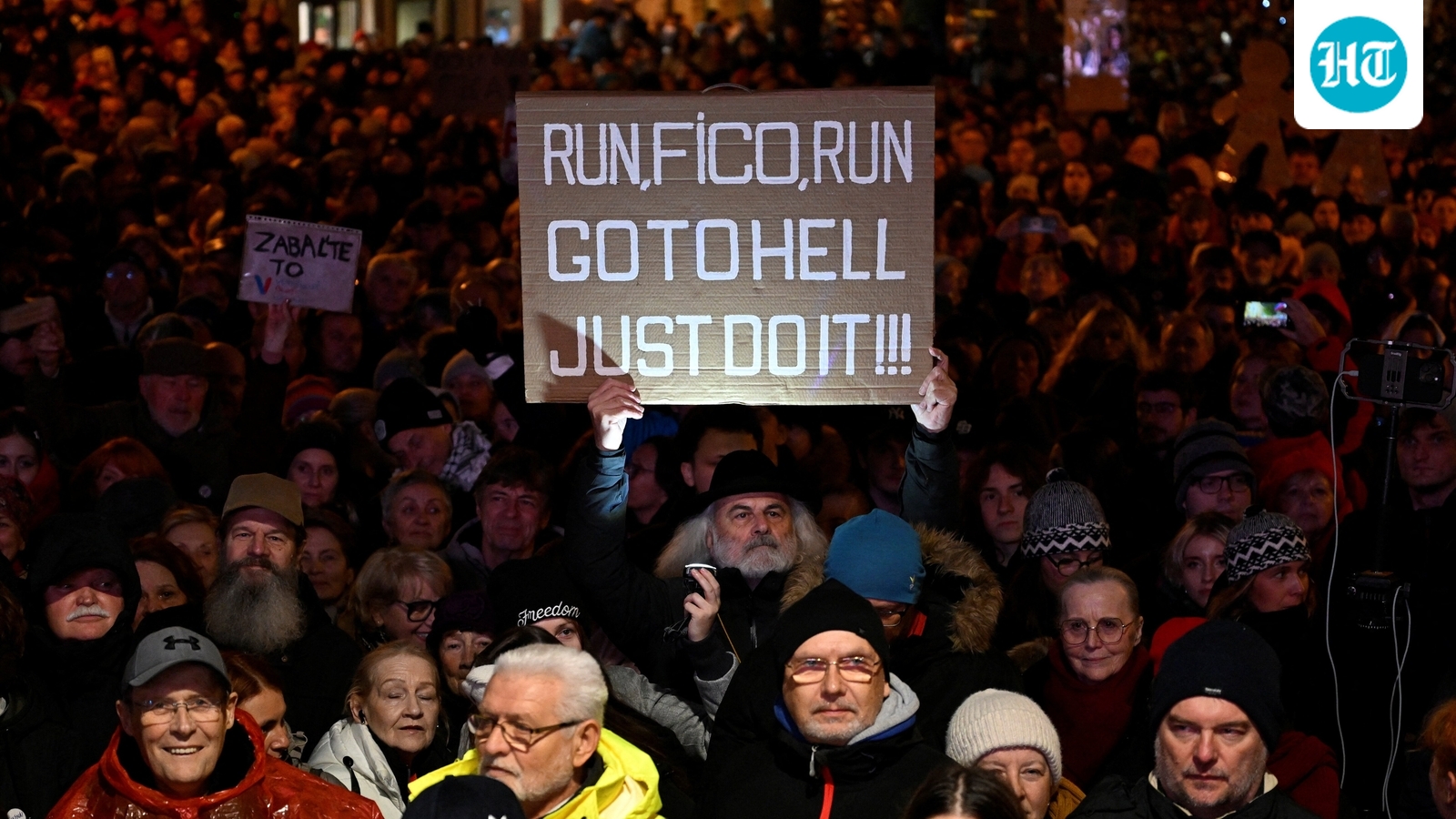
Last month, Europe saw a series of protests and demonstrations erupt across various countries, including France, Italy, Albania, and more. In November, the unrest continued, with students, youth and more launching fresh demonstrations.A demonstrator holds a banner that reads “Run, Fico, Run, go to hell, just do it!” at an anti-government protest during the 37th anniversary of the 1989 Velvet Revolution in Bratislava, Slovakia (REUTERS)In the past week, protests erupted in France, the Czech Republic, Portugal, Spain and Slovakia.FranceThe latest demonstration comes from France, where over 100,000 people took to the streets to protest against the high cost of living and demand a minimum wage for public sector workers.
From mid-September to October, Paris saw a series of demonstrations which turned violent as people protested against rising living costs, education policies, and strain on public services.On Tuesday, at least 146,000 people took part in the protests across the country, with 28,000 in Paris alone, said the Interior Ministry.Along with the demonstration, several trade unions had called for a day of strike action.The protests came after talks with French prime minister Sebastien Lecornu failed to satisfy the unions' demands.According to a Bloomberg report, Sophie Binet, secretary general of the CGT union, said protests would continue until unions reach their final goals, which include a 5% across-the-board salary increase. The push for better wages also comes after private-sector workers' salaries were increased last week."The state of schools, the state of hospitals, staffing levels in schools and hospitals, the way things are getting worse and worse across all public services, these are issues that really resonate with us," Aurelane Thos, a 38-year-old nurse at a Paris hospital, told AFP as she joined the protests.Also Read | Looting, petrol bombs, fireworks: Protests turn violent in France, Germany as unrest grips EuropeSlovakiaDays after neighbouring Czech Republic carried out protests against a new public media funding plan, demonstrations also erupted in Slovakia.On November 17, which is also the anniversary of the 1989 Velvet Revolution, which ended communist rule in erstwhile Czechoslovakia, thousands took the streets in Bratislava to rally against pro-Russian prime minister Robert Fico.“We’ve had enough of Fico,” chanted people in the Slovak capital, where organisers of the demonstrations estimated a gathering of 25,000 in the downtown SNP square.The rally on Tuesday also united Slovakia's liberal groups Progressive Slovakia and the Democrats with pro-business Freedom and Solidarity, the conservative Christian Democrats and an alliance of ethnic Hungarians.“Just as in 1989, what unites us must be stronger than what divides us,” Michal Šimečka, leader of the major opposition Progressive Slovakia party, was quoted as saying by AP.The Fico government's move to send foreign minister Juraj Blanár to Russia for talks about renewing economic cooperation and other ties between the two countries for the first time since the start of the Ukraine war angered people and opponents.Fico is also one of Europe’s most pro-Russian leaders since Hungary’s Viktor Orbán was ousted from power in April.PortugalOn November 14, tens of thousands of people marched in Portugal across 30 towns as they rallied against rising home prices, high cost of living and soaring rents in the country.Between 2015 and 2025, as per Eurostat, Portugal recorded the highest housing-to-income ratio at 61 per cent in the European Union due to a widening income gap.Over the weekends, demonstrators demanded caps on rent increases, higher wages and affordable public housing.
Responding to the protests, prime minister Luís Montenegro's government has stated it is open to dialogue ahead of State Budget talks.Also Read | 'Nobody heard us, explosion of rage': Gen Z in Europe explain reason behind protestsSpainSpain experienced its first nationwide general strike in 14 years last week. The protests were driven by increasing housing prices and the cost of living.Millions of workers stayed home, shuttered businesses, and disrupted public transport as a sign of solidarity with the protest.“It’s extremely important to remind people that we, the workers – who are also renters or who also pay mortgages – are the ones with the power to halt production and bring the economy to a standstill," Sandra Mora, of the Madrid Tenants’ Union, told the broadcaster RNE.Meanwhile, over 100,000 demonstrators took to the streets in major cities like Madrid and Barcelona.Clashes also broke out in Barcelona during the protest between police and a group of masked protesters who engaged in arson and vandalism.The unrest in Spain comes weeks before a snap general election called by Prime Minister Pedro Sanchez.(With inputs from agencies)