


Light requires eight minutes to reach Earth from the Sun, but it now takes a full day to reach Voyager 1. According to NASA calculations, the spacecraft has drifted one light-day away from home, reaching approximately 25.9 billion kilometers into space. This means a radio transmission from Earth takes 24 hours to reach the probe, and a reply takes another 24 hours.
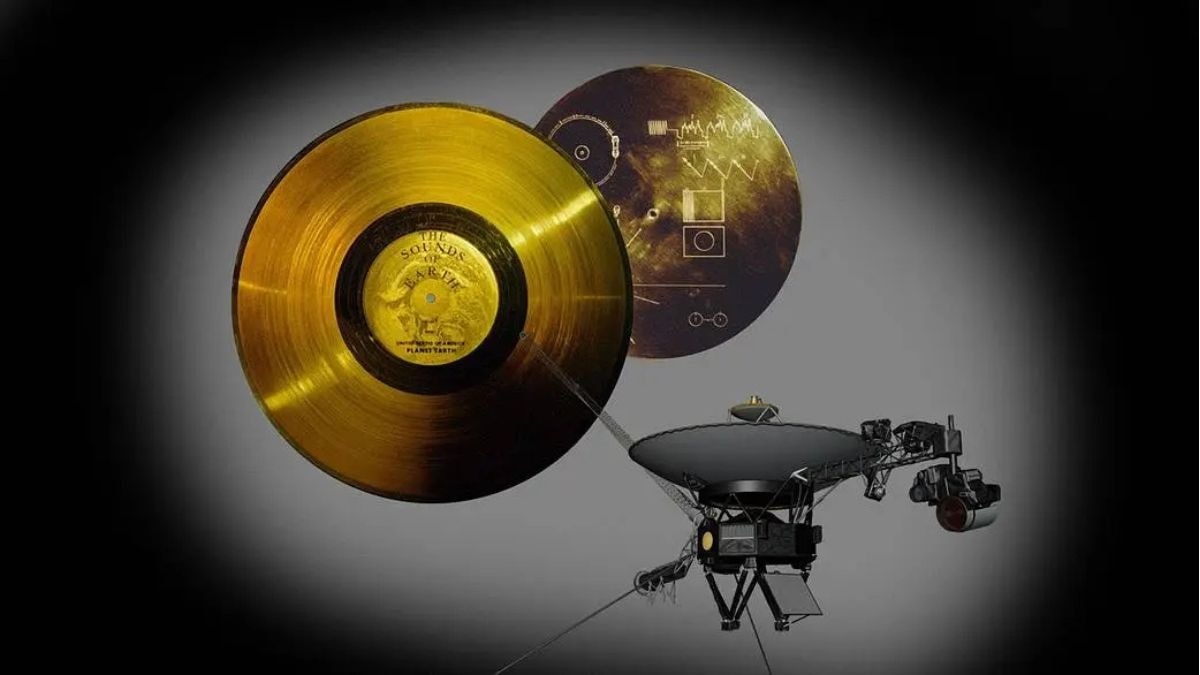
While carrying no human crew, the spacecraft holds the Golden Record, a 12-inch gold-plated copper disc designed as humanity's message to any potential recipients in the cosmos. The record contains 115 images, natural sounds like wind and thunder, greetings in 55 languages, and 27 musical pieces, including works by Bach, Beethoven, and Chuck Berry. Alongside them is a three-minute and 30-second recording titled Jaat Kahan Ho in raga Bhairavi, performed by renowned Indian classical singer Kesarbai Kerkar.
Born on July 13, 1892, in Keri, Goa, during the period of Portuguese colonial rule, Kerkar trained under Ustad Alladiya Khan, founder of the Jaipur-Atrauli gharana. She grew to become one of the most prominent khayal singers of the 20th century. American ethnomusicologist Robert E Brown, who assisted in selecting the music for the project, described her rendition of Bhairavi as the finest recorded example of Indian classical music.
Despite her legendary status, Kerkar was famously protective of her art and distrusted sound recording technology. Historical accounts note that she was averse to broadcasting and once vowed never to enter an HMV studio again after being pressured to re-record older discs. Ironically, the singer who closely guarded her voice during her lifetime has now sent it farther than any other voice in history. She passed away on September 16, 1977, at the age of 85, just 11 days after Voyager 1 was launched from Earth.
Kerkar is not the only representative of India on the spacecraft. NASA archives indicate that the Golden Record also includes spoken greetings in ten Indian languages: Bengali, Gujarati, Hindi, Kannada, Marathi, Oriya, Punjabi, Rajasthani, Telugu, and Urdu. The messages range from general greetings from Earth's inhabitants to wishes of peace and goodwill for beings across the universe.
These Indian language contributions were largely coordinated by Bishun Khare, a senior physicist at Cornell University's Laboratory for Planetary Studies, who contacted friends and members of Cornell's Indian community to record the messages within a matter of weeks.
Voyager 1 does not play the record; it carries it silently and securely, etched with instructions for playback and a map of Earth's location. NASA estimates that in approximately 40,000 years, the spacecraft will pass within 1.7 light-years of the star Gliese 445. While it remains uncertain if any entity will ever play the golden disc, the question posed by Kerkar's song remains directed at the unknown expanse of space.