


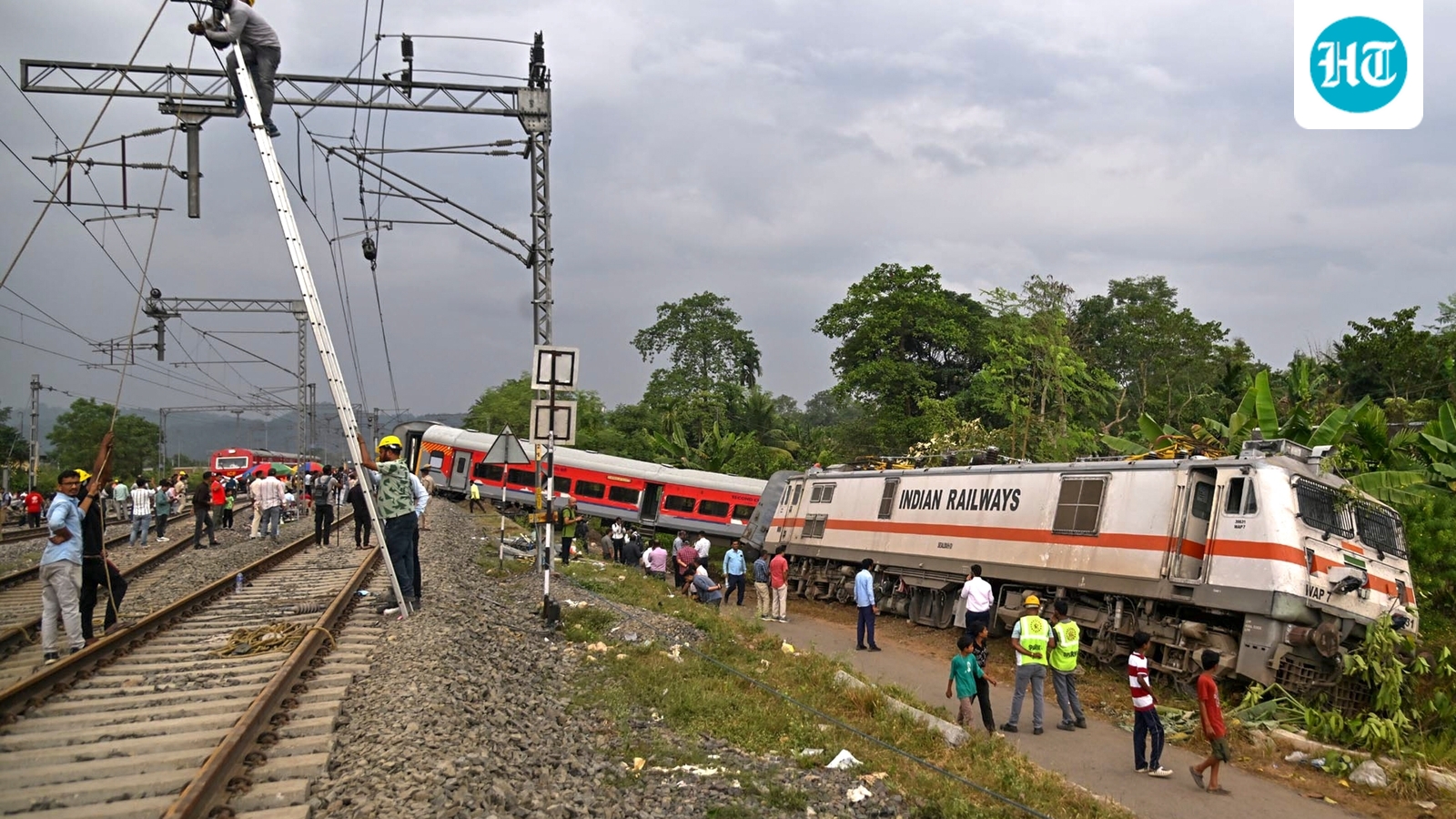
Digaru — The derailment of the Kolkata-Sairang Express near Digaru railway station in Assam's Kamrup (Metropolitan) district left passengers shaken, with a crew member detailing how the train continued moving for roughly a kilometre after going off the tracks.
The pantry car manager noted that passengers were asleep around 5 am and conditions seemed normal prior to the incident. Recalling the sequence of events, he explained that the train slowed down as it approached Digaru station before an unidentified sound was heard.
The manager stated that the speed was initially good and slowed slightly at Digaru. After crossing the station platform, a sound occurred, followed closely by the feeling of the engine derailing a few metres ahead. He added that the train continued traveling for another kilometre in a derailed state.
Describing the panic inside, the crew member said he fell from his seat three times and that doors could not be opened, leaving everyone anxious. After roughly ten minutes, the train came to a halt, and he expressed relief that everyone remained safe while noting that the power car and engine suffered severe damage.
Chief Minister Himanta Biswa Sarma reported that four people sustained minor injuries when the locomotive and five coaches of the express train left the tracks on Wednesday. In a social media statement, Sarma confirmed that all other passengers were safe and that the injured individuals were receiving medical care.
The chief minister added that basic necessities were supplied to stranded passengers and an alternative train was organized to continue their journey. The four injured travellers were transported to the Sonapur Primary Health Centre for treatment.
A Northeast Frontier Railway spokesperson explained that the mishap occurred as the train entered Digaru railway station. According to the spokesperson, the loco pilot had given precedence to another train but failed to control the speed, leading to the derailment of the locomotive and five coaches.
Railway officials deployed a recovery train to the location to conduct rescue operations and clear the blocked tracks, while alternative transport was organized to carry passengers onward.