


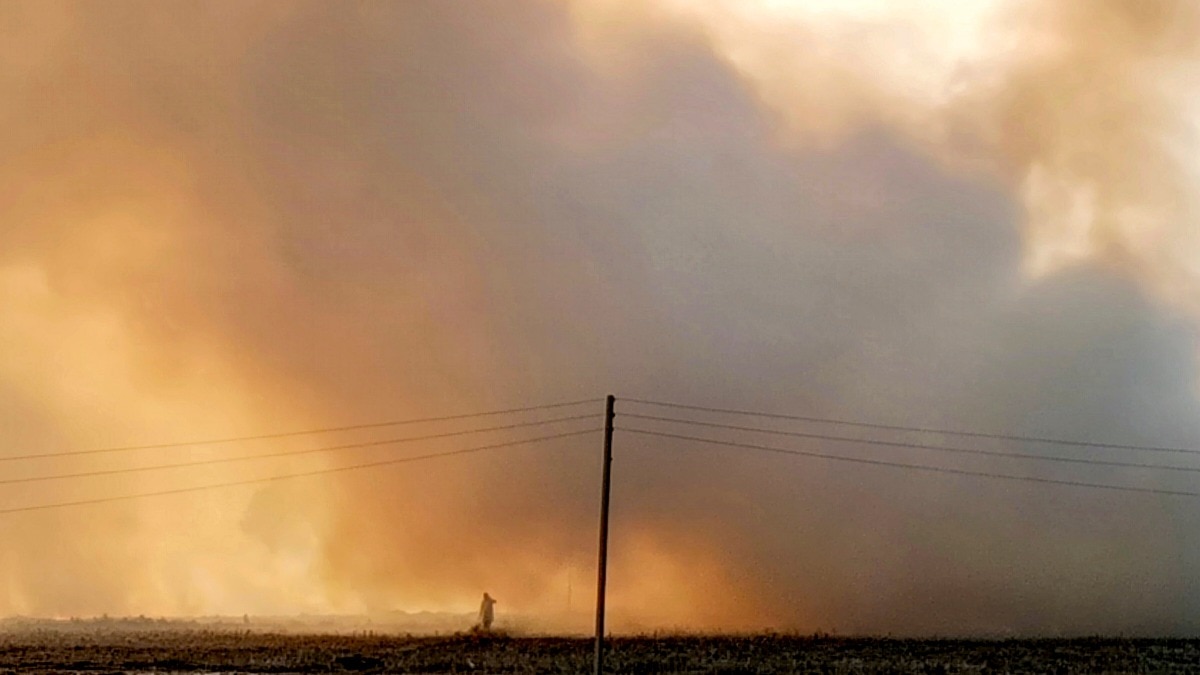
Bathinda in Punjab has emerged as the world's most polluted city, with its Air Quality Index climbing as high as 1,048 on Thursday, according to data from AQI.in. The reading placed the Punjab city well ahead of Meerut in Uttar Pradesh, which recorded 680, and Sirsa in Haryana, which stood at 636 in the global pollution rankings.
While the soaring pollution levels come shortly after Diwali, when firecracker smoke heavily impacted northern India, Bathinda's deteriorating air quality stems from a different primary source. The ongoing practice of paddy stubble burning across Punjab, combined with meteorological conditions that prevent pollutants from dispersing, heavily compounded the local pollution burden. According to rankings, all of the ten most polluted cities globally on Thursday were situated in India, with Punjab, Haryana, and Uttar Pradesh accounting for the majority as every single one of those ten cities recorded an AQI exceeding 400.
The timing aligns with Punjab's paddy harvesting season, during which agricultural workers routinely burn leftover crop stalks to rapidly clear fields before planting the subsequent wheat crop. This burning releases substantial quantities of smoke and fine particulate matter, including PM2.5, which drifts across districts and severely degrades regional air quality. Recent district-level data from the Commission for Air Quality Management indicated that Punjab recorded 4,459 farm-fire incidents through November 8.
Bathinda accounted for 406 of those recorded fires, making it the fourth-worst affected district in the state behind Tarn Taran, Ferozepur, and Sangrur. The crisis also saw a sharp spike around Diwali, with Punjab logging 1,152 agricultural fires on November 8 alone, including 132 incidents within Bathinda district.
Agricultural burning represents only part of the equation, as prevailing weather patterns dictate how efficiently smoke and particulate matter dissipate. During November, dropping nighttime temperatures and stable atmospheric conditions frequently prevent polluted air from rising and mixing with cleaner upper layers, trapping toxic smog close to the ground. Additionally, light wind speeds obstruct the horizontal movement of polluted air out of the region.
Weather conditions in Bathinda on Thursday featured a dense smoky haze accompanied by light morning winds. With agricultural fires persisting alongside atmospheric conditions unfavorable for pollutant dispersal, smoke continues to accumulate and drive air quality readings to extreme highs, highlighting that northern India's pollution crisis persists well beyond seasonal festival celebrations.