


Britain’s greyhound racing industry woke up on Monday to the news that the Racing Post, the daily trade newspaper that has carried extensive coverage of the sport since its launch in 1986, will drop both editorial and greyhound racecards in its print edition from 10 December.In a letter to Racing Post readers, Tom Kerr, its editor, said that it had been an “immensely difficult decision” and blamed “tax rises that have hit betting shops [which] have put pressure on the whole industry,” adding that “like other businesses, we have to make hard choices about where we focus our resources.” Five members of staff are expected to lose their jobs as a result of the decision.While the Post will maintain a greyhound section on its website, Monday’s news was greeted with anger and dismay by greyhound racing’s fans and professionals alike.“This undoubtedly will have come as a shock to those who have followed the sport for decades and relied on the paper as a trusted source of news, results and insight,” Mark Bird, the chief executive of the Greyhound Board of Great Britain (GBGB) said in response.“It is deeply disappointing news, particularly at a time when it feels more important than ever for horse racing and greyhound racing to stand together in the face of the challenges confronting both sports.”Bird added that the GBGB is “already exploring what opportunities may exist with other national publications to increase the visibility of the sport. We hope those discussions will prove productive, and we will keep stakeholders updated as and when there is meaningful news to share.”There are currently 15 active greyhound tracks in England and Wales, although Valley Greyhounds near Ystrad Mynach, Caerphilly, currently the only greyhound track in Wales, will close by April 2030 after the Senedd (Welsh parliament) voted to ban greyhound racing earlier this year.Scotland, which has not had a GBGB-licensed track since March 2020, also voted to outlaw the sport earlier this year, and Monday’s news will be seen as another significant setback for a sport that has had little to celebrate in recent years.As recently as 2004, there were 12,000 new registrations of racing greyhounds in the UK, and a total of 51 tracks – including 20 “independent” venues – staging racing, generating a total of around £3bn in betting turnover annually.The sport has since suffered steep declines in attendance and turnover, however, following the closure of many tracks including the high-profile London venues of Walthamstow and Wimbledon, the former home of the Greyhound Derby.
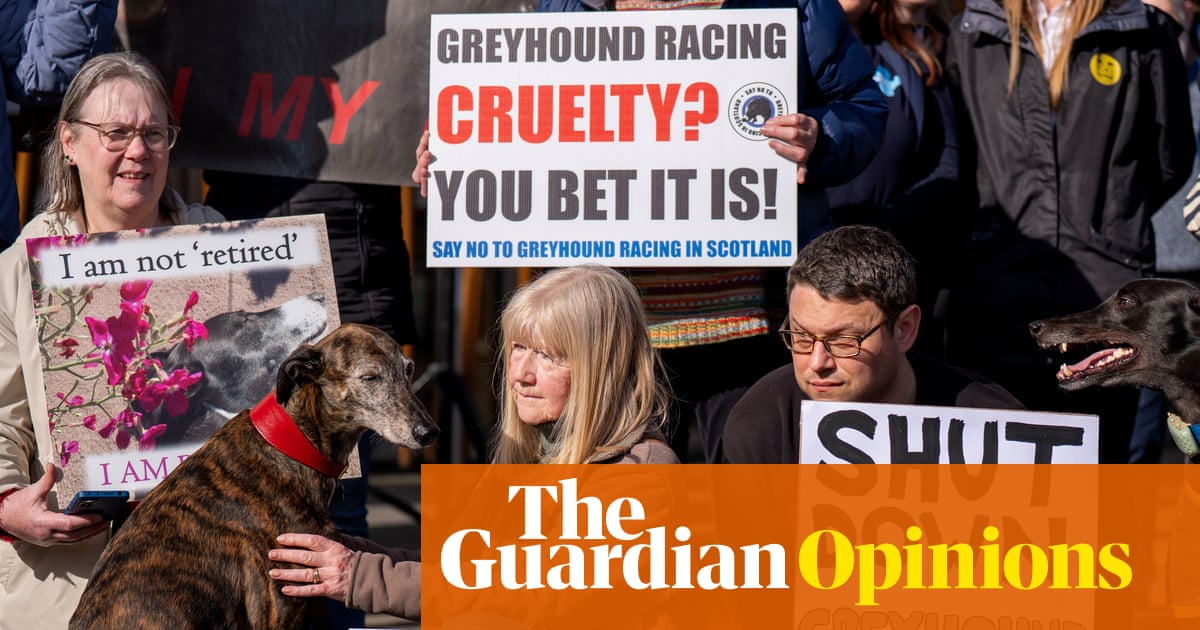
It generated estimated off-course turnover of approximately £1.2bn in 2025 according to the Gambling Commission, with around half that total coming via betting shops.Unlike horse racing, meanwhile, which has the benefit of a statutory levy to return income to the sport from betting in addition to its significant media rights deals, greyhound racing has only ever had a “voluntary” levy paid by gambling firms. That too has dwindled steadily in recent years.All in all, it has been one thing after another for the dogs, and in addition to falling crowds and revenues, since September 2023 the sport has also faced a concerted and well-funded campaign for its phased abolition.That campaign has been co-ordinated by a grouping called Cut The Chase, a coalition of animal welfare charities including Blue Cross and, most significantly, the Royal Society for the Prevention of Cruelty to Animals (RSPCA).The RSPCA’s involvement with Cut The Chase marked a major departure from the organisation’s previous stance of working with the greyhound racing industry on its welfare issues, most obviously the injury rates while racing and the uncertain future for competitors post-retirement.At the organisation’s launch, the RSPCA signed a joint statement declaring that greyhound racing is “inherently dangerous”, and that “significant welfare issues for racing greyhounds have not been resolved and cannot be resolved.”Quick GuideGreg Wood's Tuesday tipsShowLingfield 11.38 Percy Jones 12.08 Pride’s Queen (nb) 12.38 Uomo Valeroso 1.08 Defiant Dream 1.38 Trustintimes 2.08 Valentine Boy (nap) 2.38 Teggy Lasso 3.08 Orange Emperor 3.38 MeritocraticSouthwell 11.56 Rap Soul 12.26 Bells Of Ufford 12.56 Beau De Maine 1.26 Made In Reugny 1.56 Nobody Told Me 2.26 In The Purple 2.56 Gimarias 3.26 ManuelitoWolverhampton 4.30 Mehmar 5.00 Prosewriter 5.30 Zajal 6.00 Haldon Fire 6.30 National Pride 7.00 Dandana 7.30 Queue Dos (nap) 8.00 Flagbearer 8.30 RyeFans of both greyhound and horse racing may see an immediate parallel here, as the RSPCA’s current policy with regards to horse racing is to “engage” with the industry to encourage the highest possible welfare and safety standards.There have been moments, though, in recent years when the organisation’s language has veered more towards confrontation than conversation.
After this year’s Cheltenham festival, for instance, when the deaths of four horses at the meeting – from 475 runners – prompted the RSPCA to issue a statement that suggested “these incidents are clearly at odds with the UK’s status as a nation of animal lovers”.Racing launched its latest five-year welfare plan at the House of Commons earlier this month, focusing on safety, quality of life and lifetime responsibility for all Britain’s racehorses. It should be required reading for anyone with the sport’s future prosperity at heart, as it sets out in detail what racing has done, and will continue to do, to maintain the highest possible welfare standards.The day when the RSPCA calls for a ban on horse racing still feels some distance away.
Greyhound racing’s many struggles, though, of which the loss of Racing Post coverage is only the most recent, are a sharp reminder that there is no room at all for complacency.