


The announcement that the 2035 Women’s World Cup will be hosted in England, Scotland, Wales and Northern Ireland has finally come and, if we aim high enough, it could have a massive societal impact.Confirmation was a foregone conclusion – the UK was the only bidder – but that did not mean the submission was complacent or lacked ambition.This tournament, which will be the largest single-sport event staged in the UK, has the potential to transform women’s football in the four host nations and leave a positive wider imprint.Andy Burnham said as much in his statement after the announcement, saying it “will reach into communities across the country, bring more people into the game and leave a legacy that lasts long after the final whistle”.In a world where the manosphere is having an increasingly negative and misogynistic influence on young boys and men, the potential impact of a women’s World Cup on home soil cannot be underestimated.It is a large-scale problem. A Guardian article in March highlighted that almost a third of Gen Z men and boys think a wife should obey her husband.
A 2025 Movember report found that 63% of young men watch masculinity influencers. In September 2023, a YouGov report found that one in six boys aged six to 15 had a positive opinion of Andrew Tate.The task for the next eight and a half years, and beyond the tournament, is to ensure the 2035 Women’s World Cup isn’t just a great elite football event but that its impact far beyond is maximised.“So many people in our country are so connected to football,” said Sue Day, the Football Association’s director of women’s football. “I think we can show the country what women and girls can do and it can almost change the narrative a little bit around gender equality.“It really can have an impact to the benefit of everyone – boys and men as well as women and girls – because there’s so much in that manosphere space that really doesn’t benefit men and boys just as much as it really doesn’t benefit women and girls.“On the broadest level, my hope, my aspiration and my belief is that something like this touches the lives of everyone in the country.
It shows everyone in the country a different way of doing gender roles.”It is impossible to predict what scale of change the 2035 Women’s World Cup could inspire, but the scope of the bid reflects lessons learned after England hosted the 2022 Women’s Euros. Then, there was a feeling the FA underestimated the level of growth the women’s game would experience between the bid and the tournament.Old Trafford was a late addition as host of the opening match, a response to increased interest as the tournament moved nearer.
The decision to include four stadiums with capacities of less than 20,000, including Manchester City’s 4,400-seat Academy Stadium and the 7,800-seat Leigh Sports Village, was widely criticised. Of 10 host stadiums in 2022, only Wembley and Old Trafford held more than 33,000.skip past newsletter promotionafter newsletter promotionSarina Wiegman masterminded England’s Euro 2022 win.
Photograph: Martin Rickett/PAFor the 2035 World Cup, 15 of the 22 stadiums in the bid have a capacity of more than 33,000, and 12 exceed 50,000. The list will be trimmed to about 16, but the decision to have stadiums with much bigger capacities to choose from reflects the need to avoid underestimating where the game will be then and the massively increased interest clubs and councils have in hosting the showpiece women’s tournament.
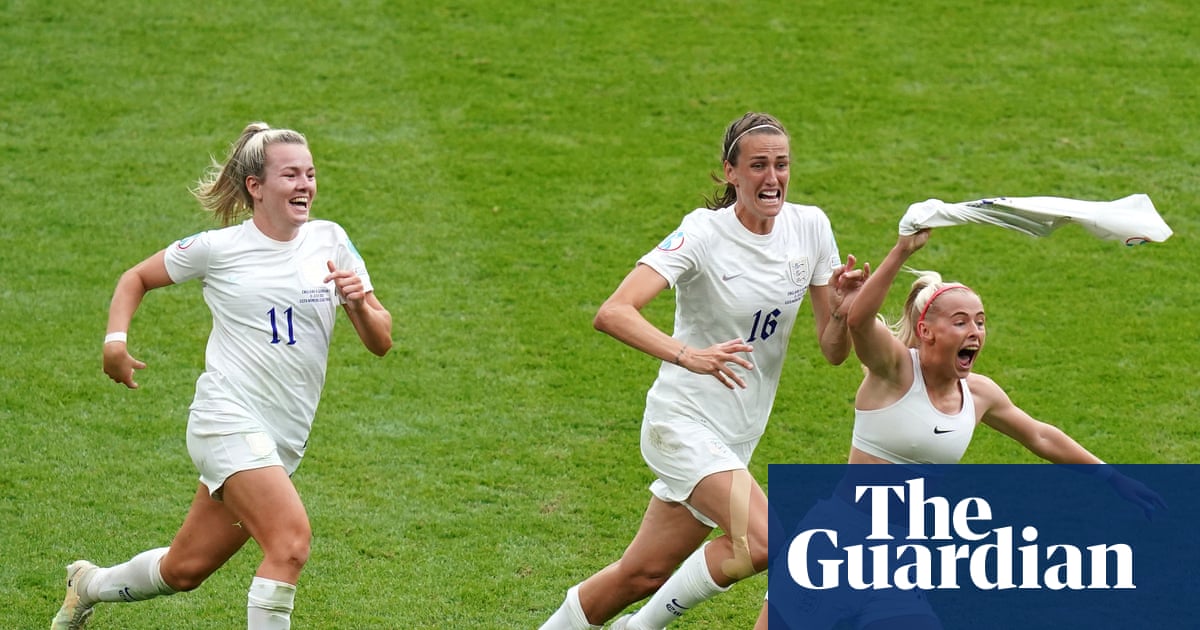
It is also a recognition of the financial and commercial benefits the tournament should bring.The gravitas of the stadium profiles adds to the broader societal impact this World Cup can have: put it in your biggest and best stadiums, have clubs show they believe in the value of women’s football, and fans will do the same.It is hard to measure the impact the 2022 Euros in England, and the Lionesses’ historic win, had on views of women’s football in the country or the extent to which that tournament challenged misogynistic ideas and attitudes about women and their place in society. There are things that hint towards a shift in consciousness in both instances, though.In 2022 it wasn’t until the tournament began that it caught the attention of the wider public.
In many respects the buildup flew a little under the radar. By the time England’s defence of their title came around in 2025, it felt as if the wider public were invested in the tournament far earlier, knew the players, and were ready to engage.Before 2035 there are two Women’s World Cups – next summer’s in Brazil and the 2031 tournament in the US, Mexico, Costa Rica and Jamaica – and the UK nations have a chance to qualify for two Euros.
That is a lot of top tournament football to inspire growth and fandom and for the 2035 organisers to build on.“It will be the most amazing tournament,” Day said, “but it’s also a catalyst for growth and inspiration and something to springboard from. I think we can change the world a little bit with the tournament and we should aim that high.
Why wouldn’t we aim that high?”