


Few Hollywood stories are as closely associated with the idea of an underdog as Sylvester Stallone’s journey to making Rocky. Yet, before Rocky Balboa became a cinematic icon, Stallone was a struggling actor who couldn’t convince the industry to give him a leading role.
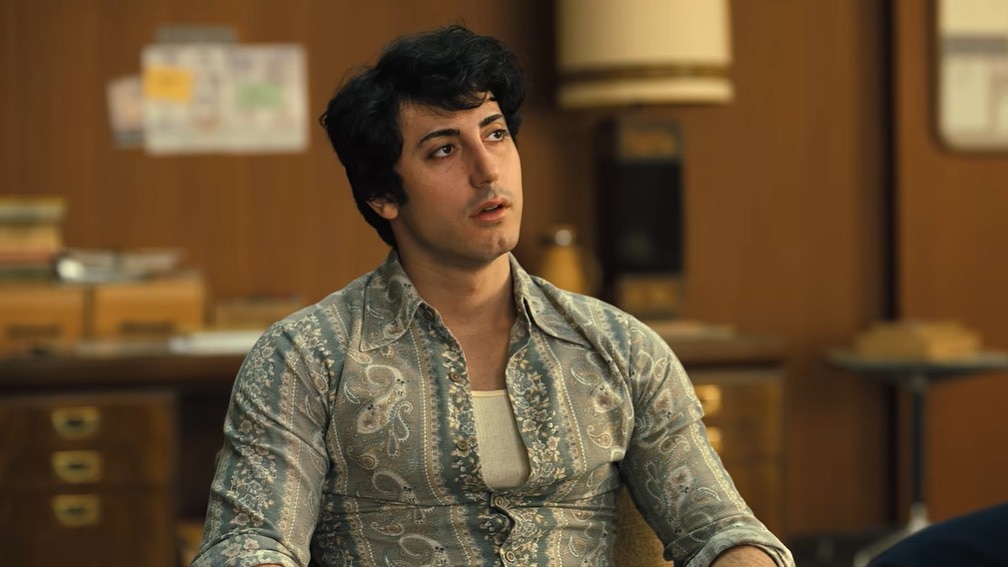
Directed by Peter Farrelly, I Play Rocky stars Anthony Ippolito as the young Stallone and follows his struggle to turn his screenplay into a film without surrendering the right to play its protagonist. AnnaSophia Robb, Matt Dillon, Toby Kebbell, PJ Byrne and Jay Duplass round out the principal cast.The film traces Stallone’s journey from financial desperation and professional rejection to the creation of a screenplay inspired, in part, by the 1975 heavyweight boxing match between Muhammad Ali and underdog Chuck Wepner.
When producers Irwin Winkler and Robert Chartoff recognise the potential of Rocky, the studio wants a more established actor for the lead. Stallone refuses to sell his screenplay without playing the character he has created, putting his future at considerable risk.
His determination is familiar territory for anyone who has watched the original Rocky, but does this account of the film deliver a knockout of its own?Ippolito carries the film with a performance that goes beyond reproducing Stallone’s distinctive speech and mannerisms. He captures the insecurity of a struggling actor without losing sight of the stubbornness that makes his eventual success believable.
The performance is most effective when Stallone has to negotiate his worth with people who possess considerably more power than he does. Here is a man who knows what he wants but cannot be certain that his conviction will be enough to get it.Farrelly, whose Green Book won the Academy Award for Best Picture, approaches the material with an evident affection for the Hollywood underdog story.
Peter Gamble’s screenplay draws parallels between Stallone and the character he is fighting to portray. Both are underestimated, both have something to prove, and both are defined by their refusal to quit.
The connection is an obvious one, but it gives the film a compelling foundation. One of the film’s most affecting elements is its portrayal of Sasha Czack, played by Robb.
She recognises Stallone’s potential when the industry repeatedly fails to do so, encouraging him to write a screenplay that gives him the kind of role he has been unable to secure. Their relationship provides emotional grounding to a story that might otherwise become an extended account of professional rejection.During one of their conversations, Sasha tells him, “I would rather be an optimist and be wrong than a pessimist and be right.” The line captures the optimism that sustains Stallone.
Another lovely detail is Sasha’s reference to Orson Welles. Welles received Academy Award nominations for both acting and writing for Citizen Kane.
Stallone would eventually earn nominations in the same two categories for Rocky, for Best Actor and Best Original Screenplay. The parallel pays off when Stallone’s gamble succeeds and the film he fought to make earns recognition at the Academy Awards.The Ali–Wepner connection is another important part of the film’s appeal.
Wepner, a relatively unheralded boxer, lasted until the 15th round against the reigning heavyweight champion before losing by technical knockout. The fight offered Stallone a compelling starting point for a story about an ordinary man given an extraordinary opportunity.
The film also pays attention to the physical demands of making Rocky. Stallone injures himself while filming the butcher-shop sequence in which Rocky punches slabs of meat, including breaking his hand.
These moments underline the practical difficulties of a production operating under tight financial and scheduling constraints.Spoiler: The film brings behind-the-scenes trivia about Stallone contracting the flu after filming the iconic kiss with Adrian, played by Talia Shire, who was already ill. He continues acting and working on the screenplay despite being unwell.However, these production anecdotes expose one of the film’s limitations.
Once the making of Rocky gets underway, the narrative increasingly relies on the audience’s affection for the original film and its iconic moments. The details are entertaining, especially for cinephiles, but familiarity with the history cannot substitute for dramatic development.
Recreating a memorable scene is one thing; finding a fresh perspective on the people who made it is another.The supporting cast helps keep the film engaging. Kebbell and Byrne bring the producers, Robert Chartoff and Irwin Winkler, into the story, while Duplass makes an impression as director John G Avildsen.
Dillon adds another dimension as Stallone’s father, Frank Stallone Sr., whose lack of faith in his son helps contextualise the younger man’s determination to prove himself.I Play Rocky is at its best when it explores the uncertainty behind Stallone’s ambition. His refusal to surrender the lead role is not simply an act of professional defiance; it is a wager on his own understanding of the character and his ability to bring it to life.
That decision gives the film its dramatic stakes.Farrelly’s film, however, does not give enough screen-time to Kiki Seto, Robert Morgan and Scot Teller, playing Shire, Meredith and Young, respectively, due to its two hours-eight-minute runtime.Nevertheless, Ippolito’s performance and the film’s account of Stallone’s determination make it an engaging watch. For anyone who loves cinema, there is something particularly satisfying about a story in which a struggling actor refuses to separate the character he has written from the opportunity to play him.Before Rocky Balboa stepped into the ring to prove himself, Stallone had his own fight to win.
I Play Rocky may not entirely escape the conventions of the inspirational biopic, but it reminds us why that fight remains worth telling.I Play Rocky theatrically released on November 13, 2026 in India.- Ends