


India's ruling party promotes the young, but doesn't let them become new centres of power. Its youth-wing appointments show how the party cultivates ambition, while carefully controlling its political consequences.The BJP put out two letters this week.
The first, late on the night of October 20, named the office-bearers of the Bharatiya Janata Yuva Morcha (BJYM): seven vice-presidents, three general secretaries and seven secretaries. The second, next morning, named the 34 members of its national executive.
Neither made much of a splash. Youth wing lists rarely do.
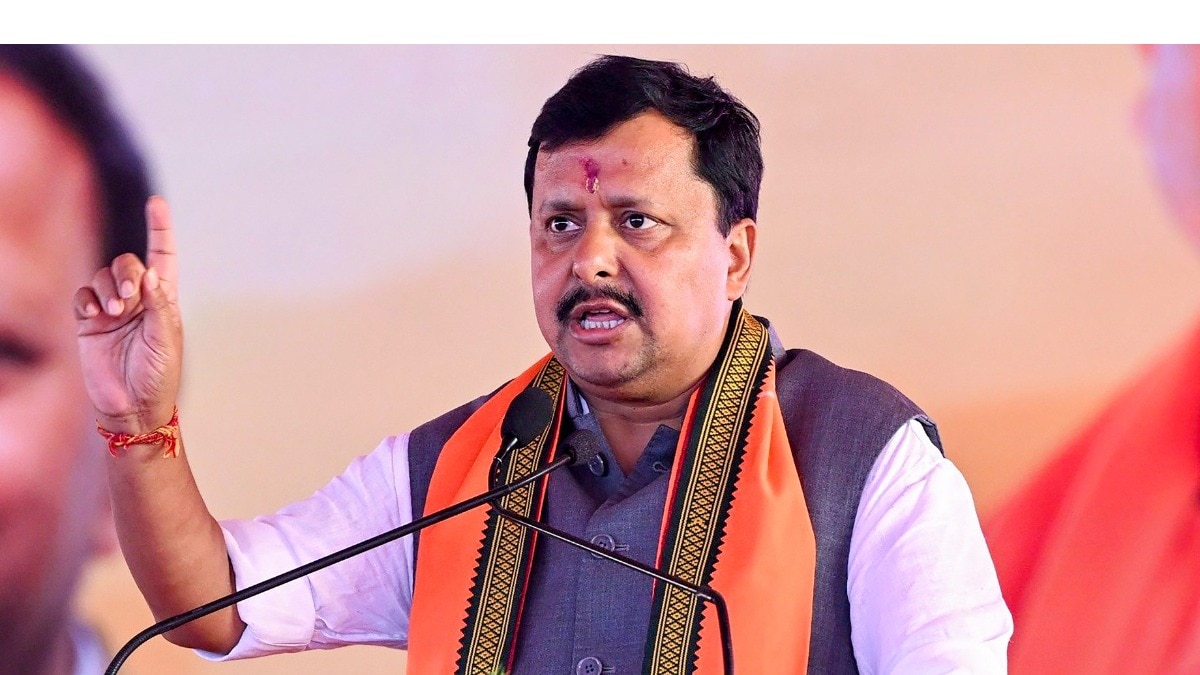
But look at who among the party’s young legislators are on them, and who are not, and the letters start to say something.Four BJP lawmakers aged 35 or under found a place. Hemang Joshi, the 35-year-old Vadodara MP, has run the youth wing since August.
Shagun Parihar, 31, the MLA from Kishtwar, is a national vice-president now. So is Soumen Karfa, 34, who represents Bhatar in the West Bengal assembly.
And Maithili Thakur, 26, the folk singer who won the Alinagar assembly seat in Bihar last November, is on the executive, though not among the office-bearers.At least four others of the same age are on neither list. Anshuman Singh Bhati, 29, the youngest BJP MLA in Rajasthan; Umang Bajaj, 33, the youngest member of the Delhi assembly; Hardik Patel, 33, who led the Patidar agitation and crossed over from the Congress in 2022; and Arijit Roy, who represents Barabani in the Bengal assembly and turned 35 the day before the first letter went out.A fifth, Biraj Biswas, 32, was never in the running: he is Bengal’s minister of state for law, and the BJP’s ‘ek vyakti, ek pad’ (one-person-one-post) rule keeps ministers out of party office—it says you can be in the government or in the party organisation, not both.
The same holds for Shreyasi Singh, the Jamui MLA who at 35 became the youngest minister in the Bihar cabinet. An MLA can hold a party post, which is how Joshi runs the youth wing from the Lok Sabha, but a minister cannot.
The ministry is the faster ladder and the organisation the slower one, and it is the party, not the legislator, that decides which you climb. Parihar and Karfa are the two the party has chosen to invest in, and neither is the kind of young legislator the youth wing used to put forward.
Parihar was 23 when gunmen in Kishtwar, Jammu and Kashmir, shot dead her father and uncle, both BJP workers, in 2018. Six years later the party fielded her for a Muslim-majority seat the National Conference had held for two terms, and she won it by 521 votes.Karfa’s story is quieter: Bhatar was Left territory for three decades and Trinamool’s after that, and this April he took it by 6,528 votes.
Few outside the district had heard of him. A vice-presidency is not a small thing for a first-term MLA, and it is the route the BJP’s history treats with most respect: defence minister Rajnath Singh ran the youth wing in 1988, former Madhya Pradesh CM and Union agriculture and rural development minister Shivraj Singh Chouhan in 2000, and party chief Nitin Nabin ran its Bihar unit before anyone in Delhi knew his name.Thakur is her own category.
She is the best-known young face the BJP has in Bihar and the only celebrity on either list, and she has been put on the executive, which meets, passes resolutions and carries the message to campuses, rather than being given a post. Bihar’s vice-presidency went to Raj Rajendra Singh, whose name means little outside the state party office.
Whether that is to keep the singer for the stage or to give a first-year legislator time to learn the ways of the organisation, the party has not said.That leaves the four, and they are not alike. Patel is the most visibly adrift.
He was left out of the Gujarat cabinet expansion last October that made Harsh Sanghavi deputy chief minister and brought in Rivaba Jadeja. This came two months after he had written to his chief minister threatening a fast over stalled works in Viramgam.
The assembly committee he was handed in May reads as consolation. Bajaj chairs the Delhi assembly’s education committee and has drawn little notice beyond it.
Whether a House committee counts under the one-post rule is something the party has never spelt out, and both men would, by most accounts, have taken an organisational role, not necessarily in the youth wing.Bhati inherits the legacy of his grandfather, Devi Singh Bhati, who held the Kolayat seat for 33 years, then left the BJP for five, and finally returned in 2023 saying his complaints had been settled. The grandson got the ticket within weeks.
In July, at a minister’s public hearing in Kolayat, the stage banners carried no name or photograph of the sitting MLA. His supporters protested and the minister apologised from the stage.Roy is the odd one out.
Going into the election he was the BJP’s district general secretary in Paschim Bardhaman. His father had been the party’s Barabani candidate in 2016, and local workers grumbled, off the record, about a third ticket for the family.
If he still holds the district post, the one-post rule explains his absence as neatly as it does Biswas's.No single explanation covers all four. But set them beside the four who got in and a line appears.
The ones chosen are first-time winners from seats the BJP had never held, with no previous party and no family in politics. The ones left out include a man who came from the Congress, two from political families and a first-timer from the capital.The same line runs through the rest of the list.
The 17 office-bearers contain almost no name a national audience would recognise. Tejasvi Surya’s 2021 team had Tejinder Pal Singh Bagga and Rohit Chahal from Delhi, both familiar from television, and Madhukeshwar Desai, a Mumbai lawyer who had been a vice-president since he was 25.
Joshi’s has Nikhil Mani Tiwari, from Chandadih village in Ballia, who worked the Lucknow belt as the youth wing’s Awadh region general secretary and has never contested anything; Harsh Vardhan Singh of Ayodhya, the state general secretary whose name was in play for the Ayodhya assembly ticket in 2022 before it went elsewhere; and Arvind Damani, a Marwari organiser from Dimapur, who has spent a decade in the Nagaland youth wing and now represents a tribal state at the national table.The only survivor from Surya’s 17 is Arpita Aparajita Badajena of Bhubaneswar, a former students union general secretary and Akhil Bharatiya Vidyarthi Parishad (ABVP) state executive member, who was Odisha BJYM secretary by 2017 and is now a national general secretary. Vineet Vats Tyagi, who ran Surya’s central office, is the treasurer.
The secretary for Maharashtra is Sayali Kulkarni, a sitting Mumbai corporator; Jharkhand gets Aman Yadav from Sisai block in Gumla, an OBC in a tribal district where the party has struggled. And the policy cell, new this time, has gone to Akhila Bandam, a LAMP fellow and Chevening scholar at University College London, the one technocrat on either list and placed in a staff role rather than a political one.Delhi, which had two political posts last time, has none.
The age limit, 35 on paper and ignored for years, has been applied: Desai is out at 39, Roy missed by a day. The list also came fast and from the top: Surya took 10 months to name a team, Joshi seven weeks, and the letter said the names were issued on the orders of the national president.
It is the third such list since August, when Nabin kept one of 11 national secretaries and replaced the head of every morcha and cell, mostly with people from the state units.That standard is not applied higher up. Nabin’s senior team has Manpreet Singh Badal, who reached the BJP via the Akali Dal and the Congress, and Baijayant Jay Panda, formerly of the Biju Janata Dal (BJD), as vice-presidents.
The one secretary he kept is a Congress defence minister’s son, and Nabin himself had entered the Bihar assembly in 2006 by winning the seat his father had held for seven terms. Inside the party this is called a division of labour: youth wing posts on organisational record, senior posts for whoever can win.
The reply, made quietly, is that the test is strictest where it matters least.So what does the BJP have for a legislator in their early thirties? Picked for the organisation, you get a title, a network and work: seven states vote next year, and Uttar Pradesh, with three senior posts and five executive seats, is where Joshi’s people will spend the winter.
In the government, you are on a different ladder and cannot be on both. In neither there is a stated path.
Patel is the test case: four years in, the best-known young MLA in Gujarat has a committee to chair and no party post, and this week’s lists did not change that.And there is the last team to think about. Surya’s 2021 line-up was sold as a bench for the future, too.
Five years on, its best-known members are the ones who were well known going in, and Surya left in August amid reports he had wanted a cabinet berth that did not come. What Nabin has done with the youth wing is on the record: the organiser ahead of the face, the first-time winner ahead of the defector, the singer on the executive rather than at the table.
The ones on the list have until 2029 to show what the preference was worth.