


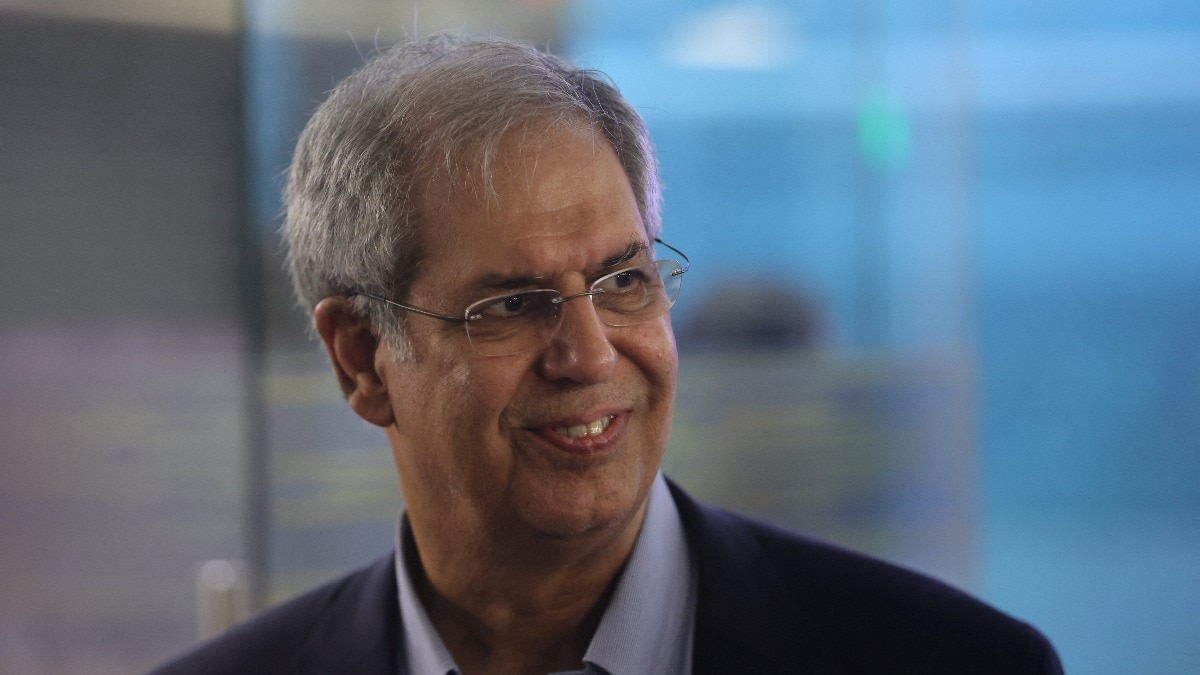
Tata Trusts chairman Noel Tata is set to step down from the boards of six major Tata Group companies on November 12, when he turns 70, while continuing as a nominee director on the board of Tata Sons, the group's holding company, reported Moneycontrol.The move comes in line with the Tata Group's retirement policy for non-executive directors, but also at a time when a governance dispute has intensified between Noel Tata and Tata Sons chairman N Chandrasekaran over the latter's proposed third term.According to the report, the six companies affected are Trent, Voltas, Tata International, Tata Investment Corporation, Tata Steel and Titan Company. Noel Tata is the non-executive chairman of Trent, Voltas, Tata International and Tata Investment Corporation, and the non-executive vice-chairman of Tata Steel and Titan.He will continue as a Tata Trusts nominee director on the Tata Sons board.
He will also continue at Trent Hypermarket, the joint venture between Trent and Tesco that operates Star Bazaar and Star Daily. Transition arrangements for some of his other directorships have not yet been established.
DISPUTE OVER CHANDRASEKARAN'S REAPPOINTMENTNoel Tata's planned exit from the operating-company boards comes amid a disagreement over Chandrasekaran's proposed reappointment for another five years, beginning February 21, 2027.The Tata Sons board approved the reappointment at a September 17 meeting. Noel Tata opposed the decision, while Venu Srinivasan, the other Tata Trusts nominee director on the board, supported it.
Tata Trusts subsequently challenged the validity of the resolution, arguing that it did not receive the affirmative support of a majority of Trust-nominated directors as required under Tata Sons' Articles of Association.The report said Noel Tata renewed his objections in an October 26 letter to Tata Sons company secretary Suprakash Mukhopadhyay. He reportedly sought the meeting's final minutes, voting records and audio-video recordings, and questioned the process followed for Chandrasekaran's reappointment.He also reportedly raised questions about whether the selection committee required under the Articles of Association had been constituted and whether the necessary approvals had been obtained.The allegations form part of an ongoing governance dispute and are not established findings of wrongdoing.WHY NOEL TATA'S TATA SONS SEAT MATTERSNoel Tata's continued presence on the Tata Sons board is significant because Tata Trusts collectively owns around 66% of the holding company.
As chairman of Tata Trusts, he occupies an influential position within the group.His departure from six major operating-company boards will require succession arrangements for the chairmanships of Trent, Voltas, Tata International and Tata Investment Corporation, as well as the vice-chairmanships of Tata Steel and Titan.The distinction between operating-company boards and Tata Sons also reflects different retirement provisions within the group's governance framework. Non-executive, non-independent directors ordinarily retire at 70, while executive directors have a retirement threshold of 65.CHANDRASEKARAN'S TENURE AND RETIREMENT AGEChandrasekaran, who became Tata Sons chairman in 2017, was approved for a proposed five-year term extending until February 2032.
He turns 65 on June 2, 2028.Under the group's internal governance framework, executive directors ordinarily retire at 65. Continuing beyond that age would require an exception or relaxation under the applicable policy, the report said.
The age threshold is an internal governance requirement and not a statutory prohibition on serving beyond 65.Chandrasekaran has overseen major investments in aviation, semiconductors, electronics, batteries and digital businesses during his tenure. His proposed continuation has been linked to the need for leadership stability as several investments remain in development or expansion phases.The disagreement between Tata Trusts and Tata Sons also extends to the proposed listing of Tata Sons.
Tata Trusts has opposed a listing, while the holding company faces regulatory considerations arising from its classification as an upper-layer non-banking financial company by the Reserve Bank of India.- Ends