


The “unprecedented” spread of the Ebola outbreak means it could reach the UK and other countries, according to one of Africa’s top health officials.As the current outbreak reached 10,000 cases, with almost 5,000 deaths, Dr Jean Kaseya, director general of the Africa Centres for Disease Control and Prevention (CDC), compared the outbreak to the Covid pandemic, which first took hold in China before spreading to countries across the world, claiming millions of lives, and ravaging health systems and economies.“We want all countries to know that they are not safe if they don’t take appropriate measures,” he said.“Each country, not only in the African region, but all continents, must now increase the preparedness level and the possibility for treatment.“It is the first time three African regions have been affected [by Ebola]. The geographic extension of this outbreak is unprecedented,” he said.Jean Kaseya, director general of the Africa CDC.
Photograph: Ken Cedeno/ReutersKaseya said leaders around the world should realise that although the brunt of the health crisis is affecting Africa at the moment, the situation could change. “We shouldn’t forget that at the beginning of Covid, many countries said there was zero risk of being affected, but a few months later, they became the hotspot,” he said. “We don’t want to see the UK and other countries become the hotspot.”This outbreak, the 17th in the Democratic Republic of the Congo since Ebola was identified, was caused by the Bundibugyo virus and has become the largest and deadliest in the country’s history.Ebola is a highly contagious, severe, and often fatal illness. It is spread through direct contact with body fluids such as the blood or vomit of infected people, or dead bodies, such as during funeral preparations.On 15 May, DR Congo’s health ministry declared an outbreak in Ituri province, though sequencing shows it had begun in February.
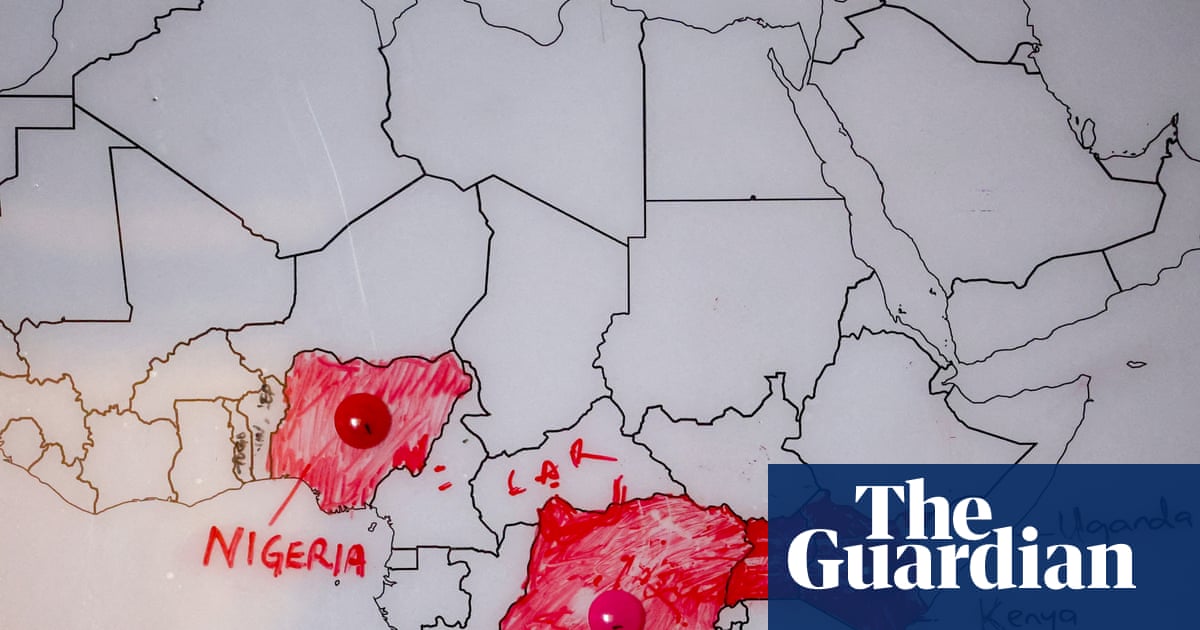
It has now spread to Kenya and Uganda in east Africa, while last week, in west Africa, Nigeria confirmed a case in the capital, Abuja, after a woman who arrived from Uganda tested positive for the virus.France is the only non-African country to have confirmed a case of Ebola so far – a doctor who had returned from DR Congo – in June.Travellers at a handwashing station in Busia on the Kenya-Uganda border, where health officials screen for Ebola symptoms, 12 October. Photograph: Bright Emoja/AFP/Getty ImagesThe Bundibugyo virus has no approved treatment, though vaccine trials are under way.
The results should be available in three to six months, said Kaseya.Of the total 10,091 cases, 10,060 have occurred in DR Congo, with 4,887 deaths. Two people have died in Uganda, and two in Kenya.The response to the crisis has been hampered by inadequate protective equipment and unpaid health worker wages, leading to strikes.
Conflict in DR Congo as well as mistrust towards officials in affected areas, misinformation and global aid cuts have further complicated the situation.Kaseya will convene a meeting of African health ministers on Wednesday to urge greater cross-border cooperation. He wants governments to introduce screening and testing for people coming from affected regions at points of entry and exit.“The main message to ministers is that they have to understand they could be affected, and we don’t want them to be surprised by what could happen,” he said.Red Cross staff simulate evacuating the remains of an Ebola victim in the Kenyan capital, Nairobi, 22 October.
Photograph: Tony Karumba/AFP/Getty ImagesAt a meeting in November with African heads of state, Kaseya will call for a “corridor of peace” in conflict areas. “Currently, we have colleagues in Ituri who want to go and support the population, but they cannot because of insecurity,” he said. “I have to say to leaders, this outbreak is not for rebels, it’s not for the official army, it’s for everyone. Ebola can affect everyone … We need to come together to have a kind of agreement on how to protect each other.”Kaseya called for a global effort to fund the response.
He said governments had pledged $3bn (£2.3bn), but that more than $2bn was still outstanding. African countries had committed $120m, he said, while the rest is meant to come from international donors including the US, the UK and the EU.“We need this money now,” he said. “We must understand that failure to provide funding now to African countries [will result in more being spent] because the outbreak will continue to move.
If we have other countries affected we’ll be talking about trillions of dollars because it will require a lot of support to stop this outbreak.”