


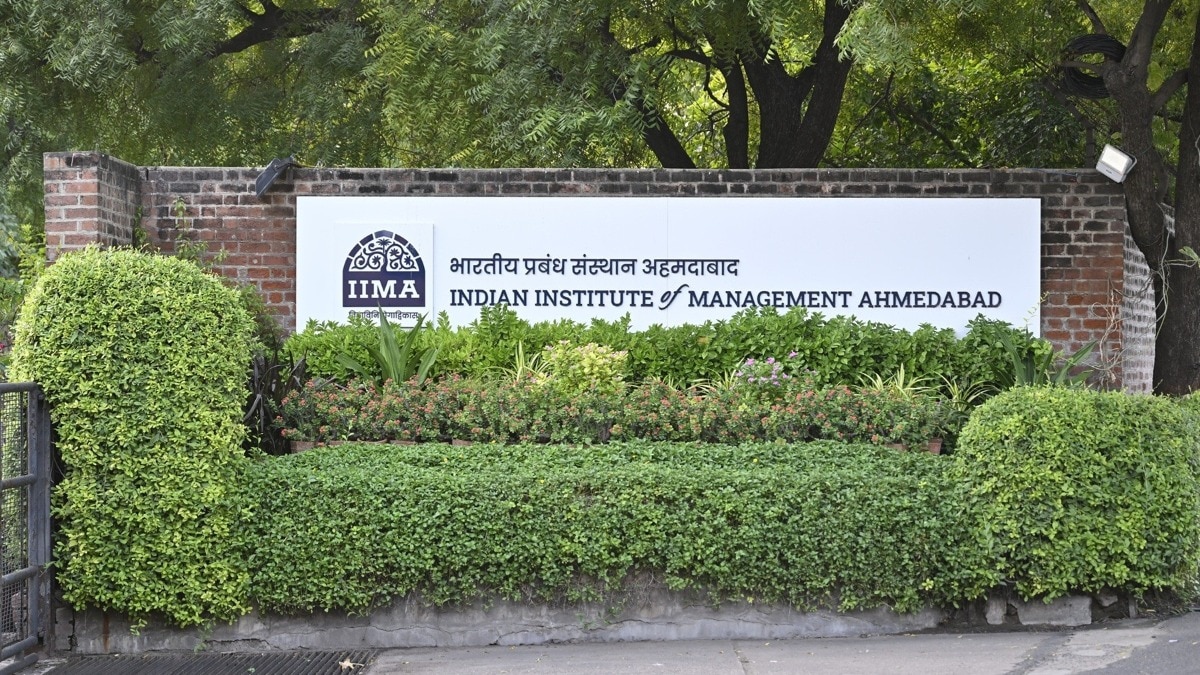
IIM Ahmedabad is giving students and faculty official AI licences while rethinking management education to prepare future managers for changing jobs, automation and uncertain business conditions, says director Professor Bharat Bhaskar.“Official AI licences” refers to institution-provided, authorised access to AI tools for students, faculty members and academic associates to support learning, research and productivity. The institute, however, continues to assess students’ independent understanding through examinations in which AI use may be restricted.As artificial intelligence (AI) changes how people work and companies rethink hiring, management education must prepare students for more than the jobs available today, the IIM Ahmedabad director told India Today.Bhaskar said no management degree could guarantee protection from layoffs.
Instead, educational institutions must help students adapt to changing job roles, new technology and business challenges they may not have faced before. “No educational institution can promise that the jobs students enter today will remain unchanged throughout their careers,” he said, adding that the focus must be on developing managers who understand technology, use AI productively and exercise independent judgement.“I cannot prepare future managers for the industry by keeping them away from artificial intelligence. AI is a fact of life, and organisations are increasingly encouraging employees to use it to improve productivity,” Bhaskar said. “If students are expected to use AI in their professional lives, they must learn to use it during their education as well,” he noted.The aim, he said, is not just to teach students how to use AI tools, but to prepare them to lead teams and make decisions in a workplace increasingly shaped by the technology.‘IF YOU IGNORE AI, YOU WILL BE IGNORED’Bhaskar said AI's impact on jobs goes beyond chatbots and office work.
Generative AI is changing tasks that involve handling information, while robots and automated systems are changing how factories and other industries operate. In some workplaces, machines are taking over more tasks.
In others, people are learning to work alongside them.He also pointed to the money companies are pouring into AI. Businesses have made huge investments, but it is still unclear whether they will earn enough from the technology to justify the spending.
If returns fall short, companies could slow their investments and rethink their hiring plans.Bhaskar sees this as part of how new technologies develop. Early excitement often gives way to a reality check as companies work out what can actually make money.For future managers, this means understanding how AI can change jobs, business models and the way companies operate.
Tasks that mainly involve collecting information could become less valuable as AI makes it easier to find answers. Knowing how to check information, understand what it means and use it to make decisions could matter more.“This is why I believe we cannot afford to ignore AI.
If you ignore AI, you will be ignored,” he said.MOVING BEYOND AI-GENERATED ANSWERSWhile IIM Ahmedabad is encouraging students to use AI, Bhaskar said simply having access to these tools is not enough to become a good manager. The institute's case-based teaching method asks students to work through real business problems, compare possible solutions and decide what to do.“If AI could solve every educational problem and provide all the learning a student needed, there would be little reason to pursue a structured management programme,” he said. “Our responsibility is to teach students how to think, evaluate alternatives and make decisions when they face uncertainty.”Bhaskar expects students to use AI to prepare their first set of answers before class.
But the discussion should not end there. Faculty members can introduce new information, change the assumptions behind a problem and ask students to rethink their decisions.“When everyone arrives with an AI-generated answer, the faculty must take the discussion further,” he said.“That is where the real learning takes place.
We are training students to make decisions when information is incomplete, probabilities are uncertain and the situation can change rapidly,” he added.The idea is to teach students to question AI-generated answers instead of accepting them without checking. Managers still need to use their own judgement, especially when they do not have all the facts or when a business situation changes suddenly.MANAGEMENT EDUCATION MUST EVOLVE WITH INDUSTRYBhaskar said management courses must keep pace with changes in industry as AI, robotics and automated systems change how businesses produce goods, run operations and provide services.
Some traditional ways of managing teams and businesses may no longer work in the same way.He also stressed the need for closer ties with industry. Companies are still figuring out how best to use AI, and management institutes need to understand these changes rather than rely only on established ideas.“Our responsibility is to study these developments, conduct research and experiment with new approaches to management education,” he said.IIM Ahmedabad is also giving students projects and self-study opportunities to explore new challenges with guidance from faculty members and researchers.For Bhaskar, the bigger question is not whether institutes can predict exactly which jobs will disappear or what new roles will emerge.
It is whether they can prepare students to keep learning, adjust to unfamiliar situations and make sound decisions when there are no easy answers.“We may not know exactly how the future workplace will look, but we must prepare our students to navigate it,” he said.- Ends