


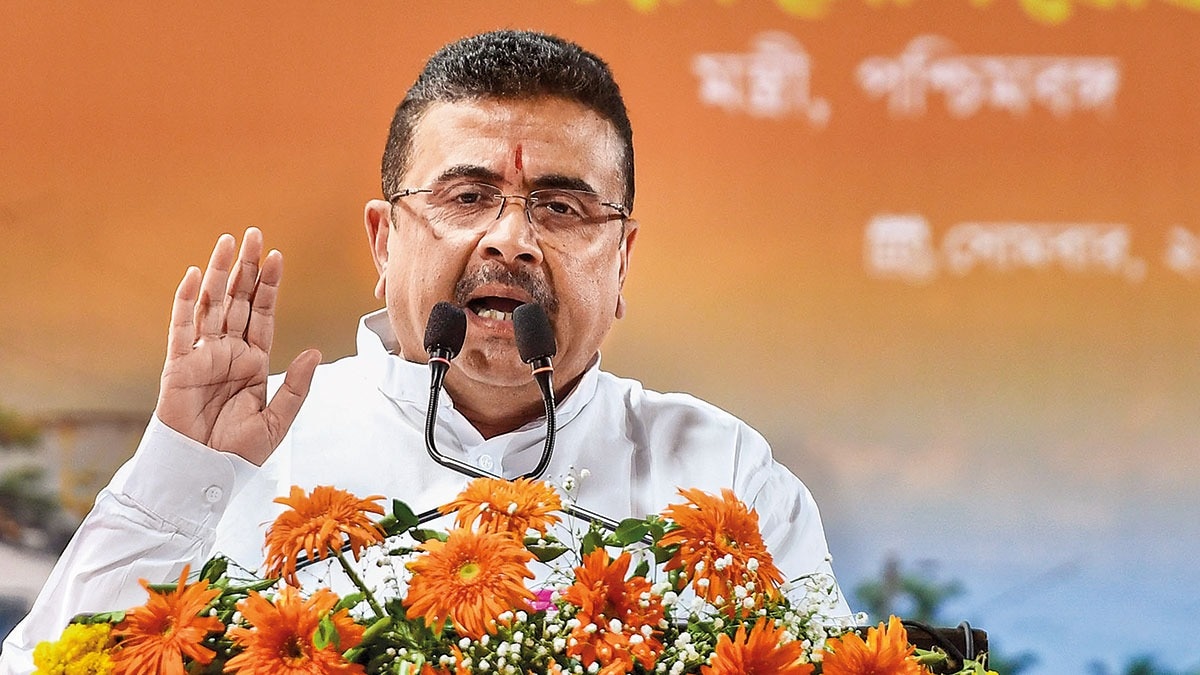
With the BJP government and Opposition in West Bengal trading charges over ward delimitation, Kolkata's long-awaited municipal elections have turned into a battle over more than just civic representation. The legal uncertainty has spilled onto Howrah even as chief minister Suvendu Adhikari's proposal to appoint party functionaries as ward coordinators opened a political front.For a government that has repeatedly promised to restore elected governance and accelerate administrative decision-making, the uncertainty surrounding Kolkata's municipal polls has become an unexpected political complication.
The battle to take control of Bengal’s most prominent civic body has also entered the courtroom.The immediate obstacle is a legal challenge to the redrawing of Kolkata's municipal wards. But the controversy has acquired larger dimensions, bringing into question the manner in which the new government has approached the transition of power in the city's civic administration.
With the Calcutta High Court restraining the State Election Commission from issuing an election notification and the state subsequently approaching the Supreme Court, the prospect of an early election remains uncertain.The dispute centres on the decision to increase the number of wards in the Kolkata Municipal Corporation (KMC) from 144 to 209. On November 6, a division bench of the Calcutta High Court, comprising Justices Sabyasachi Bhattacharyya and Arjun Ray Mukherjee, restrained the State Election Commission from notifying the municipal elections until a single-judge bench disposes of a petition challenging the delimitation exercise.
The petition was filed by Dipu Das, a former CPI(M) councillor, who has alleged that the exercise was procedurally flawed and designed to give the ruling BJP an electoral advantage. Among other objections, he has questioned the use of electoral rolls instead of actual population figures in determining ward boundaries.
The petition also raises questions about geographical contiguity, administrative convenience and the representation of residents.Perhaps the most consequential argument concerns the authority under which the delimitation was initiated. The KMC's elected board was dissolved on June 8, shortly after the BJP government assumed office, and IAS officer Smita Pandey was appointed administrator.
The petitioner has argued that the administrator could discharge the corporation's administrative responsibilities but could not exercise its collective statutory authority to recommend changes to ward boundaries under Section 601 of the Kolkata Municipal Corporation Act.The division bench's observations have added weight to the controversy. In its 21-page order, the court noted that the circumstances surrounding the corporation's mid-term dissolution, the appointment of an administrator and the subsequent sequence of events lent some substance to the petitioner's allegations.
It did not, however, finally pronounce on the legality of the delimitation exercise.The state has challenged the interim order in the Supreme Court. The petition was filed on November 13, and a hearing is expected this week.
The outcome could determine whether the government can proceed with its proposed election schedule or whether the delimitation dispute will first have to be resolved by the high court.Yet Kolkata is no longer the only city facing a legal hurdle. Howrah has entered the same contentious territory.
Imtiaz Ahmed, a former councillor and mayor-in-council member of the Howrah Municipal Corporation associated with the CPI(M), has challenged the decision to increase the number of wards from 50 to 68. His petition questions the legality of undertaking delimitation in the absence of an elected civic board and alleges that the exercise did not adequately consider population distribution and other relevant parameters.Ahmed has also pointed to substantial variations in ward populations, claiming that they range from 2,758 to 41,032.
The petition was scheduled to be heard by a Calcutta High Court vacation bench on November 17. The development has raised the possibility that the legal dispute over Kolkata's civic polls could become part of a wider battle over the delimitation of urban local bodies in Bengal.The timing is particularly significant for Howrah.
Its last municipal elections were held in November 2013; administrators have been running the corporation since December 2018. In other words, residents of the twin city have already spent years without elected municipal representatives.For Adhikari, the legal uncertainty has created an administrative and political dilemma.
The chief minister has accused the Opposition of deliberately obstructing the elections because of an anticipated electoral defeat. He has maintained that municipal corporations cannot indefinitely be run by bureaucrats, who cannot substitute elected representatives in addressing everyday civic concerns.However, Adhikari’s proposed solution has generated a controversy of its own.
He has announced that if the legal hurdles are not resolved by November 30, the government will appoint coordinators in all 209 proposed KMC wards from December 1. He has been unusually categorical about their political identity, saying that the coordinators would be BJP members.
The proposal has received the endorsement of state BJP president Samik Bhattacharya, who has also backed the appointment of local party functionaries to oversee civic services.The Opposition has interpreted the move as an attempt to acquire control of the municipal administration without going through an election. The argument is politically significant because the BJP government, which has accused its predecessor Trinamool Congress of undermining democratic institutions, is now proposing an arrangement in which ruling-party functionaries would oversee ward-level affairs without an electoral mandate.The political stakes are considerable.
The KMC was one of the Trinamool Congress's most important institutional strongholds. The dissolution of its elected board in June ended 16 years of the party's control over the corporation.
A municipal election would therefore offer the BJP an opportunity to consolidate its political position in Kolkata while giving the Trinamool a chance to demonstrate that its urban support base remains intact despite the assembly election defeat.There is also an administrative cost to the prolonged uncertainty. Civic corporations are responsible for essential services, including water supply, drainage, waste management, roads, street-lighting and public health.
Administrators can maintain the machinery of government, but the absence of elected councillors removes an important channel through which residents can seek accountability and redress.The central question, therefore, is no longer simply when Kolkata will vote. It is whether the proposed electoral boundaries can withstand judicial scrutiny, whether the government can conduct elections without further legal complications, and whether an interim arrangement involving politically appointed coordinators can adequately substitute for elected local representation.For the BJP, the assembly election victory was only the first step towards establishing its political dominance in Bengal.
Securing control over Kolkata's civic administration would be another significant milestone. But the road to that victory is increasingly being determined not by campaign rallies or political arithmetic, but the courts and the battle over who gets to draw the electoral map.Subscribe to India Today Magazine- Ends