


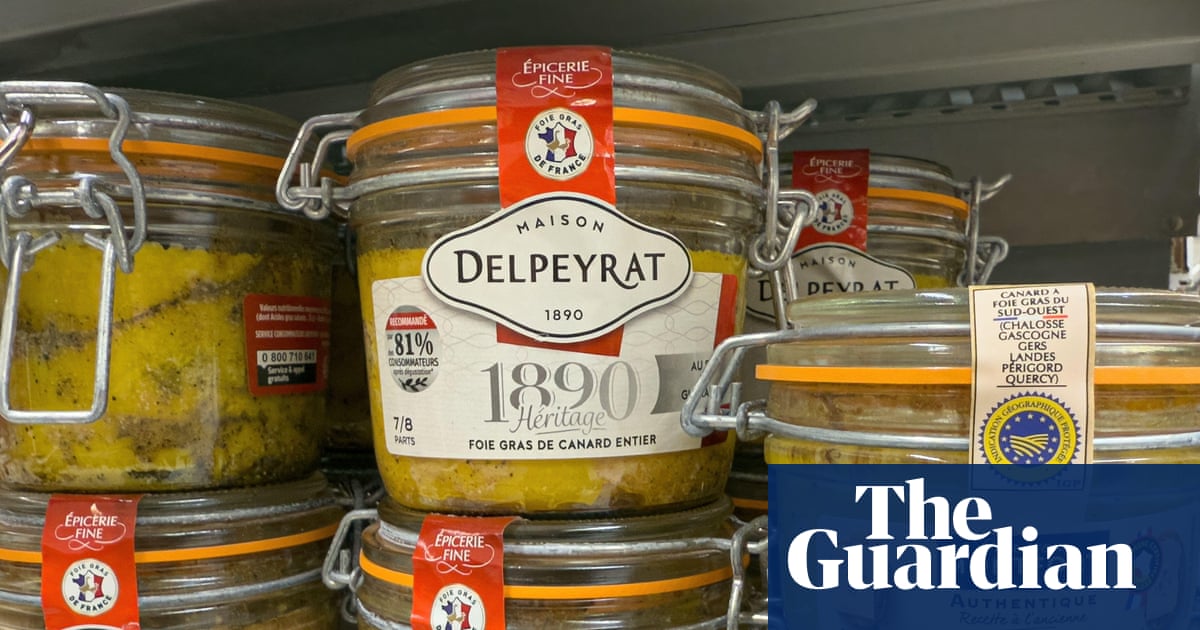
Foie gras imports into the UK will no longer be banned as ministers drop the pledge in order to smooth a trade deal with the EU that will be announced this week.As first reported by the Financial Times, the proposed ban will be officially dropped on Friday when the government announces its sanitary and phytosanitary (SPS) trade deal with the EU to reduce checks and paperwork on imports and exports of food and drink with the bloc.Labour promised before coming to power that it would ban foie gras imports. Before the election, Steve Reed, the then shadow environment secretary, said Labour would “ban the commercial import of foie gras, where ducks and geese are aggressively force-fed”.
He labelled the practice “beyond disgusting”.Foie gras is made by force-feeding ducks and geese grain through a funnel or tube that has been thrust down the bird’s neck – a process known as gavage that swells the animal’s liver to many times its normal size. The livers are then harvested.Banning it has proved difficult as EU countries including France produce and export the product and are against other states putting in place an import ban.
The Guardian reported earlier this year that ministers were preparing to drop the ban in order to secure concessions.Sustainable chefs and animal welfare charities have criticised the U-turn. Boris Johnson’s government promised to use the powers granted by Brexit to ban the “cruel” product, which still appears on menus across the country almost seven years after the UK officially left the EU.Some restaurants still sell foie gras but many shops have removed it from sale, including the king’s grocer, Fortnum & Mason, which took it off the shelves in 2021.
The production of foie gras has been banned in the UK since 2007.The French chef Alexis Gauthier used to sell more foie gras than any other restaurant than London before converting to a vegan diet and menu. He now sells a mushroom-based “faux gras” to customers of his Soho restaurant, who include the former Beatle Paul McCartney.
Gauthier said the ban being dropped was “terrible news”.“I find it very sad our government capitulates so easily,” he said. “The cruelty of foie gras belongs firmly in the history books, not in a progressive society in 2026.”Will Murray, a co-founder of the sustainable British restaurant Fallow, also based in London, serves a mushroom parfait rather than foie gras. He said: “This feels like a step in the wrong direction with regards to animal welfare.
I think London diners aren’t really asking for a big return of foie gras on menus.”David Bowles, the head of public affairs at the RSPCA, said: “We are extremely disappointed that farm animal welfare laws have been put on the chopping block as part of this new deal. Any suggestions plans to act on foie gras are being shelved to ease EU realignment are deeply concerning for animals and would be a clear backwards step.”A spokesperson for the charity Four Paws said: “The UK prohibited the production of foie gras nearly 20 years ago because of the serious animal welfare concerns associated with force-feeding ducks and geese.
Yet foie gras produced using these same methods can still be imported and sold here. As the UK strengthens its relationship with the EU, animal welfare must not become a casualty of closer trade ties.”Government insiders indicated that the ban would be dropped but noted that the method of production was banned in the UK.
A spokesperson for the Department for Environment, Food and Rural Affairs said the method raises welfare concerns.They said: “We are negotiating a food and drink deal that will slash red tape and costly paperwork, make it easier and cheaper to export seafood, boost the British economy by up to £5bn a year, and back British businesses and jobs. We are working closely with businesses to ensure a smooth transition so they can make the most of the benefits this deal unlocks.”