


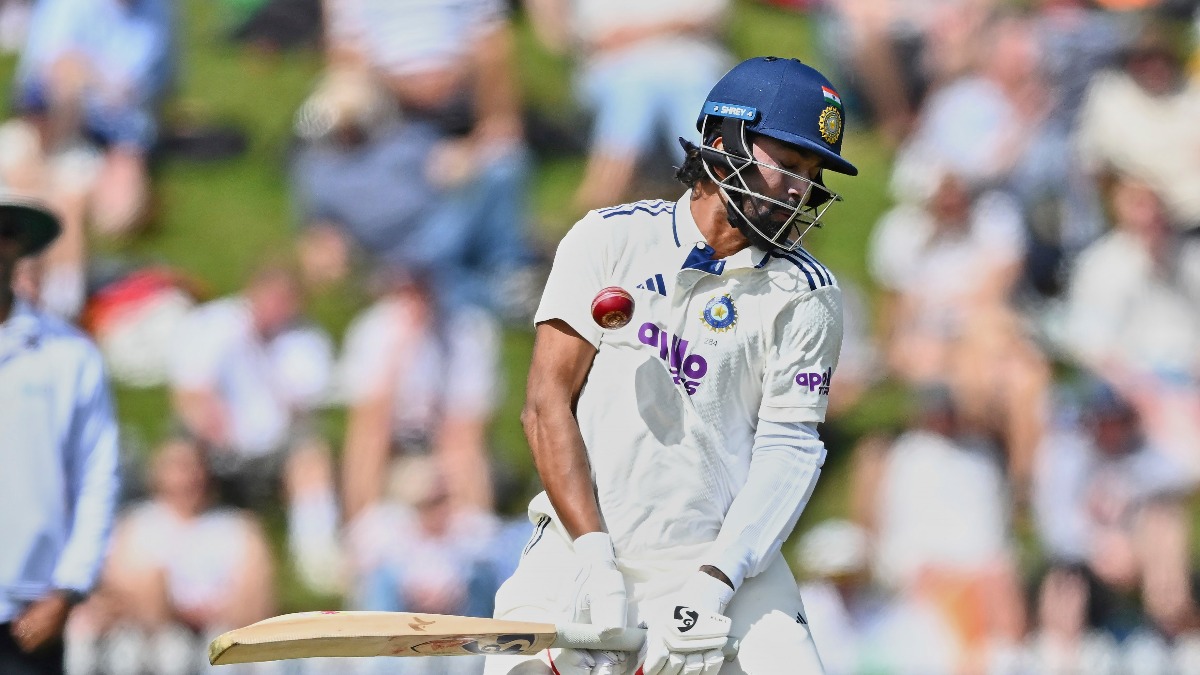
KL Rahul has long possessed a diverse array of strokes, featuring an effortless cover drive, a smooth flick through mid-wicket, and a clean punch through the off-side. However, during his knock in Wellington, the most notable aspect of his performance was not the shots he executed, but rather the ones he chose to leave alone. For more than seven hours, Rahul forced New Zealand's bowling attack to earn every delivery, defending stoutly, watching balls pass safely outside his off stump, and completely resisting the temptation to chase anything outside his comfort zone.
His impressive innings of 136 runs from 290 balls during the first Test served as an absolute masterclass in patience and concentration. This 13th Test century also marked a major career milestone, completing his set of hundreds across all four SENA nations: South Africa, England, New Zealand, and Australia. Beyond the personal achievement, the knock highlighted a batter who had spent meaningful time reflecting on necessary adjustments to his mental approach.
During his post-day press conference, Rahul noted that his technique was never the core issue. Instead, the adjustment needed was entirely mental. Over a prior 15-month stint playing in the middle order, he admitted to developing a habit of trying to make contact with nearly every delivery. In seaming conditions, however, minimizing contact with the ball often proves to be the much wiser path.
For an accomplished stroke-maker, leaving tempting deliveries outside the off stump demands immense self-discipline, as the natural inclination is to reach for the ball or chase a scoring opportunity. In Wellington, Rahul successfully curbed that instinct. Former India captain Sunil Gavaskar praised the effort on the broadcast as a textbook opening batsman's display, highlighting how Rahul managed the early phases alongside partner Yashasvi Jaiswal before both players settled into their respective rhythms.
Analyst Simon Doull pointed out that while casual viewers might remember the boundaries and big hits from the highlights package, the true excellence of Rahul's innings lay in his sound defensive technique. By striding forward confidently, the batter gained a clearer read of the pitch and trajectory, staying prepared for any movement back inward. This level of control, as experts noted, stems from deep practice and trusting one's instincts rather than feeling pressured to play at every single ball.
Substantial preparation underpinned the success. Facing his first Test appearance in New Zealand over a 71-match career, Rahul spent roughly three weeks in the country prior to the match, using net sessions to adjust his guard and adapt to local conditions after a modest run with India A. Rather than attempting a massive technical overhaul, he focused simply on finding the right positions to give himself the best chance of survival.
The hard work paid dividends as Rahul combined with Jaiswal for a 130-run opening stand, marking India's first century opening partnership in New Zealand in 32 years. India ultimately progressed to 486 for four, establishing a 118-run lead over New Zealand's first-innings total of 368. Rather than approaching the milestone with excessive emotion, Rahul treated the tour as a vital challenge against a top-tier bowling attack, proving that sometimes the most effective stroke a batter can play is the one they decide to leave alone.