


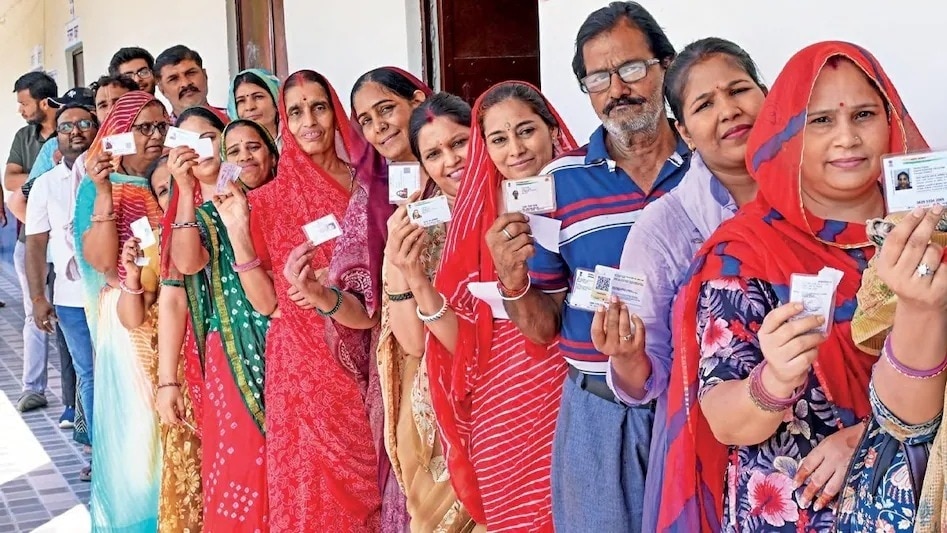
Jaipur: The ruling Bharatiya Janata Party experienced a stark contrast between its performance in urban and rural areas during Rajasthan's recent local body elections, as significant losses in village councils delivered a major boost to the opposition Congress. While the BJP previously maintained strong outcomes in urban contests, the panchayat elections exposed deep vulnerabilities in its rural support base, with prominent leaders failing to secure victory in their own backyards.
A string of high-profile defeats struck the ruling administration as 17 state ministers and three Union ministers failed to defend their political ground. The BJP lost ground in Deputy Chief Minister Premchand Bairwa's Dudu constituency, Health Minister Gajendra Singh Khinvsar's Lohawat constituency, and Agriculture Minister Kirodi Lal Meena's Sawai Madhopur constituency. Furthermore, family members of Urban Development and Housing Minister Jhabar Singh Kharra suffered electoral defeats, though former minister Rajendra Rathore's son and daughter-in-law managed to win.
Capitalizing on rural dissatisfaction, the Congress party secured a commanding lead by winning 794 out of 1,271 zila parishad seats and 3,758 out of 7,520 panchayat samiti seats. In comparison, the BJP managed to win 357 zila parishad seats and 2,213 panchayat samiti seats, while the Rashtriya Loktantrik Party secured 51 and 497 seats respectively. These results place the Congress in a strong position to claim a higher number of pradhans in panchayat samitis, with upcoming elections scheduled for zila pramukhs and panchayat samiti pradhans.
Political analysts attribute the divergence between urban and rural results to differing local dynamics. While urban elections are frequently influenced by broader political narratives and civic topics, rural contests heavily depend on grassroots leadership, community dynamics, accessibility of elected officials, and everyday concerns such as roads, clean water, electricity, and public infrastructure delays. Local friction, factionalism, and public frustration with governance are believed to have fueled the rural backlash against the incumbent party.
The outcome has sparked sharp political debate across the state. Congress state president Govind Singh Dotasra and Leader of Opposition Tika Ram Jully framed the results as a clear public rejection of the BJP government's tenure, arguing that rural voters delivered a fitting response to state and national leadership. Conversely, BJP state president Madan Rathore defended his party by asserting that the opposition had run a campaign based on false narratives, while maintaining that the party respects the mandate of the people.
The emerging performance of the Rashtriya Loktantrik Party added a third dynamic to the electoral map, highlighting a solid rural footprint that could play a decisive role in hung local bodies. For the Congress, the sweeping rural mandate provides crucial momentum leading up to the 2028 Assembly elections, provided the party can maintain its grassroots connection and internal cohesion. Meanwhile, the BJP faces an uphill task in evaluating why its governance and urban popularity failed to translate into adequate village-level support.