


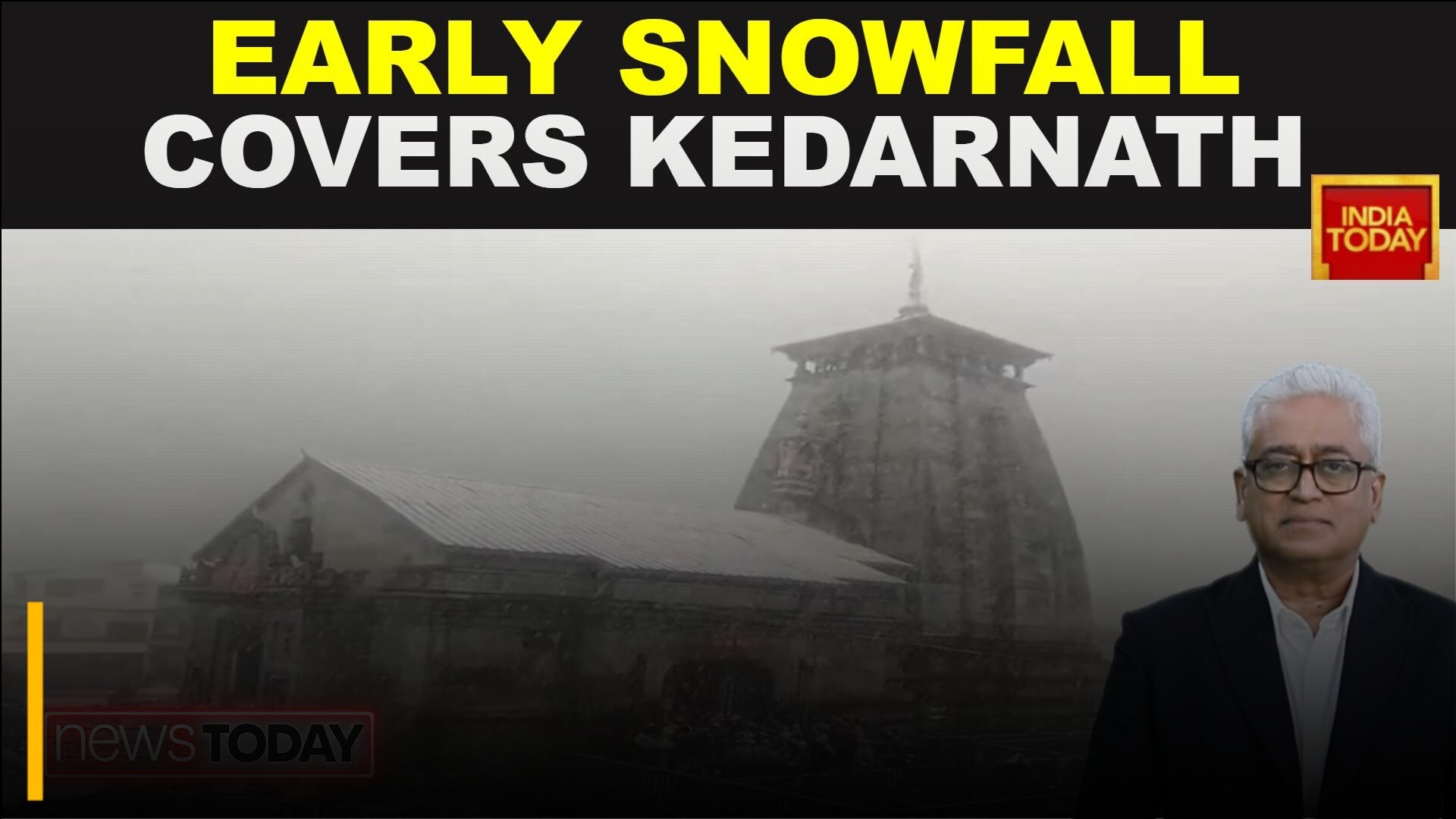
UPDATED: Oct 29, 2026 23:06 ISTUttarakhand witnessed a spell of rain and early snowfall, causing weather conditions to change dramatically across the Himalayan state. At Kedarnath Dham, snowfall transformed the surrounding landscape, covering the temple surroundings and nearby mountains in white.
The onset of winter conditions and freezing temperatures did not dampen the enthusiasm of devotees, who continued to wait for their turn to seek blessings at the shrine. Read MoreVIDEOS FROM OTHER SECTIONSLATEST VIDEOSGujarat Cow Slaughter Case: Kalol Court Cites Vedas And Manusmriti, Sentences Three Men To LifeA court in Gujarat's Kalol has sentenced three men to life imprisonment and imposed a fine of three lakh rupees each in a cow slaughter case dating back to August 2024.
Delivering the verdict under the Gujarat Animal Preservation Act, the court drew national attention by citing Hindu scriptures, including the Vedas and the Manusmriti, to emphasise the religious significance of cows. The court remarked that cows represent the mother of the universe and are home to 33 crore deities, warning that failure to punish offenders could lead to the extinction of cows.
Out of six accused, two were acquitted and one died during the trial.DMK Leader KN Nehru Faces DVAC Raids In ₹634 Crore Cash-for-Jobs Case; Party Alleges Witch-HuntFormer Tamil Nadu Minister KN Nehru is facing raids by the Directorate of Vigilance and Anti-Corruption across around 25 locations in an alleged 634 crore rupee cash-for-jobs scam following a Madras High Court directive. The DMK termed the crackdown a politically motivated witch-hunt ahead of the Trichy by-polls and accused the TVK government of attempting to divert attention from law and order issues.
Meanwhile, the ruling TVK maintained that those involved in corruption would not be spared, highlighting that a close aide of former minister Anbil Mahesh also surrendered and was arrested in an alleged bribery case.Cancer Treatment To Get Cheaper? Drug Price Caps, Hospital Markups & Patient Costs Under ScrutinyA panel discussion examines the impact of the central government's decision to slash prices of anti-cancer drugs and deliberates whether price capping should extend to other essential medicines and hospital consumables.
Panellists highlight the vast disparity between procurement costs and the retail prices billed to patients by private hospitals. While Karnataka's representative calls for transparent billing displaying landing costs alongside the maximum retail price and urges regulation based on chemical formulas rather than brands, medical experts urge caution.
Doctors emphasize the need for stringent quality control and bioavailability standards for generic drugs to prevent sub-therapeutic outcomes and black marketing. Medical specialists also recommend expanding price regulation to emergency ICU treatments, including antibiotics, antifungals, and consumables like intravenous sets.
The discussion underscores the urgent need for systemic pharmaceutical pricing reforms and greater regulatory oversight to curb healthcare inflation and protect patients from out-of-pocket medical expenses.Cancer Drug Prices Slashed By Up To 93%: Centre Caps Margins On 543 Brands From November 9The central government has revised the prices of 543 anti-cancer drug brands, with new rates taking effect from 9 November. The National Pharmaceutical Pricing Authority capped trade margins at 30% on 137 non-scheduled anti-cancer medicines, resulting in price reductions of up to 93% for generic and biosimilar drugs, though 65 high-cost cancer drugs remain unaffected.
Meanwhile, the Supreme Court questioned excessive markups across pharmaceutical supply chains, asking the Centre why margin caps should not apply to other essential medicines. The Karnataka government has mandated healthcare institutions to list both purchase costs and maximum retail prices on patient bills from 1 November, while pharmaceutical industry representatives highlighted high manufacturing, cold chain, and import costs.