


During talks with his US counterpart, secretary of war Pete Hegseth, on the sidelines of an ASEAN summit in Cebu in the Philippines on October 28, defence minister Rajnath Singh cautioned Washington that supplying sensitive military technology to Pakistan carried the risk of those assets falling into the hands of a “third country”.Singh also appeared to hint towards China and Iran while flagging concerns over Washington’s support for Pakistan’s F-16 fighter fleet, following a recent $686 million upgrade package that includes advanced avionics, cryptographic systems and cryptographic modules.The risk of sensitive military technology reaching an unintended recipient has long been a concern for countries that export advanced weapons systems. Around the world, there are numerous examples of sophisticated military equipment and classified technical information falling into the hands of third parties.Such exposure can compromise operational advantages, reveal sensitive capabilities and undermine the security of advanced weapons platforms.
The threat does not come from espionage or cyberattacks alone. Battlefield losses, the capture of military equipment, unauthorised transfers and weaknesses in supply-chain security can be equally damaging.
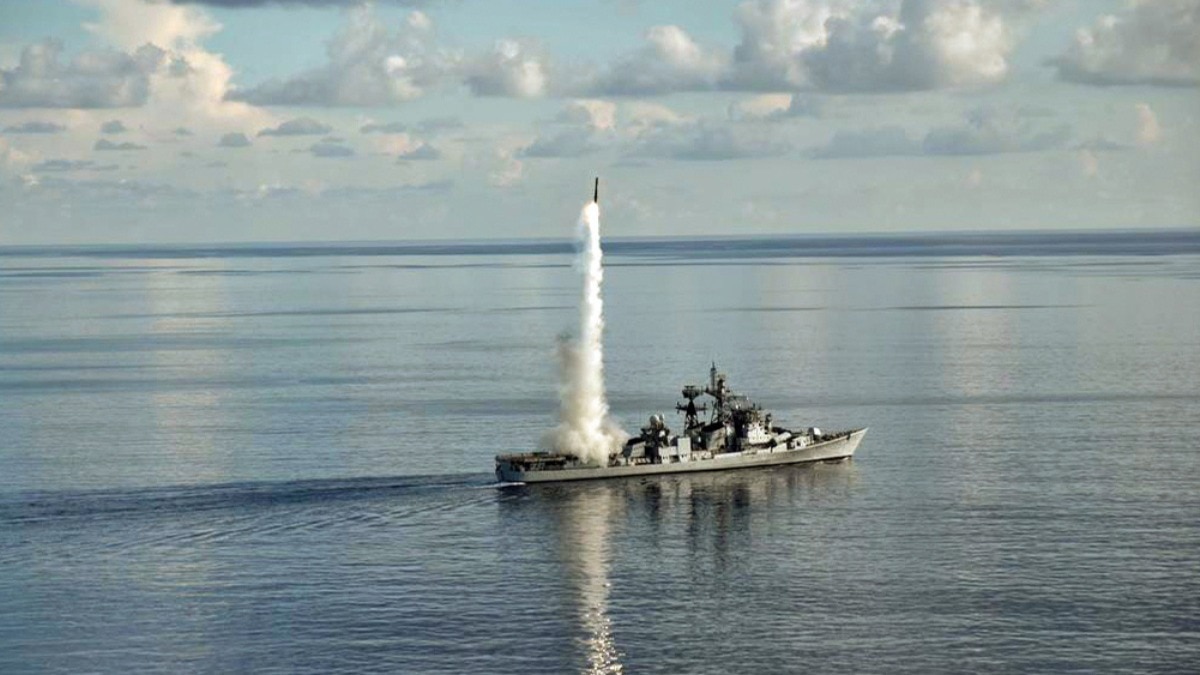
India, too, is increasingly exposed to these risks as it expands its defence exports and positions its indigenous military platforms in international markets. Among the most strategically sensitive of these is the BrahMos supersonic cruise missile, jointly developed by India and Russia.Recent developments have brought focus on India’s expected sale of BrahMos to Indonesia.
The first is the Badr Memorandum of Understanding, signed in Doha on October 21 between the defence ministers of Pakistan, Trkiye, Qatar and Indonesia, thereby opening a new framework for cooperation in defence manufacturing, research and development, technology sharing and military training.Second, Jakarta’s growing ties with Beijing. Indonesian students are increasingly going to multiple universities and educational institutes in China to study Mandarin and technical fields such as metallurgy.
While academic exchanges are not, in themselves, evidence of military technology transfer, the broader relationship between Jakarta and Beijing is relevant when assessing the strategic environment surrounding sensitive defence exports. Thirdly, Indonesian private companies act as the local procurement partner for Jakarta, managing domestic representation and support for the BrahMos missile acquisition, while collaborating with Indian and Indonesian defence companies.
The companies’ commercial relations and subcontracting arrangements with Pakistan and Trkiye have come to light. This requires careful handling in order to ensure that sensitive information remains protected throughout the BrahMos procurement process.In July, India and Indonesia reportedly formalised an agreement covering the procurement of BrahMos supersonic cruise missiles and Astra Mk-1 air-to-air missiles.
The announcement came in Jakarta during Prime Minister Narendra Modi’s state visit, following talks with Indonesian president Prabowo Subianto. Indonesia’s entry into the BrahMos export market marks another important step in India’s efforts to expand its defence partnerships and strengthen its position as a defence exporter.Indonesia’s interest is significant in the context of its growing defence engagement with India.
The two countries have developed a comprehensive strategic partnership, with defence cooperation emerging as a key pillar of their broader relationship. At the same time, Indonesia has pursued closer economic and infrastructure ties with China, including its engagement with Beijing’s Belt and Road Initiative (BRI).
These overlapping partnerships reflect Jakarta’s effort to maintain strategic flexibility, but they also underline the importance of carefully managing the security implications of sensitive defence cooperation.Military observers believe that for India, the central question is not whether Indonesia should maintain relations with China or other countries. It is whether the export of an advanced weapons system can be structured in a way that protects the technology, software, operational data and technical expertise associated with it, regardless of the recipient’s wider diplomatic relationships.The international defence industry offers several important lessons.
The security of a weapons platform depends not simply on the reputation or nationality of its manufacturer, but also on the integrity of its components, software, maintenance arrangements, data links and supply chains. Even a limited breach can provide an adversary with information that helps it understand, replicate or develop countermeasures against a sophisticated military system.One prominent example is Noshir Gowadia, an engineer who worked on technology associated with the B-2 Spirit stealth bomber, including systems intended to reduce the aircraft’s infrared signature.
He was convicted of espionage-related offences after providing classified defence information to China and was sentenced to 32 years in prison.Supply-chain security presents another challenge. Reports this September alleged that components from an Australian F-35, including a cockpit canopy and a weapons-bay door, had been diverted to Hong Kong while being shipped to the US.
The circumstances surrounding the alleged diversion, the components’ final custody and their potential intelligence value require independent verification. Nevertheless, the allegations highlight a wider concern: sensitive defence equipment can be exposed even when it is not lost in combat or deliberately transferred to a foreign military.Battlefield losses provide another route through which advanced technology can be compromised.
In December 2011, Iran obtained access to a US RQ-170 Sentinel stealth reconnaissance drone that came down on Iranian territory. Tehran subsequently claimed it had extracted technical information from the aircraft and reverse-engineered aspects of its design.A similar episode occurred in 1999 when Yugoslav air defences shot down a US F-117 Nighthawk stealth aircraft during the Kosovo conflict.
The wreckage offered an opportunity to examine aspects of the aircraft’s design and stealth technology. Subsequent reports alleged that China obtained access to some of the debris.The vulnerability extends well beyond complete aircraft.
In July 2024, Russian state media reported that Russian forces had recovered what was described as a guidance system from a US-made Army Tactical Missile System (ATACMS) missile used by Ukraine. Iran too has claimed to have captured US-made ScanEagle surveillance drones and displayed equipment it identified as recovered aircraft.Cyber espionage presents a different but equally serious threat.
US officials and defence analysts have alleged that Chinese cyber operations obtained sensitive information associated with the F-35 stealth fighter programme. Reports have claimed that the stolen technical data may have helped China’s development of advanced combat aircraft, including the J-20.These cases are relevant to India’s defence-export ambitions because the BrahMos is more than a missile delivered to a foreign customer.
It is an integrated weapons system whose effectiveness depends on specialised components, guidance and control technologies, software, testing procedures, maintenance support and operational integration.The risk, therefore, cannot be assessed solely by examining the country purchasing the system. India must also consider who will maintain it, which contractors will have access to sensitive components, how technical data will be stored and transmitted, and whether third-party personnel could gain access during training, servicing or upgrades.India’s emergence as a defence exporter is strategically important.
A key military observer said that systems such as BrahMos demonstrate the country’s growing capacity to develop and market advanced military technology, strengthen defence partnerships and reduce dependence on imports. But commercial success and strategic credibility will ultimately depend on whether India can protect what it exports.“The experience of other countries shows that advanced military technology can be compromised through espionage, cyberattacks, battlefield losses and failures in supply-chain management.
No export arrangement can eliminate every risk. The objective must be to make unauthorised access significantly more difficult, detect breaches early and limit the damage if one occurs,” military observers pointed out.Subscribe to India Today Magazine- Ends