


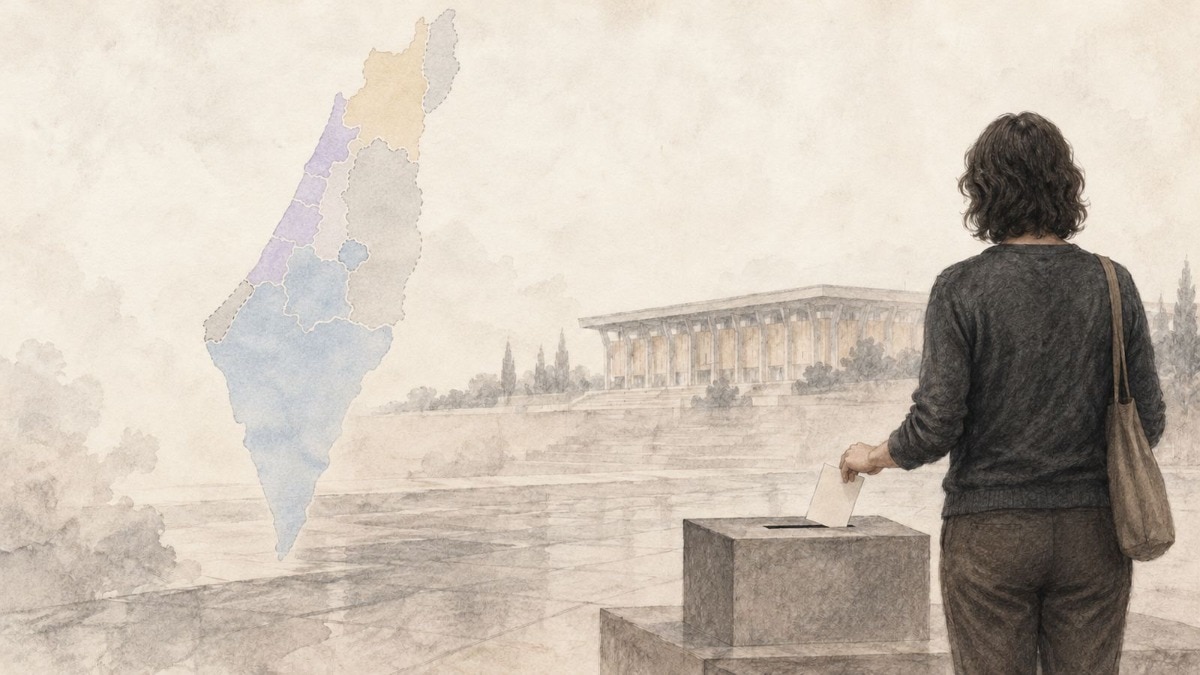
Israel has voted. Nobody has won.Prime Minister Benjamin Netanyahu's bloc won 53 of the 120 seats in the Knesset, Israel's parliament, early results show.
A government needs 61. The bloc of his main rival, former army chief, Gadi Eisenkot, won 48.Indian readers know this picture well.
It is a hung House.The count is not over. Official results are due on November 4.
But the big question will not change: who can find 61 seats? WHAT CHANGEDLikud, Netanyahu's party, is still the largest, with 27 seats.
That is five fewer than its count of 32 in 2022. The Arab parties had their best result.
The Joint List won 11 seats, and Ra'am won eight. That is 19 seats, a historic number, up from 10 in 2022.
Turnout was nearly 78 per cent, up from about 71 per cent in 2022.A COUNTRY SPLIT BY PLACE Our analysis of results from 1,224 localities shows a clear split. Netanyahu's bloc led in the Jerusalem district, with 67.5 per cent of the vote, and in the south, with 51.2 per cent.
The opposition bloc led around Tel Aviv, with 56.2 per cent, and in the central and Haifa districts. The Arab parties led in the north, with 45.6 per cent.
In Israeli settlements in the occupied West Bank, nearly four in five votes went to Netanyahu's bloc.About one in 20 votes went to parties that missed the 3.25 per cent bar. The largest of them, the Reservists-Economic Party led by Yoaz Hendel, won 2.72 per cent.IN THEIR OWN WORDSNetanyahu ran on one big promise. "We are going to fulfil our promise that there will be no Palestinian state; this place belongs to us," he said.On that, his rival agrees. "The principle of two states for two peoples is a mistake," Eisenkot said.On Gaza, Netanyahu wants Hamas to give up all its weapons first. "We are talking about genuine disarmament, not fictitious disarmament," he told ministers in August.The army draft is where they split.
Eisenkot called the vote a choice between "Netanyahu's draft-dodging government, or a government of conscription led by me."On election night, he sounded sure. "Millions of Israelis have had enough of the culture of lies, of failure, of division and incitement," he told supporters.THREE ROADS TO 61A Jewish-Arab alliance: Eisenkot's bloc, plus both Arab parties, have 67 seats. Netanyahu has ruled out working with Arab parties.
Eisenkot has not, but his party has set conditions. One asks the Arab parties to call Hamas a terrorist group and back taking away its weapons.
Arab lawmakers could also back his government from outside. At least six of them would have to vote for it.A unity government: Likud, Yashar, Together, and Yisrael Beiteinu add up to 67 seats on the latest count.
But Eisenkot ran his whole campaign on removing Netanyahu.Defections: Netanyahu needs eight more seats. Switching sides is not unusual for Israeli lawmakers.THE KINGMAKERThe next move belongs to President Isaac Herzog.
He will meet every party. Then he will ask one leader to form a government.
That leader gets 28 days, with up to 14 more. If every attempt fails, Israel votes again.It has happened before.
Israelis voted five times between 2019 and 2022.For now, Netanyahu has the biggest party. He does not yet have the last word.- Ends