


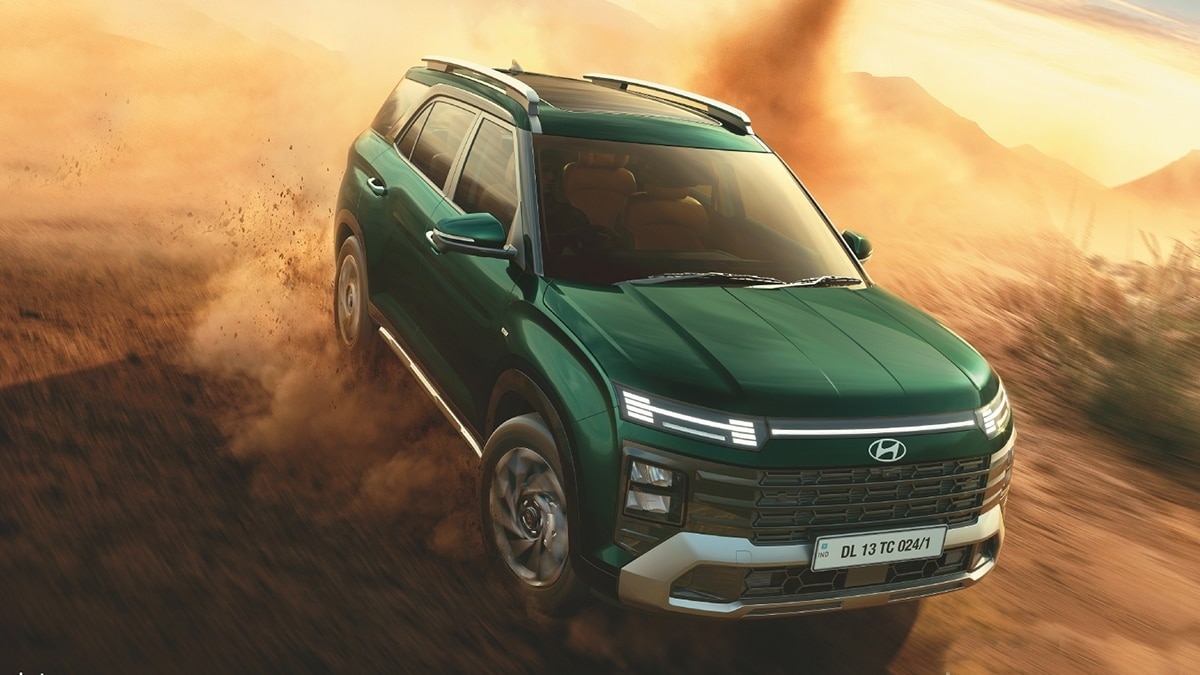
Hyundai's three-row SUV strategy could be headed for a change, with the next-generation Creta expected to play a key role in how the carmaker approaches the segment. Hyundai Motor India could discontinue the Alcazar around the time when the next-generation Creta arrives, with the carmaker reportedly exploring a seven-seater version of its popular mid-size SUV.
The third-generation Creta is currently undergoing testing, and its arrival could bring changes to Hyundai's SUV lineup, including the future of the Alcazar. In international markets, the Hyundai Alcazar is sold as the Hyundai Creta Grand.The next-generation Creta is expected to be offered in both five-seater and seven-seater configurations.
While the name of the three-row SUV remains unknown, it could share much of its underpinnings and design with the new Creta, while receiving a distinct front fascia and revisions to the rear to differentiate it from the five-seater model.The Hyundai Alcazar currently competes with the Mahindra Scorpio-N, Tata Safari and MG Hector Plus, Tomohawk in the three-row SUV space. The model received a substantial update in 2024, bringing revised exterior styling, interior changes and additional technology over its predecessor.
However, the introduction of a seven-seater Creta could prompt Hyundai to reassess the Alcazar's place in its portfolio.Hyundai Alcazar: Current engine optionsThe Alcazar shares its powertrain options with the Creta. It is currently available with a 1.5-litre turbocharged GDi petrol engine producing 160bhp and 253Nm of torque, and a 1.5-litre CRDi diesel engine generating 116bhp and 250Nm.
The petrol engine is paired with a six-speed manual or a seven-speed dual-clutch transmission (DCT). The diesel engine gets a six-speed manual or a six-speed torque-converter automatic gearbox.Next-gen Hyundai Creta: What we know so farHyundai has begun real-world testing of the third-generation Creta, with the first spy images of the heavily camouflaged SUV emerging.
Internally codenamed SX3, the new model is expected to represent a full generational change rather than a routine facelift. The test mule appears to adopt a boxier and more upright silhouette than the current Creta, with squarer proportions and a wider-looking stance.
The upright front end, steeply raked windscreen and relatively short overhangs suggest a focus on road presence and cabin packaging. The SUV has also been spotted with large alloy wheels, while its squared-off glass area and overall profile draw comparisons with the latest-generation Kia Seltos.
At the rear, the camouflage suggests a sloping roofline and a prominent roof spoiler.The next-generation Creta is expected to move to Hyundai-Kia's newer K3 platform, which already underpins the latest Seltos. The change could bring improvements in structural rigidity, safety and packaging.
It may also result in a longer wheelbase and an increase in overall dimensions, although the final specifications have not been confirmed.Hybrid powertrain could boost salesThe next-generation Creta is expected to retain Hyundai's familiar 1.5-litre naturally aspirated petrol, 1.5-litre turbo-petrol and 1.5-litre diesel engine options for India, paired with manual and automatic transmissions.A strong-hybrid powertrain is also expected to be among the key additions. Hyundai is expanding its hybrid ambitions in India, and the next Creta could benefit from a similar powertrain strategy to the one planned for the next-generation Kia Seltos.
Kia has confirmed that a hybrid version of the Seltos is due by 2027.If Hyundai decides to introduce a hybrid powertrain in the Creta range, it is likely to be offered in the 7-seater SUV.While Hyundai has not officially announced the Alcazar's discontinuation, the possibility of a seven-seater Creta could lead to an overlap between the two models. A new three-row SUV based on the Creta could allow Hyundai to consolidate its offering in this segment, although the final product strategy remains unconfirmed.
Using the Creta name could also help Hyundai boost sales of the seven-seater SUV.Subscribe to Auto Today Magazine - Ends