


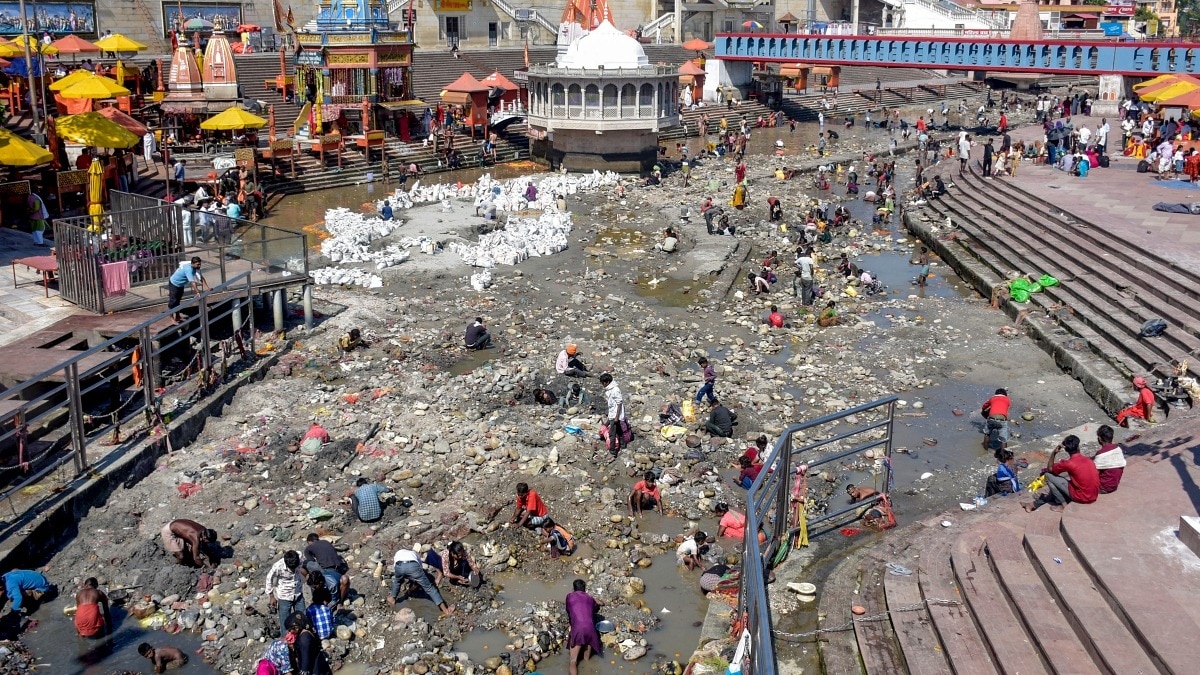
Viral visuals of an exposed riverbed at Har Ki Pauri followed the Upper Ganga Canal's temporary closure. The annual exercise has revealed extensive waste and renewed concerns about pollution in the river.Volunteers take part in a cleanliness drive in the Ganga river, in Haridwar.
Viral visuals from Har Ki Pauri in Haridwar have sparked concerns about the Ganga appearing to have dried up, revealing stretches of the riverbed that are usually submerged.But the unusual sight is temporary, caused by the closure of the Upper Ganga Canal for annual maintenance and preparations for the upcoming Kumbh.The canal was shut from midnight on October 20 and is scheduled to remain closed until November 8. Authorities are undertaking repairs, cleaning operations and construction work along the ghats ahead of the religious gathering.
Haridwar: Volunteers take part in a cleanliness drive in the Ganga river, in Haridwar, Wednesday, Oct. 21, 2026. (PTI Photo) The Ganga’s exposed riverbed at Har Ki Pauri is not a sign of the river drying up, but the waste left behind raises fresh questions about pollution and the health of one of India’s most sacred rivers.
A BIGGER CONCERN FOR GANGA: PLASTICWith the water flow affected, parts of the riverbed near the ghats have become exposed, creating a striking sight that is witnessed during the annual closure.However, what the receding water has revealed is a more persistent problem: the accumulation of waste along the riverbanks. Plastic bags, polythene, discarded clothes, coconut shells, religious idols and heaps of other waste can be seen scattered across the exposed stretches.
The sight underscores the challenge of keeping the Ganga clean, even as millions of people depend on the river for water, livelihoods and religious practices.They stopped the flow of the Ganga near Har ki paudi at Haridwar for next 18 days just so they can clean it before Diwali. And the moment the water level dropped the truth came out...the entire riverbed is buried under clothes, plastic bags, discarded slippers, and pure filth.
The natural stones that should be there..but completely hidden under our garbage. Year after year the same story bhakts leave behind their waste the administration stops the water once a year, locals cleans up the mess we created and then we start dumping again the moment the water returns.
You cant revere a river as divine and simultaneously turn her into a landfill. If this is how we treat the river we claim to worship then maybe we dontt deserve to call her MAA at all.
Period !!— Rohit (@Rohit_p__) October 21, 2026PLASTIC POLLUTION THREATENS THE GANGA’S ECOSYSTEMThe Ganga faces multiple sources of pollution, including untreated sewage, industrial discharge, agricultural runoff and solid waste. Plastic adds another layer to the problem, as discarded packaging and other materials can persist in the environment for decades or longer.When plastic waste enters the river, it can travel downstream, eventually reaching the Bay of Bengal.
Along the way, it can entangle aquatic animals or be mistaken for food by fish and other organisms. Ingested plastic can cause physical injury, interfere with feeding and expose animals to potentially harmful chemicals.Over time, larger plastic items break down into microplastics, tiny particles that can be consumed by aquatic organisms and move through the food web.
People gather to take a holy dip in the Ganga river on the occasion of 'Sarva Pitru Amavasya', at Har Ki Pauri ghat, in Haridwar, Uttarakhand. (PTI Photo) These particles have been detected in freshwater environments and aquatic species, although their precise long-term effects on the Ganga’s ecosystem remain an area of research.The pollution problem also extends beyond wildlife. Plastic waste can clog drainage channels, degrade river habitats, and complicate efforts to maintain clean water.The temporary closure of the Upper Ganga Canal does not mean the Ganga itself is drying up.
But the exposed riverbed offers a glimpse of the waste that often remains hidden beneath flowing water.As preparations for the Kumbh gather pace, the challenge is not merely to restore the water flow or beautify the ghats. It is to prevent waste from entering the river in the first place.For a river that sustains millions of people and supports a rich aquatic ecosystem, keeping the Ganga clean requires sustained sewage treatment, responsible waste disposal and stronger enforcement against pollution, long after the water returns to Har Ki Pauri.- Ends