


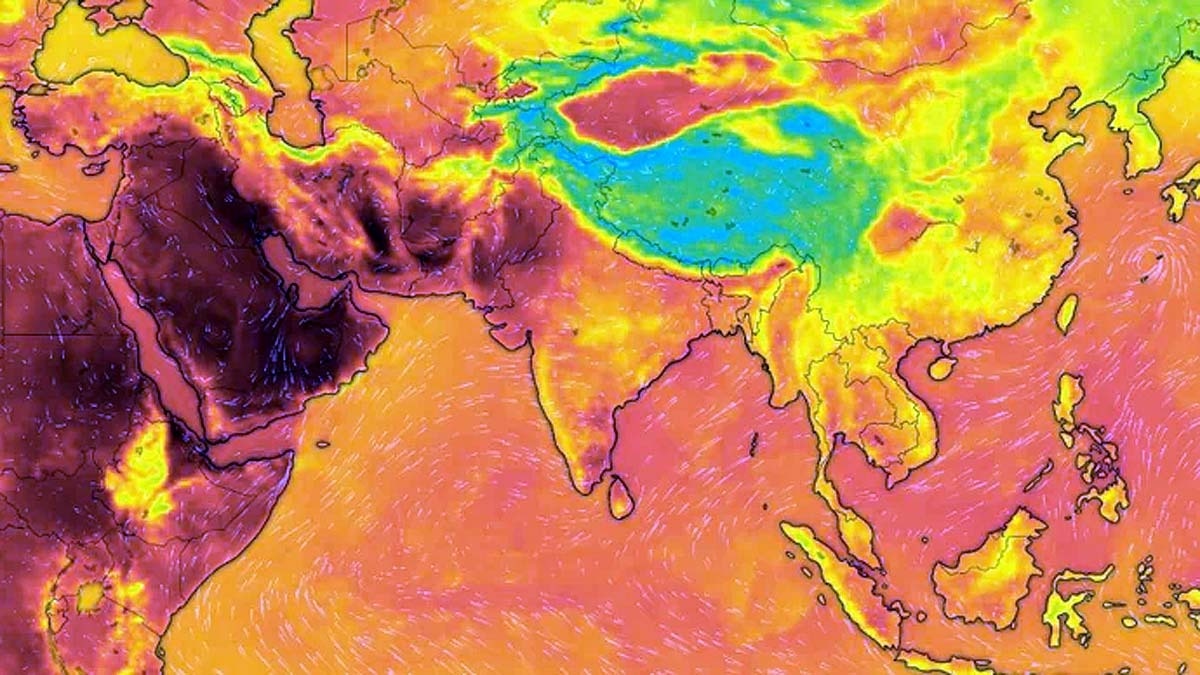
The IMD forecasts above-normal heat and deficient rainfall across most of India in November. Persistent strong El Nino conditions could disrupt regional temperature and rainfall patterns.
El Nino is one of the three phases of the El Nino Southern Oscillation, a climate phenomenon linked to changes in sea temperatures in the central and eastern tropical Pacific Ocean and fluctuations in the atmosphere above it. Most parts of India are likely to record above-normal maximum temperatures in November, according to the India Meteorological Department's monthly forecast reported by news agency Press Trust of India.
Some areas along the Himalayan foothills may experience normal to below-normal maximum temperatures.Minimum temperatures are also expected to remain above normal across most of the country. However, many parts of central and eastern India are likely to record normal to below-normal minimum temperatures.The IMD said rainfall is likely to be below normal in most parts of India during November.
Some areas in central, northwest and Northeast India may receive normal to above-normal rainfall.The country as a whole is expected to receive 77 per cent of its long-period average rainfall for the month, PTI reported. The long-period average is the average rainfall recorded in a region over a period of 30 to 50 years.
India's average rainfall for November, based on data from 1971 to 2020, is about 29.7 mm. South Peninsular India is also likely to receive 77 per cent of its long-period average rainfall in November.
The region's average rainfall for the month, based on data from 1971 to 2020, is about 118.7 mm, according to the IMD.The department said very strong El Nino conditions are currently prevailing over the equatorial Pacific Ocean. Forecasts from the Monsoon Mission Coupled Forecast System and other global climate models indicate that these conditions are likely to continue during November and December.
El Nino is one of the three phases of the El Nino Southern Oscillation, a climate phenomenon linked to changes in sea temperatures in the central and eastern tropical Pacific Ocean and fluctuations in the atmosphere above it.El Nino usually has a warming effect on the planet, while its opposite phase, La Nina, generally has a cooling effect. The phenomenon also has a neutral phase.A very strong El Nino can disrupt normal temperature and rainfall patterns, causing severe drought in some regions, heavy rain and flooding in others, and increased heat across large parts of the world.
Overall, the IMD expects a warmer and drier-than-normal November across much of India, with some regional exceptions.- Ends