


Every morning, I look at myself and my neighbours standing in the queue for water, and remember how each of us once had a life of our own, our privacy, our own toothbrush, our own home and our own bathroom. How we used to wash our faces and drink clean water without ever imagining that a day would come when these simple routines would become a battle with ourselves and with every drop of water.
Even standing beneath a hot shower has become a dream postponed until further notice.A year has passed since the announcement of the “ceasefire” in Gaza, yet the spectre of war, bombardment and death has never left our lives.War is not simply the bombing of buildings or the evacuation of a residential neighbourhood. There are small wars inside this one enormous war.
The tent is a war. The surveillance drone – the zannana, as we call it, for its incessant buzzing – is a war.
Queueing for water is a war. Waiting to use the toilet is a war.
The death of privacy is a war. Thirty people crammed into a single room is a war.Every morning, the same question follows me: what will happen today?
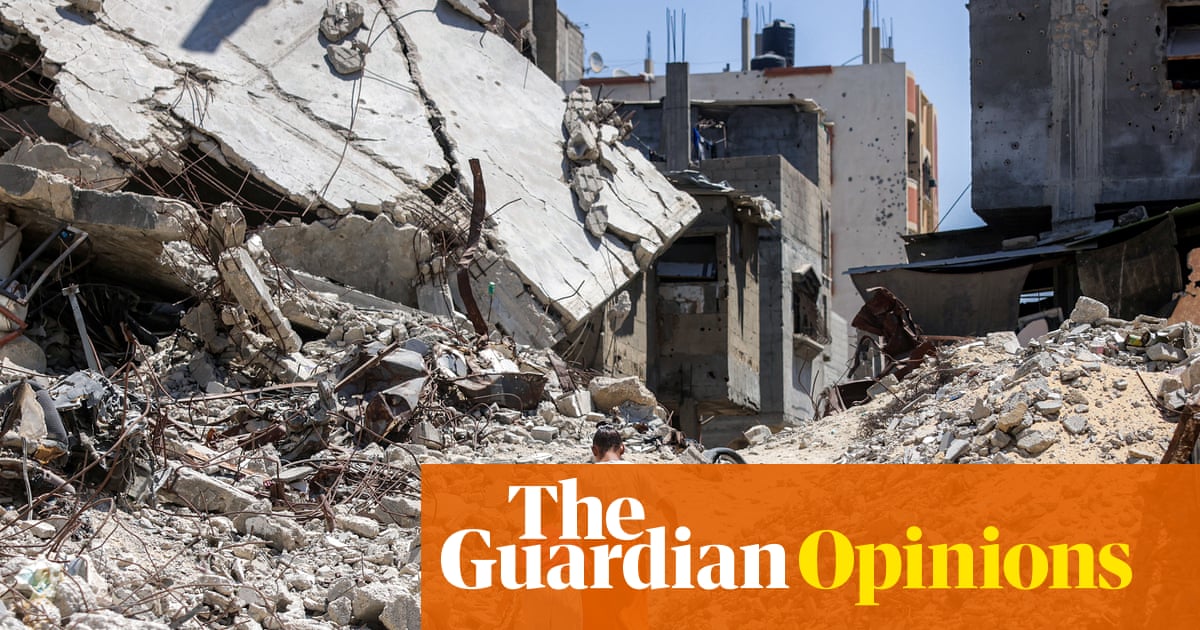
Will my children return from what remains of their school to what remains of our home, having walked along what remains of a street, when bombardment could take them from me at any moment?They walk long distances because transport is difficult and expensive amid fuel shortages, repeated border crossing closures and the trickle of essential supplies into Gaza. It is as though life itself is being rationed to us, drop by drop.In Gaza, waking up alive is not enough.
You must also make sure that the place where you slept is still somewhere you can spend the following night. You must hope that your children can dream of an ordinary day – one in which obtaining a loaf of bread, an education or medical treatment is not an achievement worthy of celebration.It is as though the ceasefire never happened.
The sounds of bombardment, explosions and surveillance drones have continued to accompany our days and nights. What remains of our homes and tents trembles – and so do our hearts.In Gaza, to be alive is to live on the edge of death.
As though we are still trapped in October 2023, when the course of our lives was redrawn into a new geography, and evacuation became a matter of Israeli orders dropped from the sky on leaflets – orders to flee from one place to another, from one tent to another disappointment, from one dangerous patch of land to a corner that seemed slightly less dangerous.On the morning of Friday 13 October 2023, the skies over Gaza rained down evacuation leaflets ordering us to leave our homes and head south.We left the north, broken, and entered madness.We left, but we have never truly returned to ourselves. We lost the people we were before the war.
We are no longer who we used to be. The war has turned us into strangers, unfamiliar even to ourselves.We left everything behind.We left the stairwell, the curtains and the windows.
The sofas, the router, the 55in television, the pressure cooker on the stove, the unwashed dishes – and half a lemon that, for some ridiculous reason, we always insisted on keeping in the fridge door.We left behind conversations, arguments, disagreements, embraces and unfinished secrets. Stories told after dinner.
A bunch of keys, and a never-ending chain of household troubles.We left our photo albums, our wedding pictures, and the hairstyle that irritated me on my wedding night because of all the hairpins; the clutter in the storeroom, the gas lighter, the bathrobe hanging behind the bathroom door, the dining table, the backgammon table, and the water, electricity and internet bills.And we left behind a precious set of drinking glasses, imprisoned in the display cabinet since 1997 on the charge of being “far too good to bring out for guests”.After the bombing, they ended up out in the street.And it turned out we had been wrong to punish our little boy for breaking a cup.We never imagined that we, too, would be broken.All of us were.Three years have passed, yet we still fear hearing again the announcement that changed our lives: “Leave your homes immediately and head south.”Three years of displacement, tents and fear. Three years in which school years have begun and ended without our children experiencing anything resembling a normal education.skip past newsletter promotionafter newsletter promotionFor the first time, school years are no longer measured in grades and certificates, but in the number of years children have spent displaced.Third year of tent school.It is as though the words I wrote years ago had been waiting for me in the present.
As though I had written an early warning that I myself failed to take seriously.I once wrote, in my 2017 book What’s That:“A tent that lets us down.”And in a Facebook post that same year I wrote:“We are all beggars in the making.”I never imagined that the words I had written in satire would one day become the details of our daily lives.From Gaza to Khan Younis, to Rafah, to al-Mawasi, to al-Zawayda, to Deir al-Balah, from a tent to what remains of our home, we have arrived safely in the unknown.Our dreams have yet to arrive. Our hopes have yet to arrive.
I fear they may have evaporated somewhere along the way.And today, a year after the announcement of the “ceasefire”, I am still standing in queues: for aid, for cooking gas, for water – and in the endless queue of those waiting for the unknown.I wait for my children to return from school, and I try to recover something of the life we left behind.The name of this chapter has changed. But fear has not changed its address.There is more to tell – if there is anything left of our minds, or our lives, to tell it.
Akram Al-Sourani is a writer and poet from Gaza City, and the author of A Homeland Out of Coverage, Half-Baked Homeland and What’s That