


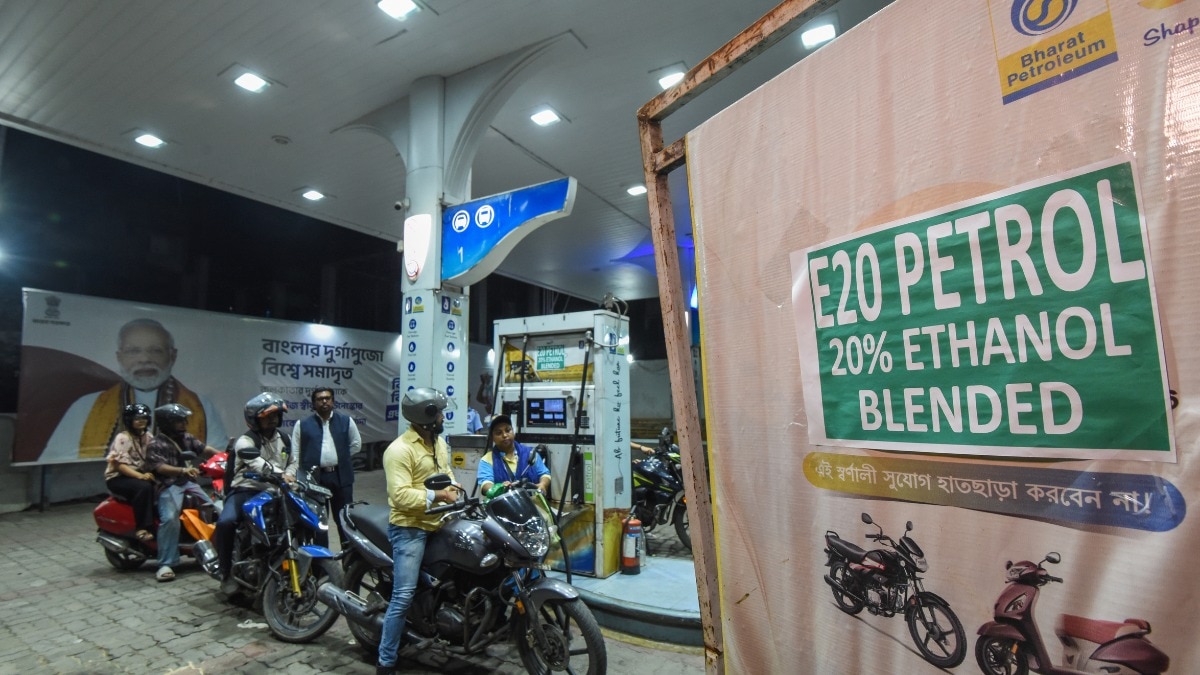
Questions over fuel efficiency, engine compatibility, consumer choice and the economic interests behind ethanol production have repeatedly forced the government to defend a programme it considers central to India’s energy security. In that context, the political messaging seems to be that the government is doubling down.The latest notification also makes an important distinction: E85 and E100 are intended exclusively for vehicles designed and certified to use them.
Existing petrol vehicles will neither be required to switch to these fuels nor undergo modifications. Much of the debate has been over the E20 fuel.
As the government has promoted ethanol-blending as a means of curbing oil imports while helping agriculture, motorists have wondered how it would affect cars built to run on lower ethanol blends.The issue has been fanned by complaints of decreased mileage and potential engine damage, especially with older cars. The lack of an easily available lower-ethanol fuel option has fuelled the criticism, and consumers are now wondering if they have any choice when it comes to the type of fuel for their vehicles.Politics has also become a part of the problem.
Opposition leaders have raised questions about the government’s management of the transition while issues of compatibility and consumer protection have gone to court. The Centre has repeatedly issued clarifications that ethanol-blending is supported by technical tests and that there is no verified evidence of widespread engine damage attributable to E20.The government has acknowledged that in some cars originally designed for E10, fuel efficiency may drop with the use of E20.
It has insisted, however, that the effect is minor, and that ethanol has a higher octane rating, which benefits performance and emissions.Facing criticism, the government has also had to field top executives of automobile manufacturers, who have publicly assured that their newer vehicles were E20-compliant. The Centre has also resisted demands to restore lower-ethanol petrol as an alternative.
Its argument has been that maintaining parallel supplies of different petrol blends across the country’s vast network of filling stations would create logistical complications and additional costs, not to mention the defeat of the very purpose of introducing E20.The disagreement goes beyond vehicle engines. Questions have been raised about the economics of ethanol production, the use of foodgrains for fuel and the benefits accruing to distilleries and agricultural producers.
The government has maintained that ethanol production supports farmers and rural incomes without compromising on food security.There are considerable economic stakes. According to ministry of petroleum and natural gas figures, ethanol-blending has saved India more than Rs 1.97 lakh crore in foreign exchange since 2014-15 due to lower import of crude oil.
The move has substituted nearly 31.6 million tonnes of crude oil and generated payments exceeding Rs 1.66 lakh crore to farmers. India achieved its 20 per cent ethanol-blending target five years ahead of the original schedule.The latest step towards E85 and E100, though, represents a different stage in the transition.
E20 involves supplying a higher ethanol blend to the existing petrol vehicle fleet, subject to compatibility of individual vehicles. E85 and E100 require vehicles specifically engineered to accommodate the substantially higher ethanol concentrations in fuel.Flex-fuel vehicles can operate on different proportions of petrol and ethanol, depending on their design and certification, without requiring drivers to make mechanical adjustments.
Their fuel systems use materials compatible with higher ethanol concentrations while advanced engine management systems automatically adjust operations according to the fuel composition. This allows a single vehicle to use different approved blends from the same fuel tank.The technology is already established in countries such as Brazil and the United States.
For India, the government expects its introduction to encourage domestic manufacturing of specialised automotive components, ethanol production infrastructure and associated services.The environmental argument is also part of the calculation. Higher ethanol blends can reduce certain exhaust pollutants, including carbon monoxide and some hydrocarbons.
Their overall greenhouse-gas advantage, however, depends on the feedstock used to produce ethanol and the production process. The government has linked the expansion of ethanol use to its broader objectives of reducing dependence on imported crude oil, promoting indigenous fuel production and achieving net-zero emissions by 2070.Subscribe to India Today Magazine- Ends